A Divine Encounter in Venetian Color
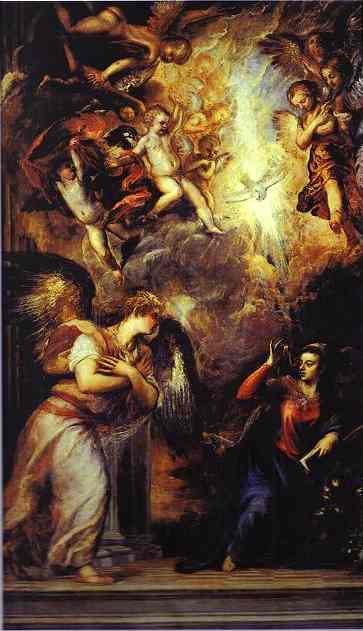
In the hallowed halls of San Salvador di Venezia, there exists a moment frozen in time, a celestial intersection between the earthly and the divine captured by the incomparable hand of Titian. The Annunciation is not merely a depiction of a biblical event; it is a symphonic arrangement of light, shadow, and profound spiritual weight. Painted between 1559 and 1564, during the twilight of the High Renaissance, this masterpiece serves as a testament to Titian’s unparalleled ability to breathe life into pigment. The scene unfolds with a breathtaking intimacy, inviting the viewer to witness the very second the Archangel Gabriel delivers his momentous message to the Virgin Mary. Through his mastery of the Venetian school, Titian transforms a theological milestone into a visceral, emotional experience that resonates across the centuries.
The composition is a delicate dance of figures and symbolic objects, woven together with a technique that defines the Venetian Titan. As one gazes upon the canvas, the eye is immediately drawn to the purity of the Virgin, contrasted against the dynamic presence of Gabriel. The angel holds a lily, a timeless emblem of innocence and divine grace, acting as a silent herald of the miracle about to unfold. Yet, Titian expands the narrative beyond the central figures, populating the periphery with a celestial orchestra. Scattered throughout the scene are musical instruments that suggest a cosmic harmony: a violin rests near the bottom-right corner, a harp floats in the upper-left, and a trumpet stands sentinel in the middle-right. These elements do more than decorate; they provide a visual soundtrack to the divine proclamation, suggesting that all of creation is vibrating in resonance with this sacred news.
The Mastery of Light and Texture
To behold a reproduction of this work is to appreciate the profound depth of Titian’s late style. Unlike the sharp, linear precision of his Florentine contemporaries, Titian utilized colorito—the art of building form through color and soft, blended edges. This technique creates an atmosphere that feels less like a painted surface and more like a window into a living, breathing space. The light in The Annunciation does not simply illuminate the figures; it seems to emanate from within the very fabric of the scene, casting soft glows upon the drapery and highlighting the subtle textures of the surrounding environment. For the discerning collector or interior designer, this quality of light offers an unparalleled ability to anchor a room, providing a focal point that radiates warmth, reverence, and a sense of timelessness.
The emotional impact of the piece lies in its balance of grandeur and quietude. While the presence of various figures and instruments suggests a complex, layered event, there is an underlying stillness—a profound hush that falls over the viewer as they contemplate the Virgin's acceptance of her destiny. This duality makes the painting an extraordinary choice for sophisticated spaces, whether it be a formal gallery setting or a curated private study. It invites contemplation and serves as a bridge to the Renaissance era, bringing the majesty of 16th-century Venice into the modern home. Owning a high-quality reproduction of such a monumental work is more than an aesthetic choice; it is an invitation to surround oneself with the enduring legacy of one of history's greatest masters.