A Celestial Vision: The Majesty of Titian’s Divine Symphony
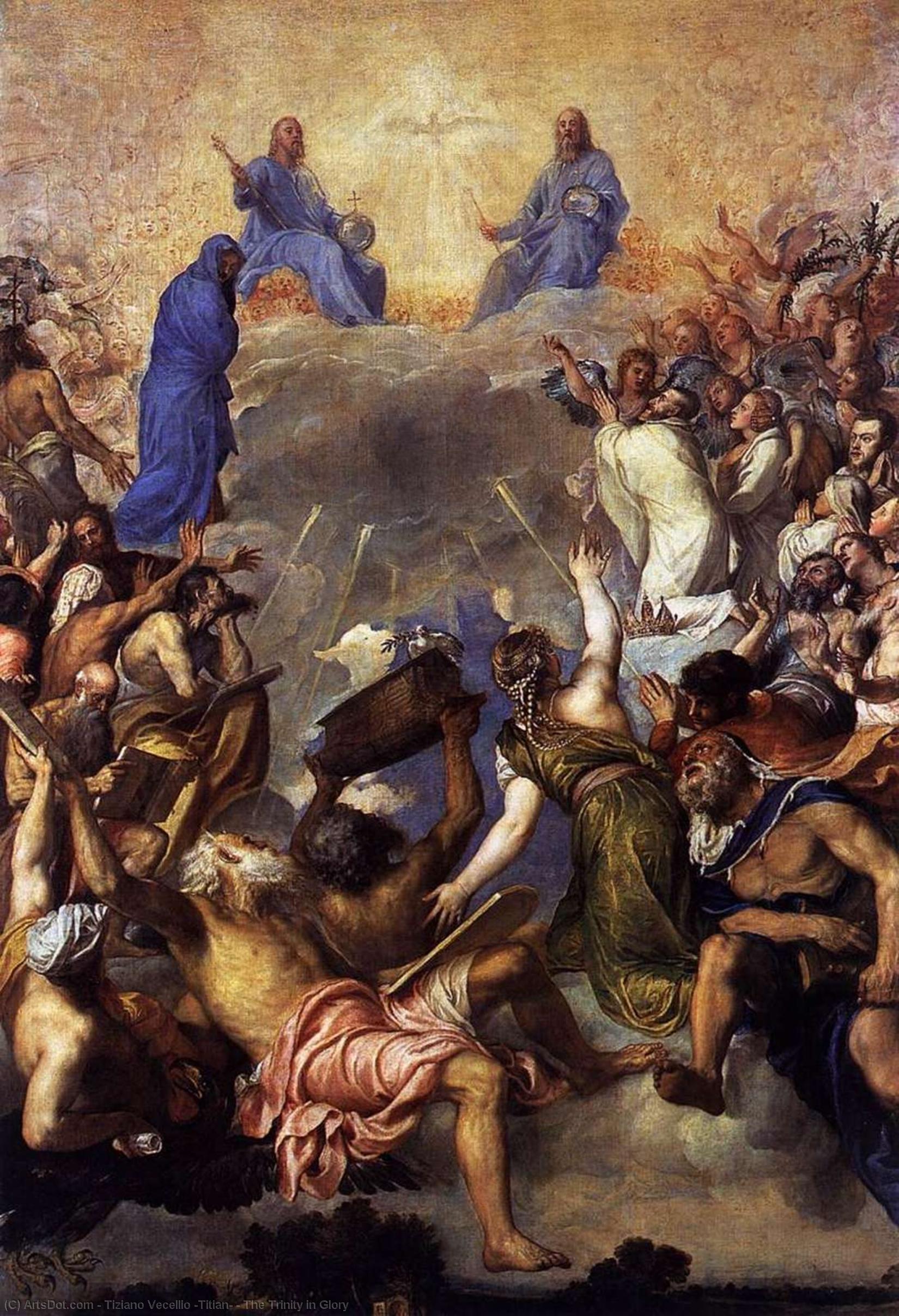
In the grand tapestry of the Venetian Renaissance, few works command the soul with such overwhelming splendor as Titian’s "The Trinity in Glory." Completed in 1552, this monumental masterpiece serves as more than a mere religious icon; it is an immersive window into the divine. Commissioned by Cardinal Giovanni Battista Carafa, the painting functions as a breathtaking panorama of celestial majesty, where the boundaries between the earthly and the eternal seem to dissolve. As one gazes upon the canvas, the viewer is not simply observing a biblical narrative but is instead invited into a profound spiritual contemplation, guided by the masterful hand of the era's most celebrated colorist.
The composition is a complex, multi-layered narrative that unfolds with rhythmic grace. Dominating the upper reaches of the canvas is the radiant Coronation of the Virgin, a window-level tableau that captures the eye through its sheer luminosity. Beneath this heavenly event, Titian meticulously weaves five distinct scenes chronicling pivotal moments in Mary’s life. The Annunciation stands as a focal point, where the Archangel Gabriel delivers miraculous news amidst a landscape bathed in an ethereal, soft light. Through these vignettes, Titian achieves a rare balance of anatomical precision and idealized beauty, creating a sense of drama that feels both deeply human and profoundly sacred.
The Alchemy of Color and Venetian Technique
What truly distinguishes this work is Titian’s revolutionary approach to the medium of oil painting. Moving away from the flatter, more rigid traditions of tempera, Titian embraced the fluid possibilities of oil to achieve an unparalleled tonal richness. This technical breakthrough allowed him to manipulate light and shadow—the technique known as chiaroscuro—to sculpt figures that possess a palpable, three-dimensional presence. The colors do not merely sit upon the surface; they seem to glow from within, shimmering with a vitality that was unprecedented in the mid-16th century.
The artist’s use of color is nothing short of alchemical. He employs a palette that transitions from the deep, dramatic shadows of the earthly realm to the brilliant, incandescent golds and blues of the heavens. This deliberate movement of light serves a symbolic purpose, guiding the viewer's eye upward from the terrestrial struggles depicted in the lower scenes toward the ultimate glory of the Trinity. For the collector or the admirer of fine art, this mastery of texture and hue offers a sensory experience that remains as potent today as it was during the height of the Venetian Renaissance.
An Eternal Legacy for the Discerning Collector
For interior designers and connoisseurs of classical art, "The Trinity in Glory" represents the pinnacle of decorative and spiritual grandeur. The painting’s immense scale—measuring an imposing 346 x 240 cm—and its dynamic composition make it a transformative piece for any space, capable of anchoring a room with its historical weight and emotional depth. It is a work that demands attention, offering layers of detail to discover, from the subtle movement of angels to the intricate textures of celestial drapery.
Owning a high-quality reproduction of such a masterpiece allows one to bring the prestige of the Venetian school into a contemporary setting. It serves as a conversation piece that bridges centuries, embodying the triumph of faith and the enduring power of human creativity. Whether placed in a private gallery or a grand living space, this depiction of Titian’s genius continues to inspire awe, providing a timeless sense of peace, luxury, and profound historical connection.