Titian
(1490 - 1576)
Titian (1488-1576): Venetian master of color & light, renowned for his portraits, mythological scenes, and innovative painting techniques. Explore a life of artistic brilliance.
Explore Berlin's history & art at the Staatliche Museen! Discover Nefertiti, ancient artifacts, masterpieces across 17 museums on Museum Island & beyond.
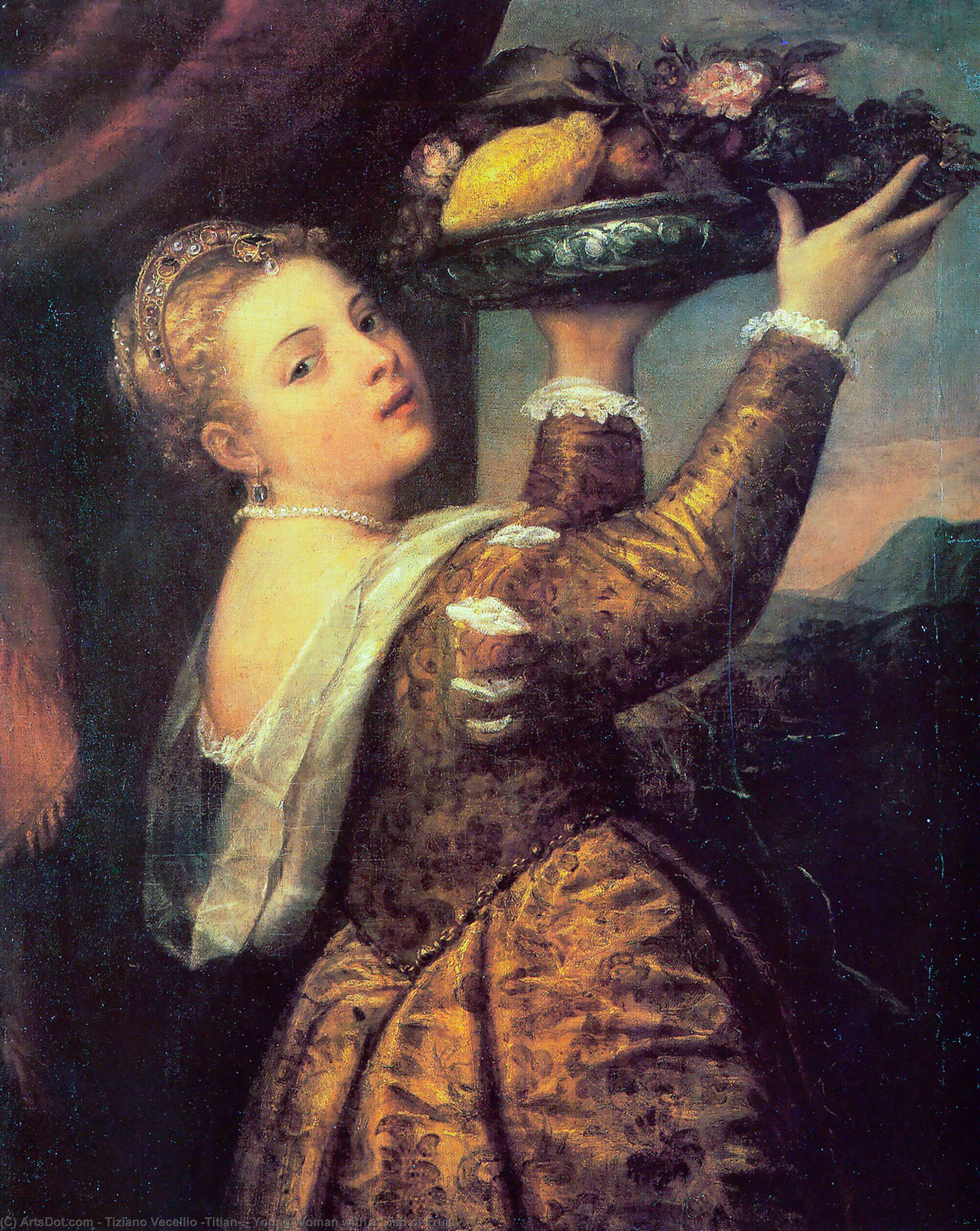
A Symphony of Color: Exploring Titian’s “Young Woman with a Dish of Fruit”
Titian Vecellio, universally recognized as Titian, wasn't merely an artist; he was a revolutionary who fundamentally altered the visual language of his era. Born in 1490 amidst the rugged beauty of Pieve di Cadore—a region that would forever inspire his canvases—his life unfolded against the backdrop of Venice’s burgeoning Renaissance glory, shaping him into one of history's most influential painters. The legacy he bequeathed to art transcends mere skill; it embodies a profound understanding of color and its ability to convey emotion and narrative depth – qualities exquisitely realized in “Young Woman with a Dish of Fruit,” completed in 1555.
- Subject Matter & Composition: This portrait captures a serene young woman seated gracefully before a lavishly adorned table laden with an assortment of seasonal fruits—apples, oranges, and bananas—a deliberate choice reflecting the opulent tastes of Venetian aristocratic society during Titian’s time. The artist skillfully employs pyramidal composition, grounding the figure in stability while directing the viewer's gaze upwards towards the luminous vase containing blossoms, creating a harmonious balance that speaks to Renaissance ideals of beauty and order.
- Style & Technique: Titian’s distinctive style is characterized by his masterful manipulation of color—a technique he termed “colorito”—which elevates painting beyond mere representation. Unlike predecessors who prioritized linear perspective and meticulous detail, Titian embraced a looser brushstroke, allowing for vibrant hues to bleed into one another, generating an unparalleled sense of atmospheric depth and luminosity. The canvas itself is treated with a thin layer of bole, preparing it for the subsequent application of pigment—a practice common during the Renaissance that ensured maximum brilliance and longevity.
Historical Context: Venice & The Patronage System
The painting’s creation coincided with the zenith of Venetian artistic achievement. Under Doge Andrea Gritti, Venice flourished as a maritime superpower and cultural epicenter, attracting artists, intellectuals, and wealthy patrons eager to adorn their villas and palaces with masterpieces. Tribolo's visionary design for the Medici Villa Castello exemplifies this era’s fascination with grandeur and formal gardens—a visual language mirrored in Titian’s meticulous attention to detail and his masterful use of color. The villa served as a symbol of Venetian prestige, showcasing the city’s wealth and sophistication.
- Symbolism: Beyond its aesthetic beauty, “Young Woman with a Dish of Fruit” carries subtle symbolic resonances. The fruits themselves represent fertility and abundance—themes prevalent in Renaissance art—suggesting an idealized vision of femininity and domestic harmony. Furthermore, the pearlescent necklace adorning the woman’s neck symbolizes purity and nobility, reinforcing her status as a figure worthy of admiration.
- Emotional Impact: Titian's ability to imbue his subjects with palpable emotion is evident in the woman’s gaze—direct and contemplative—which invites the viewer into her inner world. The artist achieves this profound connection through nuanced shading and subtle color variations, capturing not just likeness but also character—a hallmark of Venetian portraiture that continues to captivate audiences centuries later.
Legacy & Influence: Lavinia Ramsey Peale II & Beyond
Titian’s influence extended far beyond his own lifetime. His daughter, Lavinia Ramsey Peale II, herself a celebrated artist and patron of the arts, carried forward his artistic vision—a commitment to color and expressive technique that would inspire generations of painters. Works like “Girl with a Fan,” similarly imbued with radiant hues and psychological insight, stand as testament to Titian’s enduring legacy. Reproductions of "Young Woman with a Dish of Fruit" offer collectors and interior designers alike the opportunity to experience firsthand the sublime beauty and emotional resonance of this iconic Renaissance masterpiece—a timeless reminder of Titian's unparalleled mastery.