A Glimpse into a Changing World: Umberto Boccioni’s *April Evening*
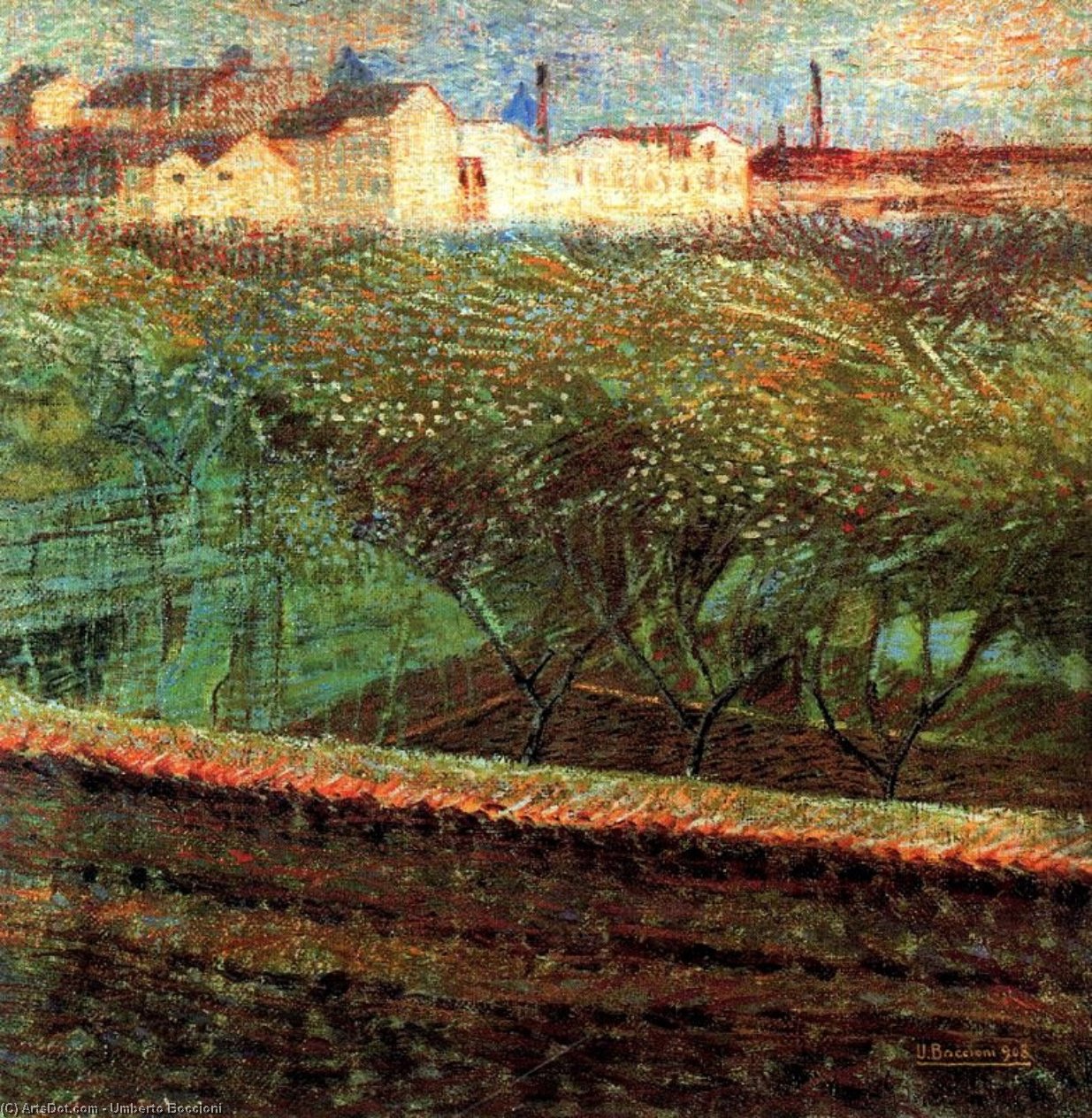
Umberto Boccioni's April Evening, painted in 1908, offers a serene yet subtly dynamic vision of the Italian countryside. Before his fervent embrace of Futurism and its radical deconstruction of form, this work reveals a young artist still deeply rooted in the traditions of Divisionism, yet already hinting at the explorations to come. The painting depicts a tranquil scene – a substantial brick building anchors the background, partially obscured by lush trees, while figures populate the landscape, enjoying what appears to be a leisurely moment. It’s a composition that breathes with an understated elegance, capturing not just a place but a feeling—a sense of peaceful contemplation under the soft light of an April dusk.
The Divisionist Palette and Early Influences
Boccioni's technique in April Evening is firmly grounded in Divisionism, also known as Pointillism when practiced by artists like Seurat. Rather than blending colors on the palette, Boccioni meticulously applied small, distinct brushstrokes of pure color, allowing the viewer’s eye to optically mix them and create a vibrant luminosity. This approach wasn't merely about achieving visual effects; it was part of a broader artistic investigation into light, atmosphere, and the perception of reality. The painting showcases his mastery of this technique, creating a shimmering quality in the foliage and sky that evokes the delicate transition from day to night. His earlier studies with Giacomo Balla were instrumental in developing this skill, and we see echoes of Balla’s influence in the way light is fragmented and reassembled on the canvas. It's important to remember that for Boccioni, this wasn’t simply about replicating a scene; it was about capturing the *experience* of seeing it.
A Bridge Between Tradition and Revolution
Painted just two years before Boccioni signed the Manifesto dei Pittori Futuristi, April Evening stands as a fascinating transitional work. While seemingly conventional in its subject matter – a peaceful landscape with figures – it possesses an underlying energy that foreshadows his later, more radical explorations of motion and modernity. The composition isn’t static; there's a subtle sense of movement suggested by the arrangement of trees and figures, hinting at the dynamism that would become central to his artistic vision. This painting represents Boccioni on the cusp of change, absorbing the lessons of the past while simultaneously yearning for a new way to represent the world around him. It’s a testament to his intellectual curiosity and willingness to challenge established norms.
The Allure of Nostalgia and Modernity
For contemporary viewers, April Evening offers more than just aesthetic pleasure; it provides a window into a pivotal moment in art history. It's a reminder that even the most revolutionary artists begin somewhere, building upon existing traditions before forging their own paths. The painting’s serene atmosphere and beautiful rendering of light evoke a sense of nostalgia, while its subtle hints of dynamism suggest the exciting changes on the horizon. A reproduction of April Evening would bring a touch of Italian elegance to any interior, offering a sophisticated blend of classic beauty and modern sensibility. It's a piece that invites contemplation, encouraging viewers to appreciate both the tranquility of the scene and the artistic genius of Umberto Boccioni—a master poised to redefine the boundaries of art itself.