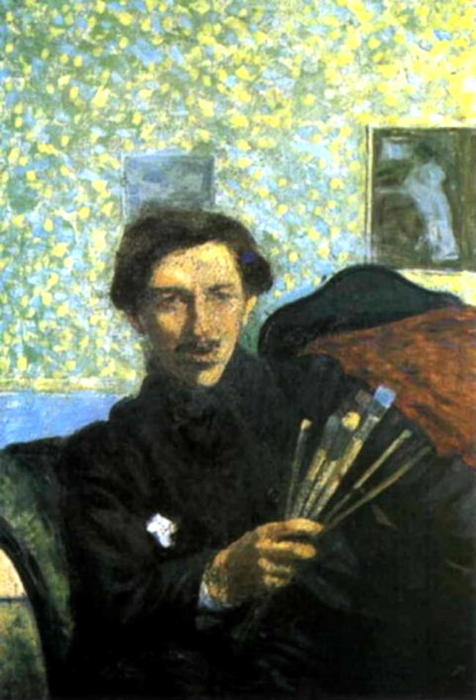
A Window into Becoming: Umberto Boccioni’s Self-Portrait of 1905
Umberto Boccioni's Self-Portrait, painted in 1905, is more than a likeness; it’s an intimate glimpse into the soul of an artist on the precipice of revolution. Before he became a leading voice of Italian Futurism, Boccioni was actively exploring artistic avenues that reveal a fascinating transitional period – a moment of self-discovery captured in oil paint. The painting doesn't shout with the dynamism that would later define his work; instead, it whispers with an introspective energy, offering viewers a rare opportunity to witness the genesis of a modern master.
The Brushstrokes of Transition: Style and Technique
The canvas breathes with the influence of Post-Impressionism and early Fauvism. Loose brushstrokes dance across the surface, prioritizing emotional impact over strict realism. Boccioni doesn’t attempt to meticulously recreate his features; rather, he uses short, broken lines to suggest form and movement, hinting at the energetic aesthetic that would soon consume him. The application of paint is notably tactile – a generous *impasto* technique brings a three-dimensional quality to the work, making the canvas itself feel alive with texture. This isn’t about precise depiction; it's about conveying feeling through the very materiality of the medium, allowing the viewer to experience the act of creation alongside the artist.
An Artist in His Realm: Subject and Composition
The composition centers on Boccioni seated within what appears to be his studio, a collection of paintbrushes held firmly in his hand – the tools of his trade, extensions of his very being. The background is deliberately blurred and textured, suggesting a space brimming with creative energy yet remaining undefined. This compositional choice isn’t accidental; it directs our full attention to Boccioni himself, emphasizing introspection and the internal world of artistic creation. It's profoundly personal—a self-reflective moment frozen in time. The subject matter is humble, eschewing grand narratives for a quiet study of an artist at work, lost in thought.
Echoes of a Changing World: Historical Context and Symbolism
Painted a decade before Boccioni fully embraced the tenets of Futurism, this self-portrait provides invaluable insight into his artistic origins. Born into a rapidly industrializing Italy in 1882, he was deeply affected by the technological advancements sweeping across Europe. While these influences aren’t yet overtly expressed here, they simmer beneath the surface, foreshadowing his later celebration of speed, technology and modernity. The paintbrushes are not merely props; they symbolize Boccioni’s dedication to his craft and the essence of his artistic identity. The blurred studio setting represents a space for exploration, experimentation, and the birth of new ideas. Overall, the painting evokes a sense of quiet contemplation, perhaps tinged with melancholy – a thoughtful gaze inviting viewers to consider not only his likeness but also the inner life of an artist wrestling with self-discovery.
A Timeless Resonance: Collecting and Interior Design
This Self-Portrait offers a unique opportunity for collectors seeking a piece that bridges traditional and modern art. Its subdued color palette and expressive brushwork make it remarkably versatile, complementing a range of interior design styles – from classic to contemporary. A reproduction would serve as a striking focal point in a study, living room, or creative workspace, inspiring contemplation and adding a touch of artistic sophistication. It’s a piece that speaks to universal themes of self-reflection, creativity, and the enduring power of art—a quiet yet powerful statement for any collection.