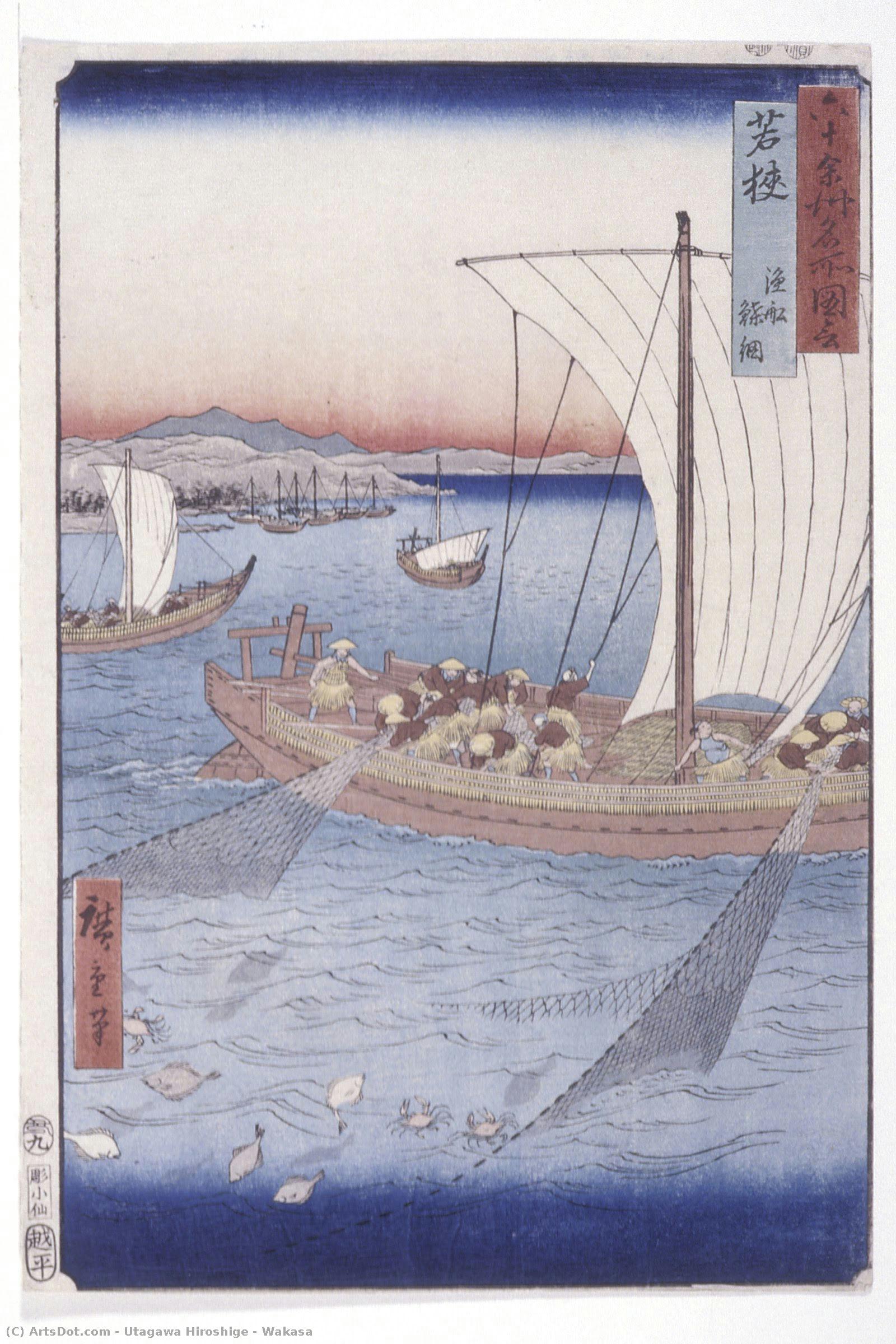
Utagawa Hiroshige’s “Wakasa” depicts a picturesque fishing boat traversing calm waters, populated by thirteen figures enjoying the day. Inspired by the Fifty-Three Stations of the Tokaido highway, this masterpiece embodies Hiroshige's signature style—a harmonious blend of observation and artistic interpretation—influencing Impressionist painters like Monet and Van Gogh.
Discover Utagawa Hiroshige (1797-1858), Japan's last great ukiyo-e master. Explore iconic landscapes like 'Fifty-three Stations of the Tōkaidō,' his poetic style, and profound influence on Impressionism & Van Gogh.
Discover Newfields in Indianapolis! Explore 54,000+ artworks from African, Asian & European collections, stunning gardens, historic homes & nature parks. Enjoy exhibitions, tours & events for all ages.
A Poetic Vision of Edo Japan: The Life and Art of Utagawa Hiroshige
Utagawa Hiroshige (1797-1858) stands as an unparalleled luminary in the realm of *ukiyo-e*, or “pictures of the floating world,” forever etching his name into the annals of Japanese art history. More than merely capturing visual impressions, Hiroshige possessed a singular ability to distill the spirit of Edo Japan—a period characterized by burgeoning urban growth, social stratification, and an evolving cultural landscape—into breathtaking landscapes imbued with profound emotional resonance. His artistic journey began humbly, apprenticed under Utagawa Toyohiro, mastering the intricate craft of woodblock printing while simultaneously cultivating a deeply personal aesthetic rooted in observation and contemplation. This formative experience would ultimately shape his distinctive style and propel him to become Japan’s final great *ukiyo-e* master, leaving an indelible mark on both Japanese artistic tradition and its subsequent influence on Western art movements like Impressionism.
- Subject Matter & Composition: Hiroshige's canvases rarely depict grand narratives or heroic figures; instead, he favored serene scenes of nature—mountain vistas, riverscapes, cherry blossoms in bloom—often populated by solitary travelers or fishermen. These subjects were deliberately chosen to evoke feelings of tranquility and contemplation, mirroring the philosophical currents prevalent during his time.
- Style & Technique: Hiroshige’s signature style is defined by its meticulous attention to detail and masterful use of perspective—particularly *ma*, or negative space—to create a sense of depth and atmosphere. He employed a technique known as *bokashi*, blending tonal gradations with subtle shading to achieve remarkable realism while simultaneously conveying an ethereal quality.
The Fifty-Three Stations of the Tōkaidō: A Journey Through Time & Landscape
Perhaps Hiroshige’s most celebrated series, “The Fifty-Three Stations of the Tōkaidō,” exemplifies his artistic prowess and captures the essence of Edo Japan's commercial artery. This ambitious undertaking involved painstakingly documenting each station along the Tokaido highway—the main route connecting Kyoto and Tokyo—resulting in sixty-six prints that offer a panoramic view of the region’s topography, flora, and fauna. Each print is rendered with breathtaking precision, capturing not only the physical environment but also the subtle nuances of daily life—farmers tending their fields, merchants traversing the road, pilgrims embarking on sacred pilgrimages.
- Symbolism & Emotion: Hiroshige’s landscapes are laden with symbolic meaning. Cherry blossoms represent impermanence and beauty fleetingly grasped; mountains symbolize strength and resilience—themes central to Zen Buddhism, which profoundly influenced Japanese culture during Hiroshige's lifetime.
- Influence on Impressionism: Hiroshige’s innovative use of *ma* and tonal gradations captivated European artists like Claude Monet and Vincent van Gogh who were experimenting with new approaches to painting. They recognized in Hiroshige’s work a kindred spirit—a desire to capture the immediacy of experience and convey emotion through color and light, mirroring the core tenets of Impressionism.
Hiroshige's Legacy: An Enduring Aesthetic Influence
Despite the decline of *ukiyo-e* by the late 19th century due to shifting economic conditions and Western artistic dominance, Hiroshige’s influence continues to resonate today. His landscapes remain admired for their beauty, tranquility, and masterful execution—inspiring artists and designers alike. Reproductions of his prints adorn homes and galleries worldwide, testifying to the enduring power of his vision—a testament to a Japanese artist who transformed landscape painting into an art form capable of conveying profound emotional depth and capturing the sublime spirit of Edo Japan.