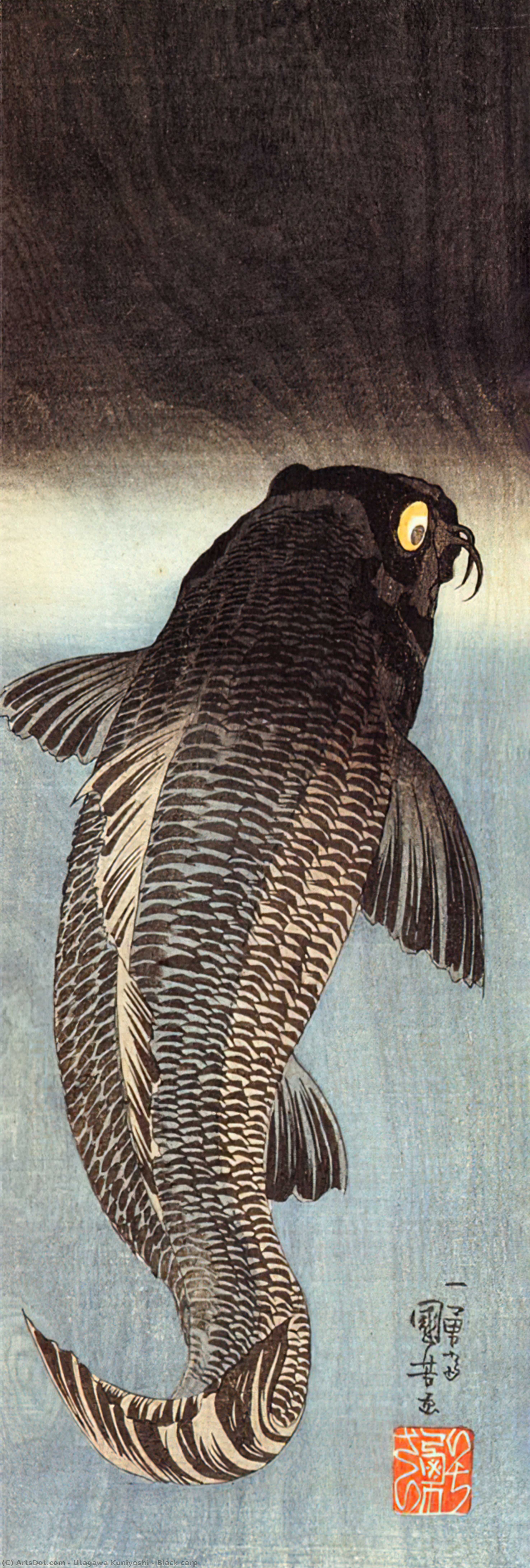
“Black carp” by Utagawa Kuniyoshi captures the dramatic essence of Edo-period Japan with its striking depiction of a black fish illuminated by yellow eyes, symbolizing resilience amidst darkness. Explore this iconic animal painting at WikiArt.
Discover Utagawa Kuniyoshi (1797-1861), a master of Japanese ukiyo-e woodblock prints. Renowned for vibrant warrior scenes, fantastical landscapes & blending traditional with Western styles. Explore his iconic Suikoden series and more!
A Vision of Darkness and Resilience: Exploring Utagawa Kuniyoshi’s “Black Carp”
The painting "Black Carp," attributed to Utagawa Kuniyoshi, embodies the spirit of late Edo *ukiyo-e*, a genre renowned for its dramatic depictions of Japanese life and mythology. Created in 1853, during a period marked by political instability and societal anxieties – specifically following the Meiji Restoration’s dismantling of feudal authority – this artwork transcends mere visual representation; it speaks to themes of perseverance amidst adversity and embodies profound symbolic resonance. Kuniyoshi's masterful command of color and composition elevates “Black Carp” beyond a simple depiction of fish into an emblem of fortitude and spiritual significance.
Style and Technique: The Power of Color Palette
Kuniyoshi’s signature style is characterized by its dynamism and expressive brushwork, hallmarks of the Utagawa school. He employed *sumi-e* techniques – monochrome ink painting – blended seamlessly with vibrant pigments to achieve a striking visual effect. Notice how Kuniyoshi utilizes deep blacks and shades of indigo to establish an oppressive atmosphere—a deliberate choice reflecting the turbulent political climate of his time. Yet, amidst this darkness, flashes of yellow illuminate the carp’s eyes, symbolizing enlightenment and unwavering determination. The artist meticulously layered washes of color onto textured paper, creating a palpable sense of movement and capturing the essence of the subject matter with remarkable precision.
Historical Context: Reflections of Societal Change
“Black Carp” emerged during a pivotal moment in Japanese history—the transition from feudal rule to constitutional monarchy. The Meiji Restoration ushered in rapid modernization and Western influence, challenging traditional values and beliefs. Kuniyoshi’s artistic output mirrored this transformative process, grappling with anxieties about the future while simultaneously honoring Japan's rich cultural heritage. The carp itself holds significance within Buddhist iconography, representing compassion and overcoming obstacles—qualities deemed crucial for navigating the complexities of a new era. Its solitary presence underscores the importance of inner strength in confronting external pressures.
Symbolism: Resilience Against Turbulent Times
Beyond its immediate visual appeal, “Black Carp” is laden with symbolic meaning. The carp’s coloration – predominantly black and yellow – represents darkness and illumination respectively—a powerful juxtaposition mirroring the struggle between tradition and progress. Its unwavering gaze symbolizes steadfastness and resilience—attributes admired in Japanese culture as essential for enduring hardship. Furthermore, the fish's association with longevity reflects a desire to safeguard Japan’s cultural identity amidst Western encroachment. Kuniyoshi skillfully communicates these ideas through subtle visual cues, inviting viewers to contemplate deeper philosophical questions about overcoming challenges and preserving values.
Emotional Impact: A Meditation on Strength and Hope
Ultimately, “Black Carp” evokes an emotional response rooted in contemplation and admiration for artistic brilliance. The painting’s somber palette compels reflection on the anxieties of its era, while simultaneously inspiring a sense of optimism through the carp's luminous eyes—a beacon of perseverance amidst uncertainty. Kuniyoshi’s masterful technique captures not merely the appearance of the fish but also its spirit—a testament to the enduring power of art to convey profound ideas and emotions. It serves as an unforgettable reminder that even in times of darkness, hope—represented by the carp's radiant gaze—can prevail.