The painting
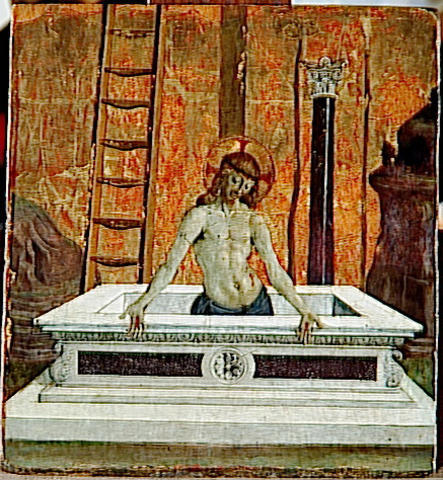
Dead Christ at the Tomb is a remarkable work of art created by the renowned Italian artist
Vannucci Pietro (Le Perugin) in 1473. This early Renaissance masterpiece is a testament to the artist's skill and attention to detail, showcasing his ability to convey emotion and depth through his use of color and composition.
Artistic Style and Influences
Vannucci Pietro (Le Perugin)'s style is characterized by his use of realistic and naturalistic representations, which was influenced by his time spent studying the works of
Piero della Francesca and Verrocchio. The
Dead Christ at the Tomb painting features a somber and contemplative atmosphere, with a focus on the central figure of Jesus Christ lying on a tomb. The use of light and shadow creates a sense of depth and three-dimensionality, drawing the viewer's eye to the subject.
Notable Works and Collections
Vannucci Pietro (Le Perugin) was a prolific artist, and his works can be found in various museums and collections around the world. Some of his notable works include
Portrait of a Young Man, which is housed at the
Galleria degli Uffizi in Florence, Italy, and
Christ Handing the Keys to St. Peter (detail 2), which is located in the
Sistine Chapel at the Vatican City. You can find more information about these paintings on
ArtsDot.com.
ArtsDot.com offers handmade oil painting reproductions of
Vannucci Pietro (Le Perugin)'s works, including the
Dead Christ at the Tomb. You can learn more about the artist and his works on
ArtsDot.com or on
Wikipedia.
The
Dead Christ at the Tomb is a significant work in the history of art, and its beauty and emotional depth continue to inspire and captivate audiences today.