A Vision of Classical Majesty
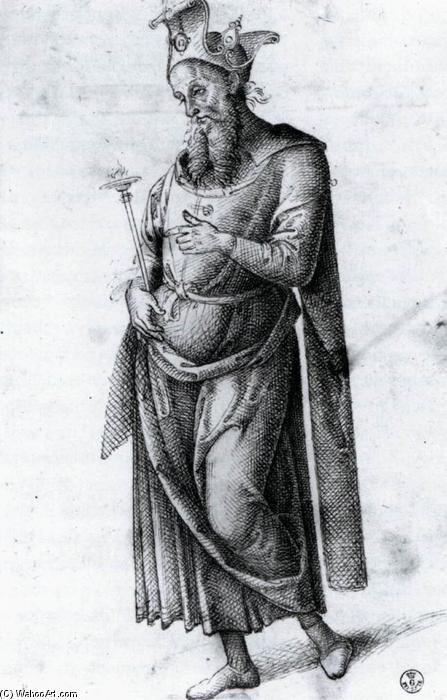
In the quiet, commanding presence of Pericles, we encounter a window into the soul of the Renaissance. Created in 1497 by the master Vannucci Pietro, also known as Le Perugino, this striking black and white engraving transcends its monochromatic palette to deliver a profound sense of regal authority. The subject stands as a monumental figure of power, captured in a moment of poised stillness that commands the viewer's undivided attention. Through the meticulous application of line and shadow, the artist breathes life into a classical archetype, presenting a figure that feels both historically grounded and mythically eternal. For the discerning collector or interior designer, this piece offers more than mere decoration; it provides a focal point of intellectual depth and historical gravity.
The technical mastery displayed in this work is nothing short of extraordinary. Utilizing the intricate medium of engraving, Le Perugino employs a sophisticated language of hatching and cross-hatching to sculpt form from the void. Every fold of the flowing robes, every delicate strand of the subject's long beard, and the shimmering texture of the elaborate crown are rendered with surgical precision. The interplay of light and shadow—a technique known as chiaroscuro—creates a dramatic three-dimensional illusion, pulling the figure forward from the dark, indistinct background. This deliberate use of contrast ensures that the geometric elegance of the composition, from the circular orb to the linear strength of the staff, remains strikingly legible, making it an ideal centerpiece for spaces that value classical sophistication.
Symbolism and the Weight of Authority
Beyond its aesthetic brilliance, Pericles is a rich tapestry of symbolic meaning. The regalia held by the figure—the radiant orb atop a staff and the ornate crown—serves as a universal shorthand for sovereignty and divine right. These elements connect the viewer to the long tradition of Renaissance humanism, where the study of classical antiquity was used to reflect upon contemporary leadership and moral virtue. The composition is anchored by these symbols of power, which act as anchors for the eye, guiding the observer through a narrative of stability and command. To possess a reproduction of such a work is to invite an atmosphere of wisdom and permanence into one's environment.
For those seeking to curate an atmosphere of prestige, this artwork serves as a bridge between the ancient world and the modern era. The emotional impact of the piece lies in its ability to evoke awe through its sheer detail and the dignified temperament of its subject. Whether placed in a grand library, a formal study, or a contemporary gallery setting, the engraving acts as a silent interlocutor, sparking conversation about history, art, and the enduring nature of greatness. It is a timeless investment for any connoisseur of fine art who appreciates the meticulous craftsmanship of the Italian masters.