A Glimpse into the Soul of the Artist
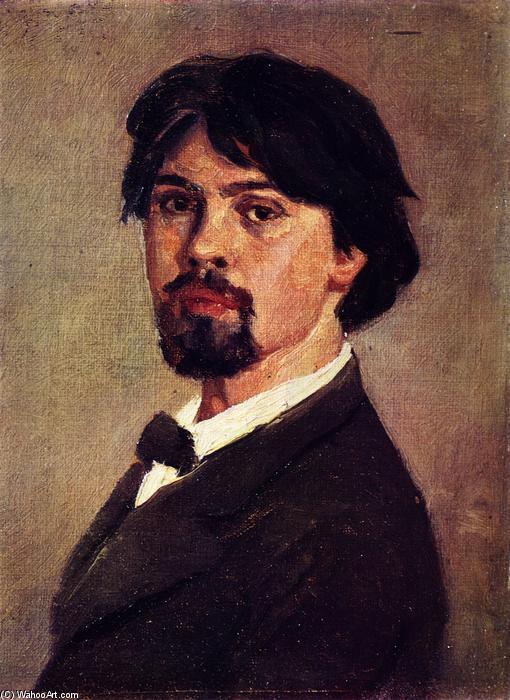
Vasily Ivanovich Surikov’s Self-Portrait from 1879 offers more than just a likeness; it is an intimate confrontation between the artist and the viewer, filtered through the rich lens of late 19th-century Russian portraiture. To gaze into these painted eyes is to encounter not merely a man in fine attire—the dark suit, the crisp bowtie, the distinguished beard—but a mind at work, poised between public presentation and private introspection. Surikov, a titan of Russian Realism, possessed an uncanny ability to capture the psychological undercurrents beneath the polished surface of society. This portrait is a masterclass in controlled formality, suggesting a moment captured just before or after a significant social engagement.
Mastery of Formality and Presence
The technical execution speaks volumes about Surikov’s skill. The rendering of the fabric, the subtle sheen on the lapels, and the precise knot of the bowtie demonstrate an acute understanding of texture and light. Yet, it is the sitter's gaze that anchors the piece. He looks directly out, engaging us in a silent dialogue. This direct address transforms the painting from a mere record into an active participant in our viewing experience. The inclusion of the chair in the background grounds the figure within a tangible, albeit somewhat undefined, domestic or studio setting, lending an air of established permanence to the moment.
The Context of Russian Realism
To appreciate this work is to understand its historical cradle: the zenith of Russian Realism. While Surikov is perhaps more famous for his sweeping historical epics detailing Russia's grand narratives, even in a seemingly personal study like this self-portrait, one senses that commitment to truth. His background, steeped in the realities of Siberian life and folklore, informs every gesture here—a dedication to portraying humanity with unflinching honesty, whether depicting peasant struggle or the measured composure of an urban gentleman.
Symbolism of Self-Presentation
The very act of painting a self-portrait during this era was often a negotiation between public persona and private identity. The formal suit and bowtie symbolize adherence to societal expectations—the respectable, successful man of his time. However, the intensity in his expression hints at the complexity beneath that veneer. It invites us, the modern viewer, to consider our own carefully constructed facades. This painting whispers secrets about ambition, self-awareness, and the enduring weight of expectation.
Bringing the Masterpiece Home
For collectors or those seeking art that speaks with intellectual depth, this reproduction offers an unparalleled opportunity to connect with a pivotal moment in Russian artistic history. It is a piece designed not just for admiration, but for contemplation. Imagine it gracing a study or drawing-room; its sophisticated narrative quality elevates any space, suggesting the cultured taste of someone who appreciates both technical brilliance and profound human psychology.