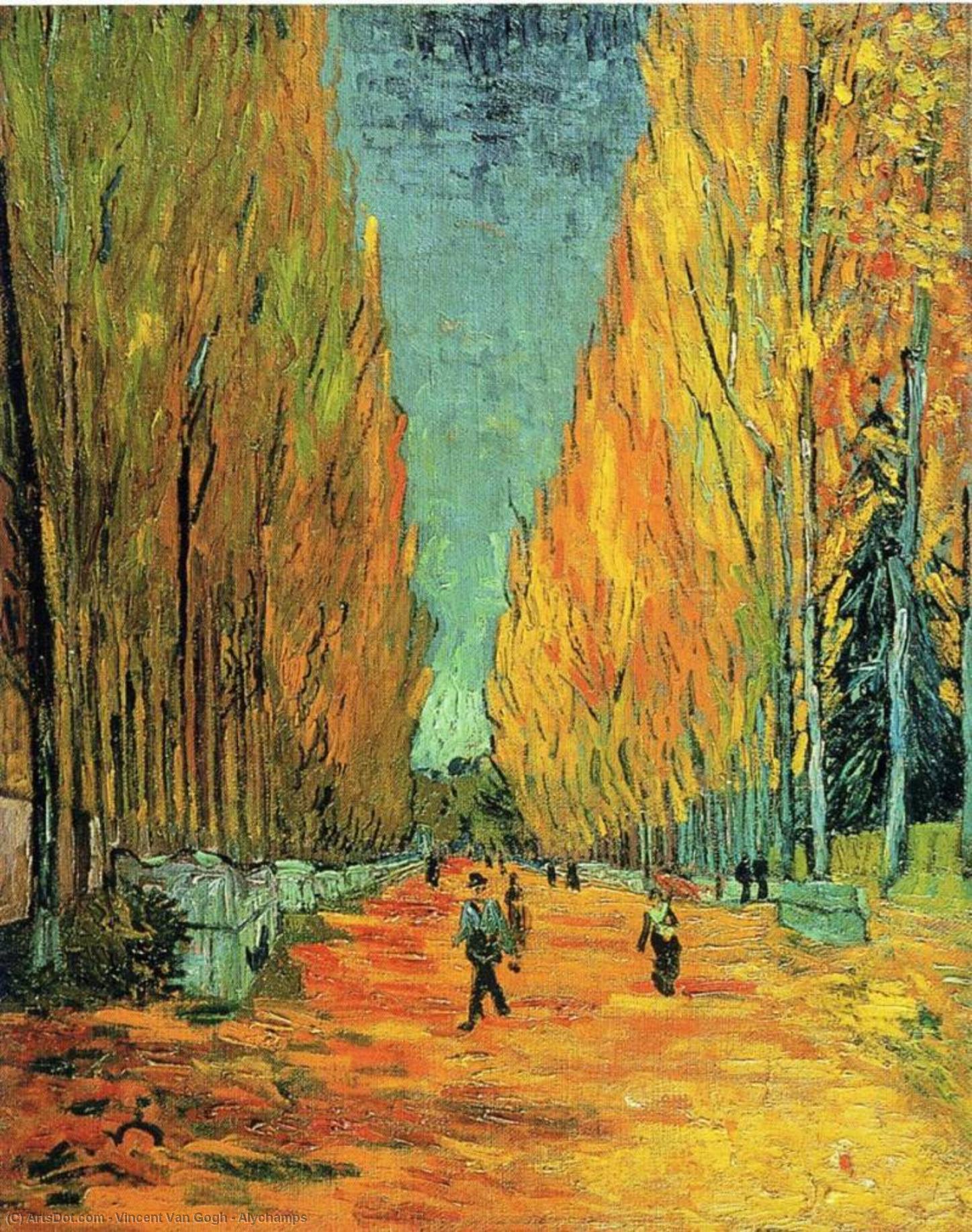
Alychamps: A Glimpse into Van Gogh's Autumnal Vision
Vincent van Gogh’s "Alychamps," painted in 1888, is more than just a depiction of a street scene; it's an immersive experience capturing the essence of autumn and the artist's unique perspective. Measuring 92 x 73 cm and rendered in oil on canvas, this artwork currently resides within the esteemed Joslyn Art Museum in Omaha, United States, serving as a cultural gem for art enthusiasts.
Composition and Artistic Style
The painting portrays a tranquil street lined with towering trees, creating a palpable sense of depth. Nine figures stroll along the road, each engaged in their own activity—some carrying bags or belongings—contributing to the scene's dynamic equilibrium. Van Gogh’s signature Post-Impressionist style is immediately recognizable through his bold brushstrokes and vibrant color palette. The trees, with their expressive trunks and branches, dominate the composition, acting as a natural frame for the street. His masterful use of light and shadow on the leaves and ground generates a feeling of movement and vitality. The perspective exhibits a slight distortion, lending the painting a dreamlike quality that is characteristic of Van Gogh's work.
Historical Context and Symbolism
Painted during Van Gogh’s time in Arles, France, "Alychamps" reflects his fascination with capturing everyday life and natural beauty. The Alyscamps itself was an ancient Roman necropolis, a place of remembrance and reflection. Van Gogh's choice to depict this location suggests a contemplation on mortality and the passage of time, themes often explored in his art. The vibrant autumnal colors—shades of yellow, orange, and red—symbolize transition, change, and the beauty inherent in decay. These hues evoke feelings of warmth, nostalgia, and perhaps even melancholy, reflecting the emotional intensity that defines Van Gogh's artistic expression.
Technique and Emotional Impact
The painting’s texture is pronounced due to the thick application of oil paint—a technique known as impasto. This creates a three-dimensional effect, enhancing the visual impact and conveying a sense of raw emotion. The swirling brushstrokes not only define shapes but also contribute to the overall feeling of movement and energy. "Alychamps" isn't merely an observation; it’s a visceral experience—a window into Van Gogh’s emotional state as he observed the world around him. It invites viewers to connect with his feelings of awe, wonder, and perhaps even solitude.
Related Works and Legacy
- The Potato Eaters (1885): Demonstrates Van Gogh's early focus on depicting the hardships of peasant life.
- Les Alychamps: Another painting by Van Gogh capturing the same location, showcasing his continued interest in the subject.
- Large Plane Trees: A similar exploration of natural beauty and expressive brushwork.
“Alychamps” stands as a testament to Vincent van Gogh’s enduring legacy—a powerful expression of emotion and observation that continues to resonate with audiences worldwide.