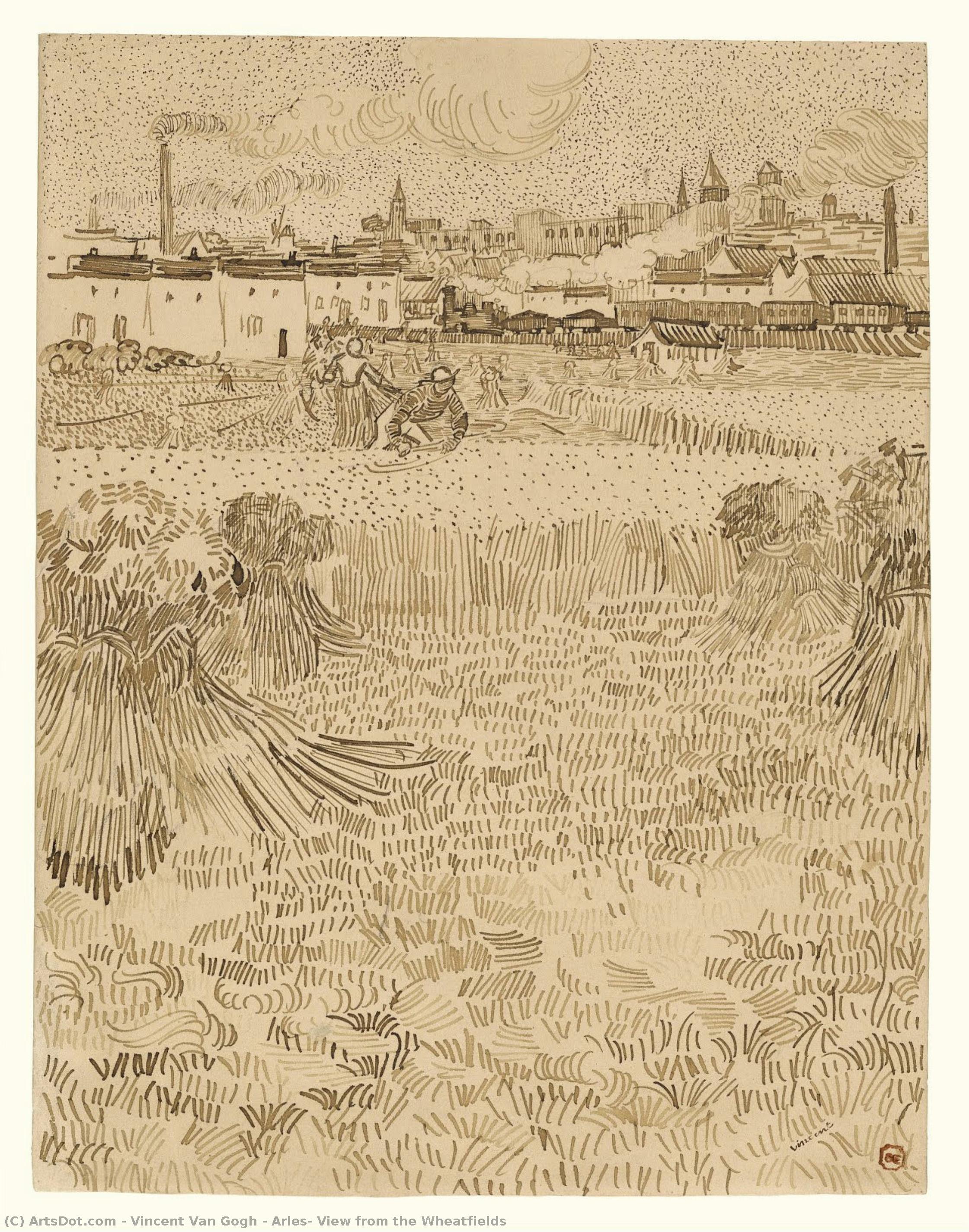
A Window Into Rural Provence: Exploring Van Gogh’s ‘Arles: View from the Wheatfields’
Vincent van Gogh's “Arles: View from the Wheatfields,” painted in 1888, transcends mere depiction; it’s a visceral embodiment of Impressionism infused with the artist’s intensely personal vision. Created during his prolific period in Arles, France – a town that captivated him and served as inspiration for numerous canvases – this drawing offers more than just a picturesque landscape; it speaks volumes about Van Gogh's preoccupation with capturing the essence of rural life and confronting the anxieties of modernity.
- Subject Matter: The composition centers around a freshly harvested wheat field, bathed in golden hues, dominating the upper half of the canvas. Below lies Arles itself – a cluster of buildings punctuated by churches – representing a juxtaposition between tradition and burgeoning industrialization.
- Style & Technique: Characteristic of Van Gogh’s expressive style, “Arles” employs thick impasto brushstrokes—heavy layers of paint applied directly to the canvas—creating palpable texture and conveying an immediacy that distinguishes it from smoother Impressionistic renderings. The artist meticulously rendered the wheat stalks and bundles using varied shades of golden brown ink, prioritizing tonal variation over precise detail.
- Historical Context: Painted during a pivotal moment in art history, “Arles” reflects the broader artistic currents of the Belle Époque. While Impressionists like Monet focused on capturing fleeting moments of light and color, Van Gogh sought to convey emotion and psychological depth—a departure from prevailing aesthetic conventions. The inclusion of a railroad train and factories underscores the encroaching influence of industrial progress on rural communities, mirroring anxieties about societal transformation prevalent at the time.
- Symbolism: Beyond its visual beauty, “Arles” carries symbolic weight. The wheat field symbolizes fertility and abundance, yet it’s simultaneously rendered with a sense of melancholy—perhaps reflecting Van Gogh's own struggles for acceptance and artistic fulfillment. The figures of the farmer and his wife embody labor and resilience, representing humanity's connection to the land amidst the rapid pace of change.
- Emotional Impact: Viewing “Arles” evokes a profound feeling of tranquility mingled with unease. Van Gogh’s masterful use of color and texture captures not only the visual splendor of Provence but also the artist’s inner turmoil—a testament to his ability to transform personal experience into universal artistic expression. It's a piece that invites contemplation on themes of beauty, hardship, and the enduring spirit of human endeavor.
Why Choose a Reproduction? ArtsDot.com offers exceptionally detailed reproductions of “Arles: View from the Wheatfields,” meticulously crafted to preserve the original artwork’s vibrancy and textural nuances. This allows collectors and interior designers alike to experience Van Gogh's genius firsthand, bringing his evocative vision into any space. Explore our curated collection today!