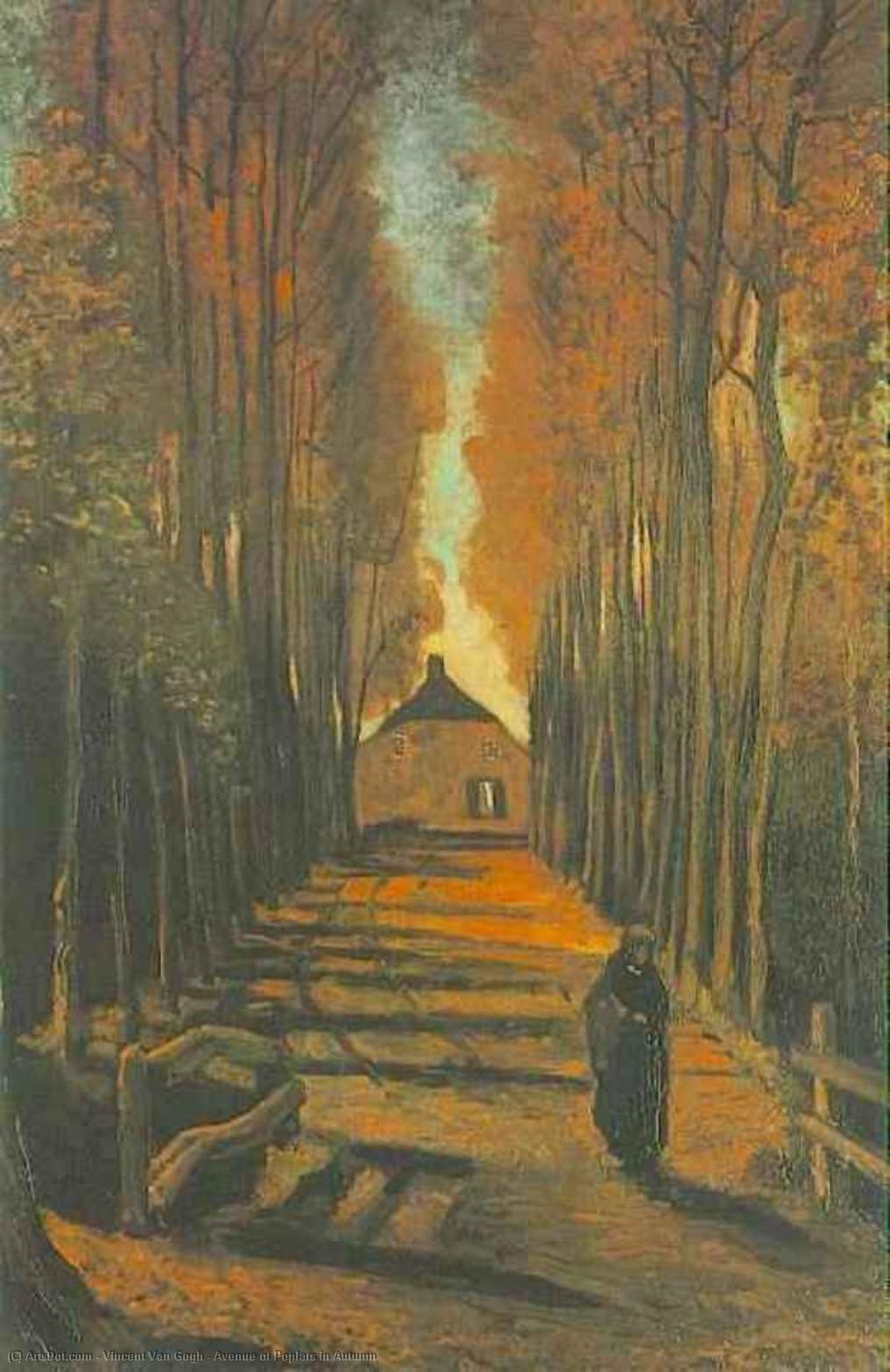
Vincent Van Gogh’s ‘Avenue of Poplars in Autumn,’ completed in 1884, exemplifies his distinctive Impressionistic style. Featuring a poplar avenue bathed in autumnal hues – yellows, oranges, and blues – the painting embodies movement and emotion through expressive brushstrokes. Explore this iconic piece at ArtsDot.com/ADC/Art.nsf/O/5ZKG8X.
Introduction
Vincent Van Gogh, a Dutch painter born on March 30, 1853, is considered one of the most influential artists in Western art history. His unique style and use of color have inspired generations of painters. One of his famous works is 'Avenue of Poplars in Autumn,' which showcases his mastery of capturing the beauty of nature.
The Painting
'Avenue of Poplars in Autumn' (
Vincent Van Gogh: Avenue of Poplars in Autumn, 1884, Oil on Canvas, 73 x 59 cm) is a stunning example of Van Gogh's ability to capture the essence of nature. The painting features an avenue of poplar trees with their leaves turning yellow and orange, indicating the arrival of autumn. Van Gogh used bold brushstrokes and vibrant colors to create a sense of movement and energy in the painting. He captured the changing seasons by using warm yellows, oranges, and greens, which contrast beautifully with the deep blues and purples of the sky. The result is a breathtaking work of art that captures the beauty and transience of nature.
Van Gogh's Style
Van Gogh was known for his unique style, which combined elements of Impressionism and Post-Impressionism. He used bold colors and expressive brushstrokes to create a sense of movement and energy in his paintings. His use of color and light was innovative and helped to define the Post-Impressionist movement.
The Significance of 'Avenue of Poplars in Autumn'
'Avenue of Poplars in Autumn' is significant because it showcases Van Gogh's mastery of capturing the beauty and transience of nature. The painting also demonstrates his innovative use of color and light, which helped to define the Post-Impressionist movement.
Conclusion
'Avenue of Poplars in Autumn' is a stunning example of Vincent Van Gogh's unique style and mastery of capturing the beauty of nature. The painting showcases his innovative use of color and light, which helped to define the Post-Impressionist movement. If you are interested in owning a handmade oil painting reproduction of this masterpiece, visit our website at
/en/art/show/art-5zkg8x-en/.
References