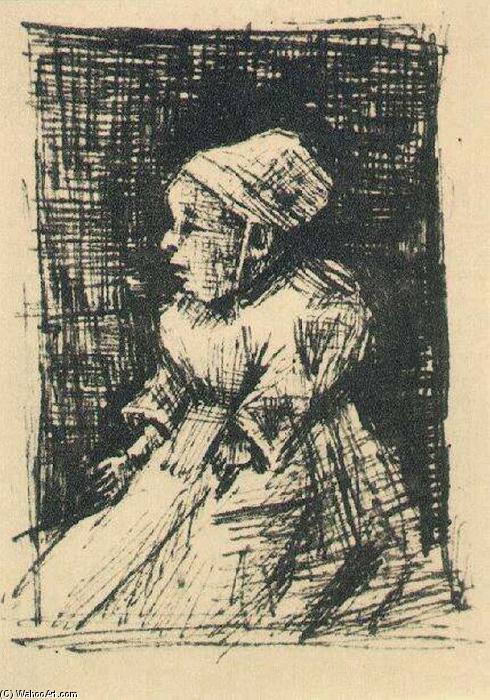
A Portrait of Innocence: Vincent van Gogh’s “Baby”
Vincent Willem van Gogh’s “Baby,” painted in 1883, is more than just a depiction of a child; it's a distillation of emotion and an exploration of vulnerability rendered with the distinctive brilliance that characterizes his oeuvre. Created during his formative years in Paris – a period marked by experimentation with Impressionistic influences – the painting transcends mere observation, delving into the psychological landscape of its subject.
- Subject Matter: The artwork portrays a young child adorned in a bonnet, seated calmly yet subtly tilted towards the viewer. This posture immediately invites contemplation and encourages an empathetic connection with the depicted figure.
- Style & Technique: “Baby” exemplifies Van Gogh’s evolving artistic style, moving away from purely representational concerns toward conveying inner feeling. Employing a meticulous technique of hatching – delicate lines meticulously layered to create tonal variations – he achieves remarkable depth and texture without resorting to color palettes typical of Impressionism. The resulting monochrome image possesses an arresting stillness that amplifies its expressive power.
- Historical Context: Painted amidst the burgeoning Symbolist movement, “Baby” reflects a broader artistic preoccupation with conveying spiritual truths through evocative imagery. Symbolists rejected naturalistic representation in favor of exploring archetypal themes and emotions, aiming to tap into universal human experience. Van Gogh’s engagement with Symbolism is evident in his deliberate choice of monochrome – a stylistic convention favored by artists seeking to bypass the superficial beauty of the visible world.
- Symbolism & Emotion: The bonnet itself carries symbolic weight, representing protection and nurturing—themes central to maternal care. More profoundly, however, “Baby” embodies Van Gogh’s profound sensitivity to human emotion. The child's gaze – averted slightly from the viewer – speaks volumes about introspection and perhaps a quiet apprehension. The artist skillfully captures this elusive quality of consciousness, conveying a sense of melancholy mingled with tenderness.
The painting’s enduring appeal lies in its ability to resonate across generations. It serves as a poignant reminder of childhood innocence and the complexities of human emotion—qualities that continue to inspire artists and captivate audiences alike. A high-quality reproduction allows viewers to appreciate Van Gogh's masterful technique and immerse themselves in the emotional depth of this unforgettable portrait.
Exploring Hatching Technique
Van Gogh’s mastery of hatching is arguably his most distinctive contribution to art history. Unlike Impressionistic brushstrokes that capture fleeting impressions of light, hatching utilizes parallel lines to build up tonal values—creating shadows and highlights with remarkable precision. This method demanded considerable patience and control from the artist, reflecting a commitment to meticulous observation and expressive rendering.
- Detailed Application: The hatching technique involves applying numerous closely spaced lines in opposing directions – typically horizontal and vertical – to achieve subtle gradations of tone. Each line contributes to the overall effect, layering textures and creating an illusion of depth that surpasses mere visual representation.
- Influence & Legacy: Hatching’s influence extends far beyond Van Gogh's own work, shaping the stylistic sensibilities of subsequent generations of artists—particularly those associated with Expressionism. Artists like Edvard Munch embraced hatching as a means of conveying psychological intensity and capturing the essence of human experience.
A Window into Parisian Symbolism
“Baby”’s creation coincided with Van Gogh's immersion in the Parisian Symbolist circle—a group of artists united by their rejection of naturalistic representation and their pursuit of spiritual insight. Figures like Gustave Moreau and Alexandre Cabanel championed Symbolism, prioritizing emotive expression over literal accuracy.
- Shared Aesthetic Values: The Symbolists sought to evoke moods and emotions through suggestive imagery—drawing inspiration from mythology, folklore, and dreamlike visions. They believed that art could transcend the limitations of sensory experience, accessing realms beyond the visible world.
- Departure From Impressionism: Unlike Impressionists who aimed to capture the ephemeral beauty of light and color, Symbolists prioritized conveying inner psychological states—often confronting themes of mortality, suffering, and transcendence.
Emotional Resonance & Artistic Impact
“Baby”’s enduring power stems from its ability to evoke profound emotional responses in viewers. The painting's quiet stillness—coupled with the child’s averted gaze—creates an atmosphere of contemplative melancholy—a characteristic mood that resonates deeply within Van Gogh’s oeuvre.
- Psychological Depth: Van Gogh skillfully captures this elusive quality of consciousness—suggesting a subtle apprehension beneath the surface calm. The artist's intention was not merely to depict a child; it was to convey an emotional truth—a testament to human vulnerability and the enduring fascination with inner experience.
- Influence on Expressionism: “Baby” served as a pivotal catalyst for the development of Expressionism—an artistic movement that championed subjective emotion and distorted form to communicate psychological intensity. Artists like Ernst Ludwig Kirchner and Emil Nolde adopted hatching techniques—drawing inspiration from Van Gogh’s pioneering approach.