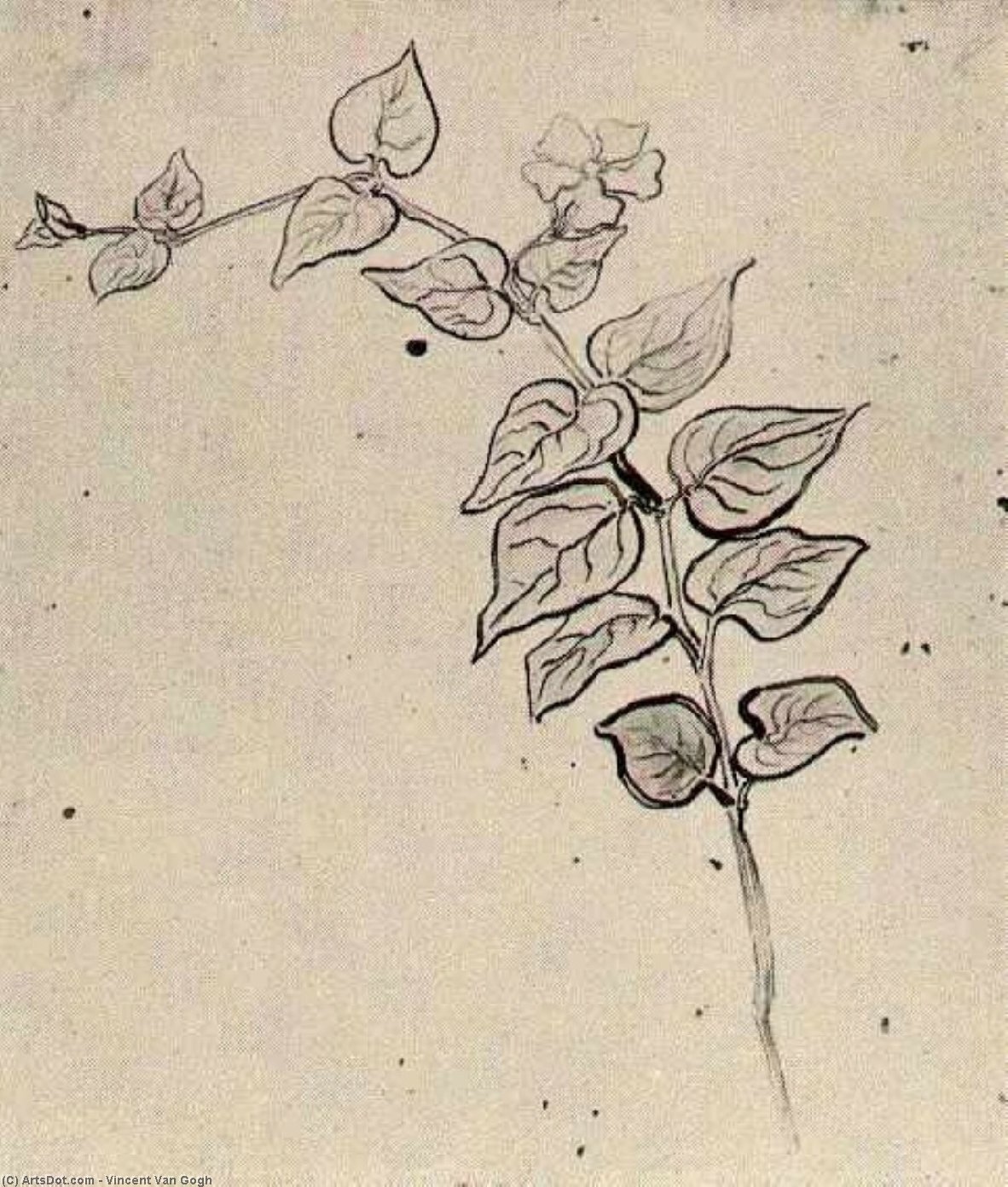
“Branch with Leaves” embodies Vincent van Gogh’s signature Post-Impressionistic style – bold lines and expressive color—capturing the serene beauty of nature's delicate balance. Explore this iconic sketch at WikiArt.
Vincent van Gogh (1853-1890): Explore the life & art of the Dutch Post-Impressionist master behind 'Starry Night' and 'Sunflowers'. Discover his bold style & lasting impact on modern art.
A Study in Tranquility: Exploring Vincent van Gogh’s Branch with Leaves
Vincent van Gogh's *Branch with Leaves*, painted in 1890 during his prolific period in Arles, France, stands as a deceptively simple yet profoundly resonant testament to the artist’s unwavering fascination with the natural world. Created in Post-Impressionism style—a movement characterized by its bold brushstrokes and expressive use of color—the sketch captures a single branch adorned with delicate green leaves against a muted beige background. It's not merely an observation of botany; it’s an embodiment of van Gogh’s deeply felt connection to the rhythms of rural life, a refuge from the anxieties that plagued his inner turmoil.
Technique and Material Considerations
The artwork is executed primarily with pencil on paper—a technique favored by Van Gogh for its immediacy and ability to capture fleeting impressions. His meticulous attention to detail is evident in the careful rendering of leaf veins and the subtle gradations of tone achieved through layering graphite strokes. Unlike Impressionists who sought to depict light as it appeared at a particular moment, Van Gogh prioritized conveying emotion rather than optical accuracy. The loose, textured surface reflects his desire to imbue the image with palpable energy—a feeling of stillness punctuated by bursts of vibrant green.
Historical Context: Arles and the Pursuit of Artistic Harmony
Painted during van Gogh’s ambitious attempt to establish an artist's colony in Arles—a town brimming with artistic fervor and populated by fellow Impressionists like Paul Cézanne—the sketch represents a pivotal moment in his creative evolution. Seeking inspiration from Cézanne’s geometric explorations of form, Van Gogh wrestled with reconciling the intellectual rigor of modern art with his own instinctive impulse toward emotional expression. The choice of subject matter—a commonplace branch—was deliberate; it served as a vehicle for conveying universal themes of beauty and resilience—themes that resonated deeply within van Gogh's personal struggles.
Symbolism: Representing Growth, Renewal, and Inner Peace
Beyond its aesthetic qualities, *Branch with Leaves* carries symbolic weight. The branch itself symbolizes growth, renewal, and the enduring power of nature to heal and inspire. The vibrant green leaves represent vitality, freshness, and optimism—qualities that Van Gogh desperately sought during his convalescence following a mental breakdown. The muted beige background serves as a counterpoint to the verdant foliage, emphasizing its luminosity and highlighting its significance within the composition. It speaks to an inner peace achieved through contemplation of simple beauty.
Emotional Impact: A Window into Van Gogh’s Soul
Ultimately, *Branch with Leaves* offers viewers a glimpse into the artist's soul—a poignant reminder that even amidst profound suffering, van Gogh retained an unwavering belief in the transformative potential of art and nature. The sketch’s understated elegance belies its emotional depth, inviting contemplation on themes of solitude, perseverance, and the enduring allure of the natural world. It remains a powerful emblem of Van Gogh's artistic vision—a testament to his ability to distill complex emotions into deceptively simple forms.