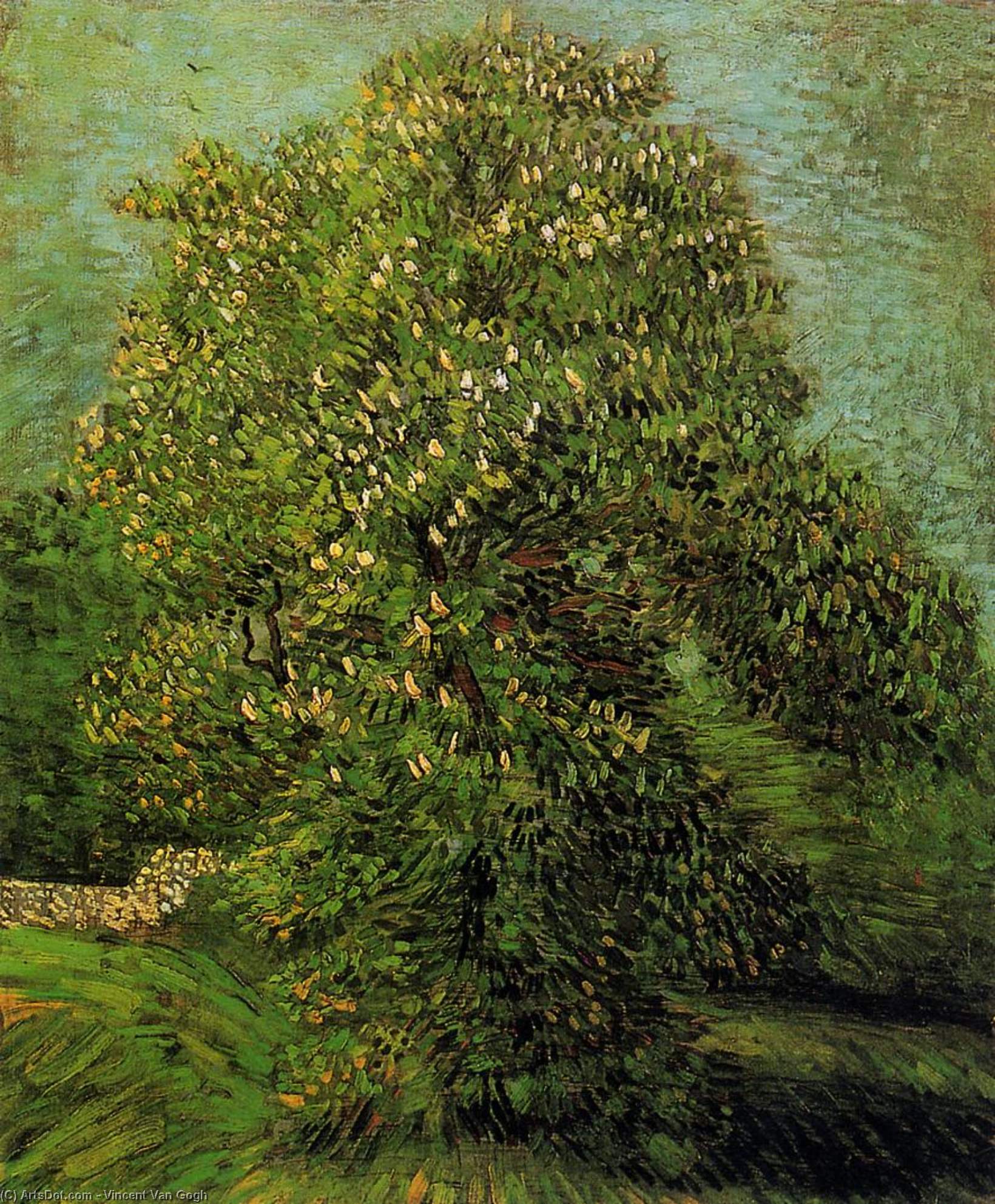
Admire Vincent van Gogh’s ‘Chestnut Tree in Blossom,’ a stunning Neo-Impressionist landscape masterpiece housed at the Van Gogh Museum, Amsterdam. Explore its vibrant colors and intricate brushstrokes – a timeless symbol of nature's beauty.
A Vision of Springtime Tranquility – Vincent van Gogh’s Chestnut Tree in Bloom
Vincent Willem van Gogh's “Chestnut Tree in Bloom,” completed in 1887 during his prolific period at Auvers-sur-Oise, transcends mere depiction; it embodies a profound connection to the natural world and a masterful distillation of Post-Impressionist artistic principles. This oil on canvas painting isn’t simply observed—it's felt—a testament to Van Gogh’s unparalleled ability to translate inner emotion into visual form.
- Subject Matter: The artwork centers around a solitary chestnut tree bursting forth with blossoms, capturing the essence of springtime renewal. Its branches reach upwards against a hazy sky, symbolizing aspiration and resilience.
- Style & Technique: Executed in Neo-Impressionism—a stylistic departure from Impressionism—the painting utilizes Pointillist techniques. Tiny dots of pigment meticulously layered onto the canvas create an illusion of shimmering color and texture, maximizing luminosity and capturing the vibrancy of the blossoms.
The artist’s deliberate brushstrokes are infused with palpable energy, conveying a sense of movement and immediacy. Unlike Impressionists who sought to capture fleeting moments of light, Van Gogh aimed to express his subjective experience—the emotional resonance he felt when confronted with the beauty of nature. This approach is evident in the expressive handling of color; shades of green dominate, punctuated by splashes of yellow and pink, mirroring the blossoming tree’s radiant hues.
Historical Context: Auvers-sur-Oise – A Turning Point
Painted during Van Gogh's final year of life—a period marked by increasing mental instability and artistic fervor—“Chestnut Tree in Bloom” reflects his preoccupation with themes of mortality and spiritual contemplation. Situated within the broader context of Impressionism’s waning influence, Van Gogh boldly asserted a new aesthetic direction, prioritizing emotional intensity over photographic accuracy.
- Symbolism: The chestnut tree itself carries symbolic weight—representing fertility, endurance, and transformation. Its blossoms symbolize hope and rebirth, mirroring Van Gogh's own yearning for solace amidst his personal struggles.
- Location: Currently residing in the esteemed Van Gogh Museum in Amsterdam, this artwork stands as a cornerstone of Post-Impressionist art history, attracting visitors from around the globe who seek to immerse themselves in the legacy of one of art’s most influential figures.
Emotional Impact & Artistic Legacy
"Chestnut Tree in Bloom" continues to captivate audiences with its breathtaking beauty and profound emotional depth. It exemplifies Van Gogh's unwavering commitment to conveying his inner world through visual language—a feat that cemented his place as a pioneer of expressive art.
At ArtsDot.com, we offer meticulously crafted oil painting reproductions of this iconic masterpiece, allowing you to experience the transformative power of Van Gogh’s vision in your own home. Bring the serenity and vibrancy of Auvers-sur-Oise into your living space—a timeless tribute to artistic genius.
- Related Works: Explore other captivating canvases by Vincent van Gogh, including “Portrait of Père Tanguy,” “Dying Slave and Figures at a Table,” and “Park View”—each offering unique insights into his distinctive style and emotional range.