Introduction
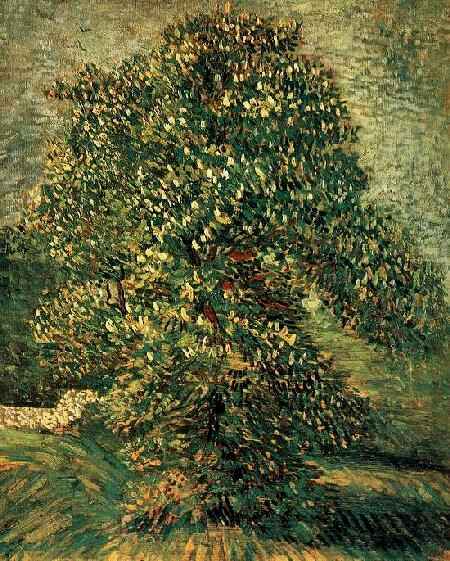
Vincent Van Gogh, a Dutch post-impressionist painter, is renowned for his vivid and emotional depictions of nature. Among his most famous works are the Chestnut Tree in Blossom series, which includes the painting
Chestnut Tree in Blossom 3. This article explores the significance and technique of this masterpiece, available as a hand-made oil painting reproduction on
ArtsDot.com.
Background
Van Gogh painted the Chestnut Tree in Blossom series during his stay at Saint-Rémy-de-Provence asylum in 1889. The trees were located outside the hospital grounds, and Van Gogh often depicted them in various stages of bloom. These paintings reflect his appreciation for the beauty of nature and his emotional state during this period.
Significance
Chestnut Tree in Blossom 3 is a testament to Van Gogh's mastery of color and brushwork. The painting features vibrant hues, with pink blossoms contrasting against the deep blue sky. The swirling brushstrokes create a sense of movement and energy, evoking the artist's emotional response to the scene.
Technique
Van Gogh used oil paint on canvas for this painting, applying thick layers of pigment with bold, sweeping strokes. His technique, known as impasto, created a textured surface that added depth and intensity to his work. The use of complementary colors further enhanced the visual impact of the piece.
Conclusion
Chestnut Tree in Blossom 3 is an exceptional example of Van Gogh's artistic talent and emotional expression. This painting, along with other works by the artist, can be found on
ArtsDot.com, where customers can purchase high-quality hand-made oil painting reproductions.
Note: The original Chestnut Tree in Blossom 3 is part of the collection at the
National Gallery - Alexandros Soutsos Museum in Athens, Greece.