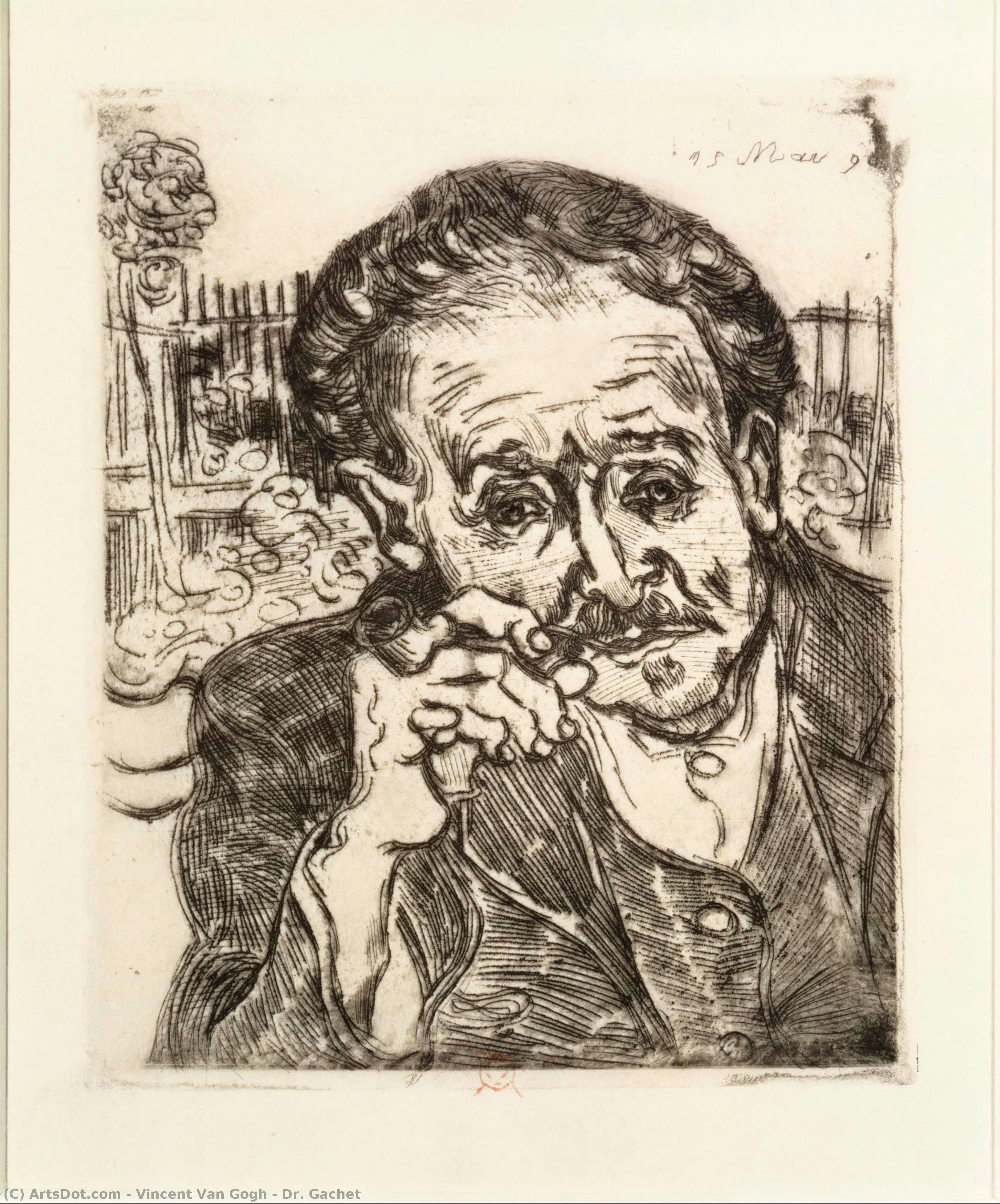
A Glimpse into the Soul: Interpreting Dr. Gachet
To stand before this evocative portrait, even in its monochrome rendering, is to confront a raw outpouring of human emotion. Depicting a man identified as Dr. Gachet, this drawing captures not merely a likeness, but a moment suspended in time—a breath caught between words. The subject, with his beard and spectacles, gazes out at the viewer with an intensity that feels both intimate and slightly fraught. His mouth is open, suggesting a narrative mid-sentence, perhaps a confession or a passionate declaration. This immediacy is what makes the piece so compelling; it pulls the observer into a private dialogue with the sitter.
The Hand of Van Gogh: Technique and Atmosphere
While the subject matter draws from a specific moment in Vincent Willem van Gogh’s life, the drawing itself showcases a mastery of line work that is characteristic of his intense observational period. The technique employed here—a detailed black and white drawing—forces the viewer to concentrate on contour, gesture, and shadow rather than the vibrant hues for which Van Gogh is most famous. This restraint in color paradoxically amplifies the emotional charge. Notice the delicate rendering of the cigarette held loosely; it is a small detail that anchors the figure while simultaneously suggesting contemplation or nervous energy. Behind him, the old-fashioned fence acts as more than mere background; it establishes a sense of place, grounding this intense psychological study within a tangible, if slightly melancholic, setting.
Historical Echoes and Emotional Resonance
Painted around 1890, this work exists at a pivotal juncture in Van Gogh’s tumultuous life. It is steeped in the atmosphere of artistic struggle and profound emotional depth that permeates his oeuvre. The portrait transcends simple biography; it becomes an emblem of misunderstood genius. For the collector or designer, owning a reproduction of this piece means acquiring more than just artwork—it is acquiring a palpable connection to the passionate spirit of Post-Impressionism. It speaks to the universal human condition: the need to be heard, the weight of unspoken thoughts, and the vulnerability inherent in self-expression.
Integrating Art into Living Spaces
For those seeking art that whispers rather than shouts, this drawing offers a sophisticated counterpoint to overly vibrant pieces. Its dramatic chiaroscuro effect, even reproduced, lends an air of intellectual gravitas to any room. Imagine it placed above a console table or nestled within a study; the stark contrast between the detailed figure and the simpler backdrop creates visual drama without overwhelming the space. It invites pause, contemplation, and deep conversation among those who appreciate art that rewards closer inspection.