Farmer with Straw Hat: An Exploration of Texture and Emotion in Van Gogh’s Provençal Landscape
Vincent van Gogh's “Farmer with Straw Hat,” painted in 1888 during his stay in Arles, France, stands as a testament to the artist’s unwavering dedication to capturing not just visual likeness but also palpable emotion. This unassuming depiction—a solitary farmer tending to his crops beneath a radiant Provençal sun—holds within it layers of artistic innovation and profound symbolic resonance that continue to captivate audiences today.
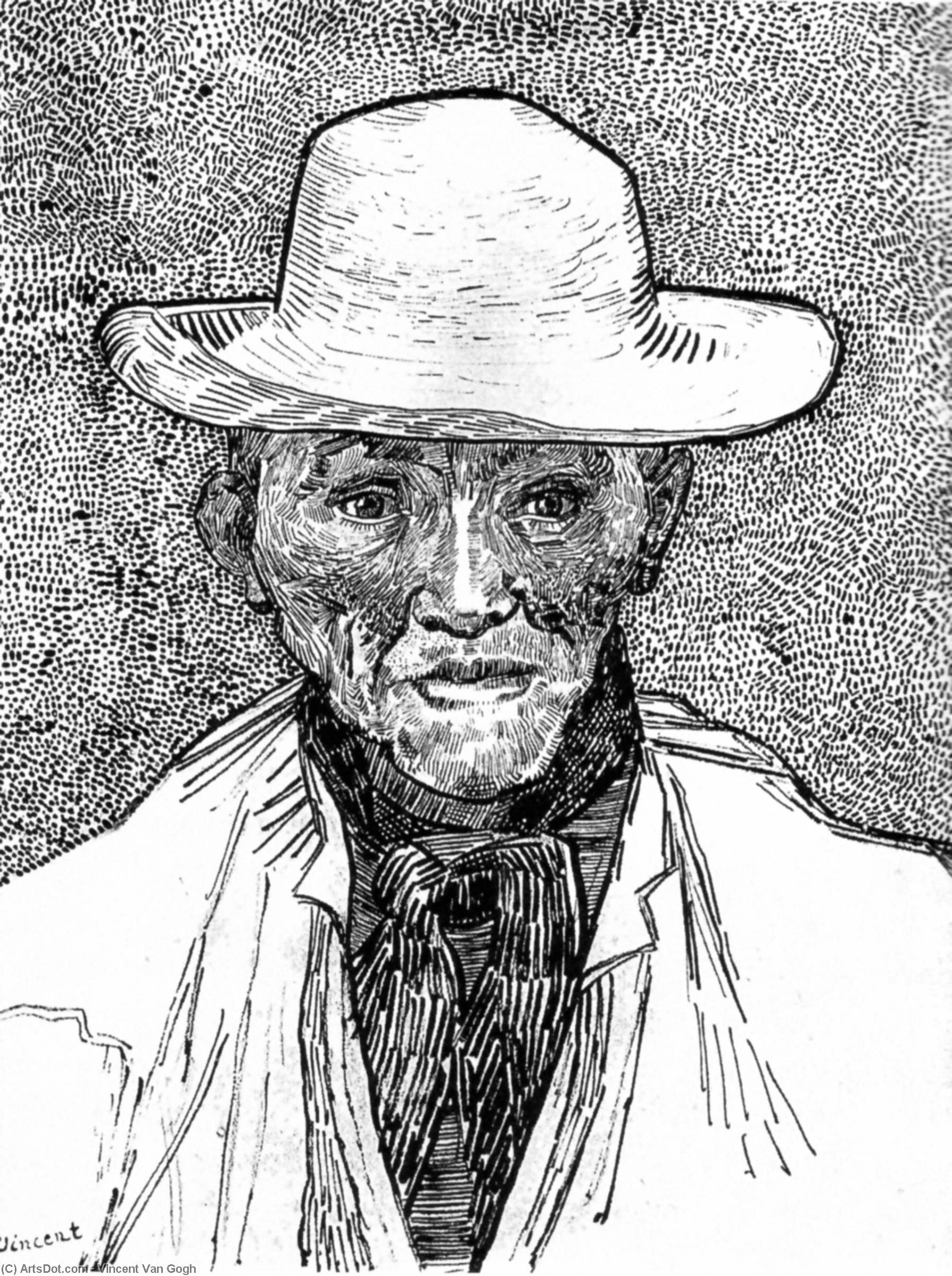
- Composition & Perspective: The tightly cropped portrait focuses intently on the farmer’s face and upper torso, establishing a direct gaze with the viewer. Van Gogh eschews traditional perspective, prioritizing instead an immediacy of presence—a deliberate rejection of academic conventions that favored illusionistic depth. This compositional choice underscores the artist's desire to convey psychological insight rather than merely reproducing a scene.
- Style & Technique: Characteristic of Van Gogh’s distinctive style, “Farmer with Straw Hat” exemplifies his expressive linework and masterful use of hatching and cross-hatching. These techniques aren’t employed for mere shading; they generate texture—the rough surface of the straw hat, the weathered skin of the farmer's face—creating a visceral experience for the viewer akin to touching the canvas.
- Color Palette & Lighting: The monochrome palette—primarily shades of gray—serves as an instrument of emotional restraint. However, Van Gogh skillfully manipulates tonal values to simulate sunlight filtering through foliage, casting subtle shadows that imbue the scene with warmth and depth. This careful consideration of lighting contributes significantly to the artwork’s mood.
- Symbolism & Emotional Impact: The farmer's downturned mouth hints at contemplation or perhaps weariness—a reflection of the hardships inherent in rural labor. More broadly, the straw hat symbolizes resilience, practicality, and connection to the land—themes central to Van Gogh’s artistic vision and his deeply felt empathy for the working class.
- Historical Context: Painted during a period of intense creative fervor, “Farmer with Straw Hat” reflects Van Gogh's fascination with Impressionism and Japonisme. The influence of Japanese prints is evident in the flattened perspective and simplified forms—a stylistic choice that aligns with the broader artistic currents of the era.
This remarkable drawing isn’t merely a depiction of a farmer; it's an embodiment of Van Gogh’s artistic philosophy – to translate feeling into form. Its enduring appeal lies in its ability to evoke contemplation and appreciation for the beauty found within everyday life, cementing its place as one of the artist’s most poignant and unforgettable achievements.