Vincent van Gogh was a Dutch painter who is considered one of the most influential figures in Western art history. His painting,
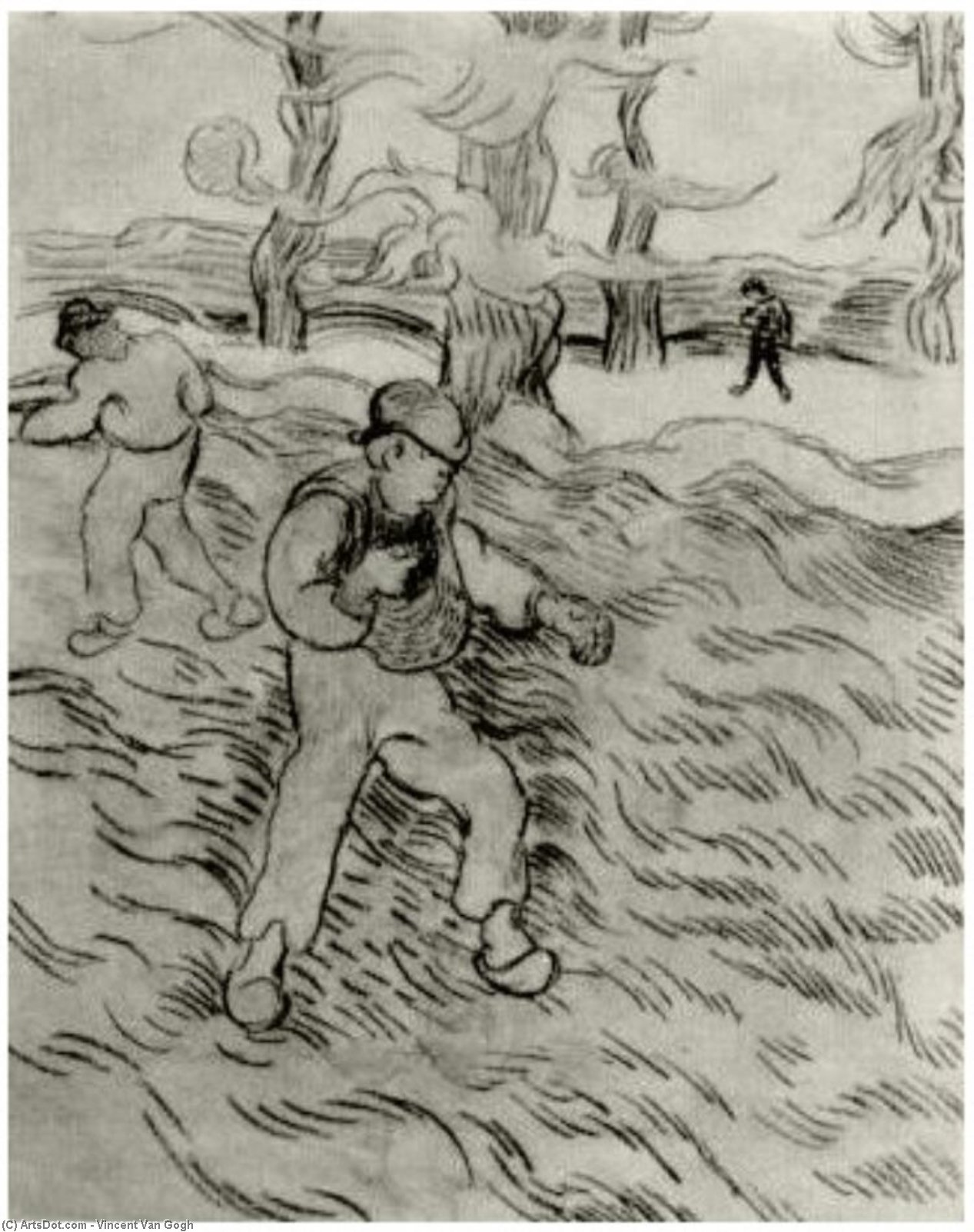
Field with Two Sowers and Trees, is a stunning example of his mastery of the Post-Impressionist style.
Introduction to Postimpressionism
Postimpressionism was a predominantly French art movement that developed roughly between 1886 and 1905. It emerged as a reaction against Impressionists' concern for the naturalistic depiction of light and color. Postimpressionism encompasses Les Nabis, Neo-Impressionism, Symbolism, Cloisonnism, the Pont-Aven School, and Synthetism.
Style and Significance
Field with Two Sowers and Trees is a significant work in
Vincent van Gogh's oeuvre, as it showcases his unique ability to convey emotion through color and form. The painting features two sowers working in a field surrounded by trees, created using
pencil in 1890. The vibrant colors, bold brushstrokes, and expressive forms create an emotional connection between the viewer and the depicted scene.
Experience it through ArtsDot.com
At
ArtsDot.com, you can explore a wide range of
Vincent van Gogh's masterpieces, including
Field with Two Sowers and Trees. Our hand-made oil painting reproductions are meticulously crafted to capture the essence and beauty of the original works. By adding one of our stunning reproductions to your collection, you can experience the magic of
Vincent van Gogh's art in your own home or office.
You can also learn more about Postimpressionism and other art movements on our website, including
Post-Impressionism Art Movement Introduction.
Conclusion
Field with Two Sowers and Trees is a captivating example of
Vincent van Gogh's mastery of Postimpressionism. By exploring this work, along with other pieces by the artist, you can gain a deeper appreciation for his unique style and enduring influence on modern art. Visit
ArtsDot.com to discover more about
Vincent van Gogh and his remarkable paintings, including those housed in the
Van Gogh Museum.