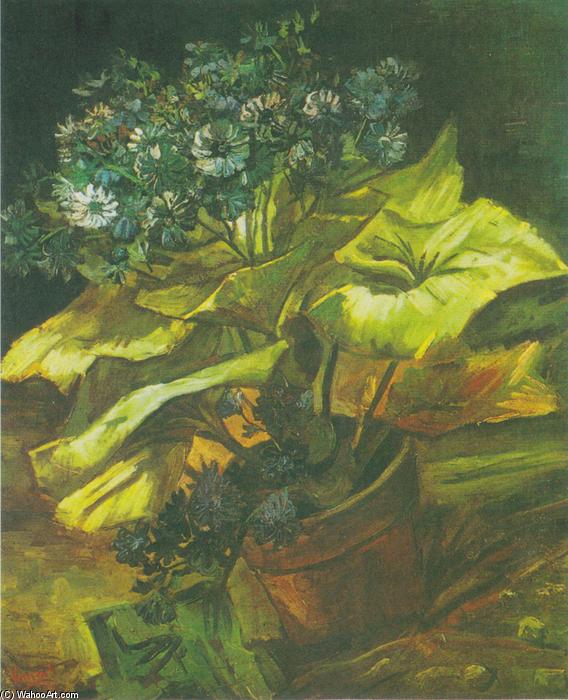
Flower Pot with Asters: A Post-Impressionist Masterpiece
Vincent van Gogh's "Flower Pot with Asters," created in 1886, is a captivating still life that exemplifies his burgeoning artistic style and emotional depth. This painting, now housed within the Museum Boijmans Van Beuningen in Rotterdam, Netherlands, offers a glimpse into Van Gogh’s Parisian period and showcases his innovative approach to color and brushwork.
Style and Technique: Embracing Post-Impressionism
“Flower Pot with Asters” firmly resides within the Post-Impressionist movement. Emerging as a reaction against Impressionism's focus on fleeting moments of light, Post-Impressionism prioritized subjective expression and symbolic meaning. Van Gogh, alongside artists like Paul Cézanne and Paul Gauguin, sought to convey emotions and ideas through bold colors, distinct brushstrokes, and simplified forms.
The painting’s technique is characterized by thick, impasto application of paint – a hallmark of Van Gogh's style. The visible brushstrokes create texture and movement, imbuing the flowers with a vibrant energy. He employed complementary color pairings—such as blues and oranges—to heighten visual impact and evoke emotional resonance. The composition is relatively simple: a clay flower pot filled with asters against a plain background, yet Van Gogh’s masterful use of color and texture elevates it to a profound artistic statement.
Historical Context: Parisian Artistic Exploration
This artwork was painted during Van Gogh's time in Paris (1886-1888), a pivotal period in his artistic development. He had moved to the city seeking exposure to new ideas and influences, immersing himself in the vibrant art scene. He encountered Impressionism but quickly sought a more expressive path. The influence of Japanese woodblock prints (Ukiyo-e) is evident in the flattened perspective and bold compositions. Van Gogh was also deeply influenced by the works of Émile Bernard and Paul Gauguin, who encouraged him to experiment with color and form.
Symbolism and Emotional Impact
While seemingly a simple depiction of flowers, "Flower Pot with Asters" carries deeper symbolic weight. Flowers in Van Gogh's work often represent life, beauty, and the passage of time—themes that resonated deeply with his own struggles and observations. The vibrant colors evoke feelings of joy and vitality, while the energetic brushstrokes convey a sense of inner turmoil and passion.
The painting’s emotional impact lies in its ability to connect with viewers on a visceral level. It is not merely a representation of flowers; it's an expression of Van Gogh's personal vision and his profound connection to the natural world. The simple subject matter, combined with the artist's expressive technique, creates a work that is both accessible and deeply moving.