Vincent van Gogh: A Life Dedicated to Art
Vincent Willem van Gogh (1853-1890) remains one of history’s most influential figures in Western art. His work is characterized by its beauty, emotion and color, profoundly impacting 20th-century art.
Early Life and Influences
- Born on March 30, 1853, in Zundert, Netherlands, Van Gogh initially pursued various careers before dedicating himself to painting.
- He worked as an art dealer, teacher, and missionary, experiences that deeply influenced his worldview and artistic sensibilities.
- Early influences included the Dutch Masters like Rembrandt and Frans Hals, as well as Japanese woodblock prints – Ukiyo-e – which sparked his interest in bold compositions and flattened perspectives.
Artistic Development
- Van Gogh’s early works, such as The Potato Eaters (1885), reflect a somber palette and focus on the hardships of peasant life.
- His move to Paris, where he met members of the artistic avant-garde, including Émile Bernard and Paul Gauguin, marked a pivotal moment in his artistic evolution. He embraced Impressionism’s techniques while simultaneously exploring Symbolist ideas.
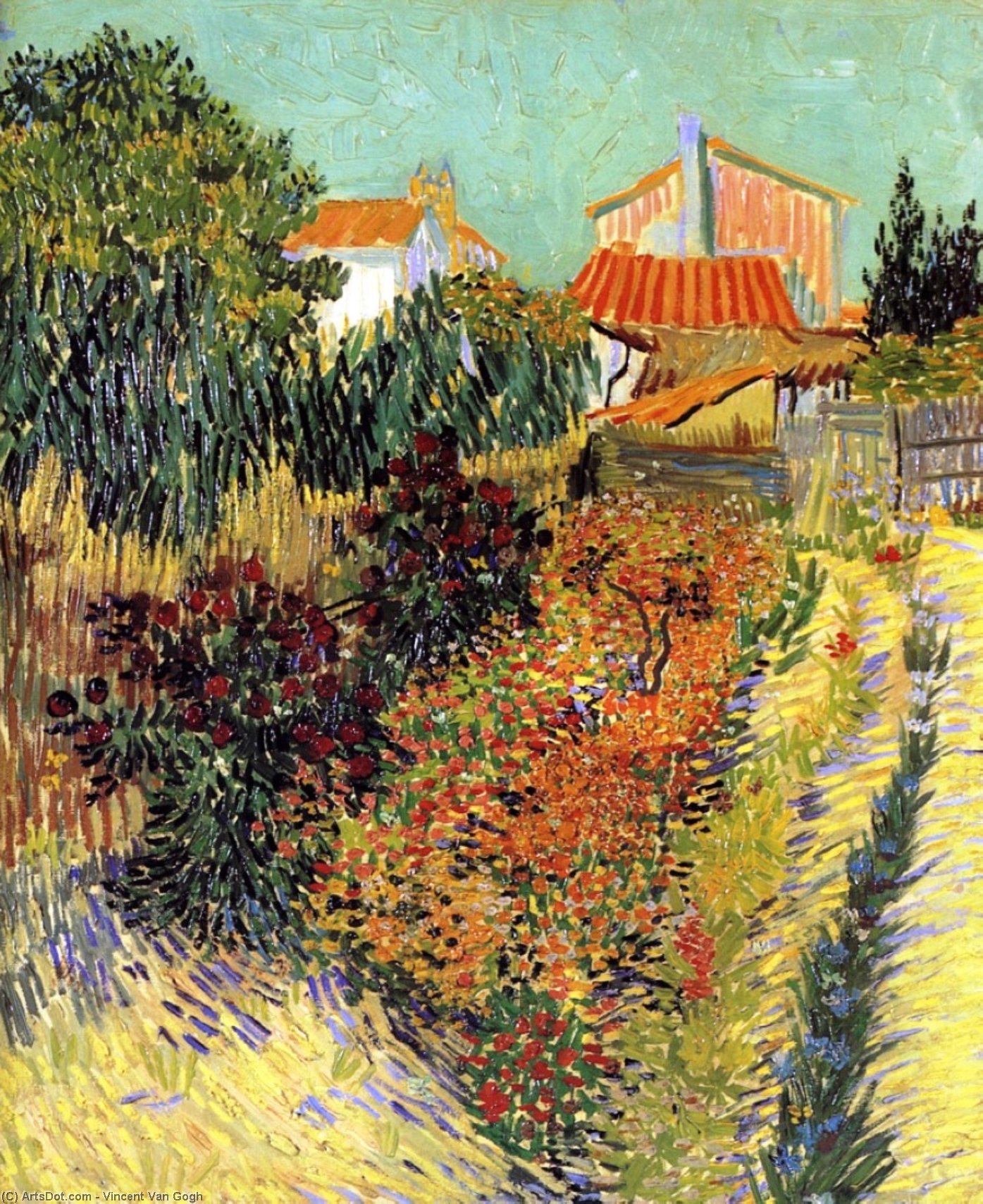
“Garden Behind a House”, 1888 – Vincent van Gogh - WikiArt.org
“Garden Behind a House” was created in 1888 by Vincent van Gogh in Post-Impressionism style. Find more prominent pieces of landscape at Wikiart.org – best visual art database.
- Style: This painting exemplifies the expressive fervor of Post-Impressionism, departing from Impressionism’s optical realism to prioritize emotional resonance and subjective experience.
- Technique: Van Gogh employed thick impasto—a technique involving applying paint in heavy layers—to imbue the canvas with palpable texture and dynamism. Bold brushstrokes convey movement and energy, capturing the vibrancy of the garden scene.
- Color Palette: The painting’s dominant hues – reds, yellows, greens – are deliberately intensified to heighten emotional impact. Van Gogh skillfully juxtaposes complementary colors to create visual harmony while simultaneously emphasizing contrasting moods.
Historical Context
Painted during Van Gogh's time in Arles, France, “Garden Behind a House” reflects the artist’s fascination with capturing the beauty of nature amidst personal turmoil. It stands as a testament to his unwavering commitment to portraying the world as he perceived it—a realm brimming with color and emotion.
Symbolism
The garden itself symbolizes tranquility, fertility, and renewal – themes that resonated deeply within Van Gogh’s artistic vision. The vibrant flowers represent joy and vitality, while the house embodies stability and domestic comfort. These elements intertwine to convey a sense of harmonious coexistence between humanity and nature.
Conclusion
"Garden Behind a House" by Vincent van Gogh is a masterpiece that encapsulates his distinctive style and contribution to Post-Impressionism. Its enduring appeal lies in its ability to evoke profound emotions and inspire contemplation about the relationship between art, beauty, and human experience. For those interested in exploring more of Van Gogh’s work or delving into the broader context of Impressionist and Symbolist movements, visit Garden Behind a House and Wheat Fields on Wikipedia.
Key Points:
- Vincent van Gogh’s “Garden Behind a House” is a cornerstone of Post-Impressionism, prioritizing emotional expression over optical accuracy.
- The painting utilizes thick impasto and bold brushstrokes to convey movement and vibrancy.
- A rich color palette—dominated by reds, yellows, and greens—amplifies the artwork’s emotive power.
- It reflects Van Gogh's fascination with capturing natural beauty amidst personal struggles.
This painting remains a powerful reminder of Van Gogh’s artistic genius and his enduring legacy as one of the most beloved figures in Western art.