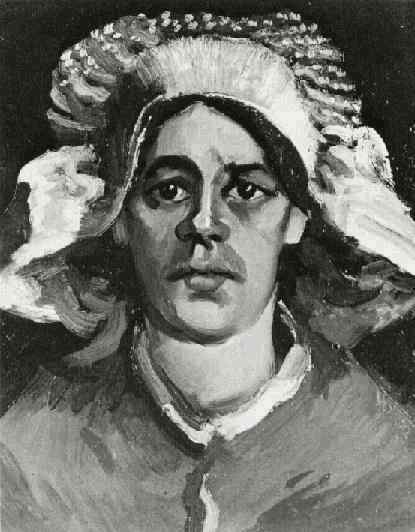
A Glimpse into Van Gogh’s Soul: Gordina de Groot, Head
Vincent van Gogh's “Gordina de Groot, Head” isn’t merely a portrait; it’s a poignant window into the artist’s burgeoning empathy and his nascent exploration of realism. Painted in 1885, during a pivotal period in his artistic development, this intimate study captures the essence of Gordina de Groot, a peasant woman who served as a model for several of Van Gogh's early works, most notably “The Potato Eaters.” More than just a likeness, it’s a carefully constructed image brimming with quiet dignity and a subtle undercurrent of vulnerability – qualities that would become hallmarks of his later, emotionally charged masterpieces. The painting stands as an exemplary piece showcasing the artist’s unique style and mastery in Post-Impressionism, offering a rare glimpse into the life of a woman largely absent from the grand narratives of art history.

The Language of Post-Impressionism
“Gordina de Groot, Head” is firmly rooted in the burgeoning movement of Post-Impressionism, a reaction against the fleeting effects of light and color championed by its Impressionist predecessors. Rather than simply recording visual appearances, Van Gogh sought to imbue his work with deeper meaning – an exploration of emotion, memory, and the human condition. This painting exemplifies several key characteristics of the movement: the deliberate use of visible brushstrokes, creating a dynamic texture that seems almost tactile; a preference for simplified forms, reducing the subject to its essential elements; and a bold, often unnatural, palette designed to express inner feeling. The influence of Paul Cézanne’s geometric approach is subtly present, particularly in the careful construction of the headpiece, while Gauguin's emphasis on color and symbolism also resonates within the composition. The flattened perspective, characteristic of Post-Impressionism, allows Van Gogh to focus entirely on the surface of the canvas and the expressive potential of color and form.
Decoding the Details: Composition & Technique
The painting’s composition is strikingly direct – a centered portrait that immediately engages the viewer's gaze. Gordina de Groot’s face, turned towards us with an almost unnerving intensity, dominates the frame. The intricate headpiece, a symbol of her social standing and perhaps even tradition, adds layers of visual complexity. Van Gogh masterfully employs impasto—thickly applied paint—to build texture and depth, particularly in the folds of the fabric and the contours of the face. The visible brushstrokes aren’t haphazard; they are carefully considered, directing our eye across the surface and contributing to a sense of movement and vitality. The monochromatic palette – shades of gray, black, and white – amplifies the drama of light and shadow, creating a powerful contrast between highlights and deep shadows that models the form with remarkable precision. The diffused lighting suggests an interior setting, perhaps a dimly lit room, adding to the painting’s intimate atmosphere.
Symbolism & Emotional Resonance
Beyond its technical brilliance, “Gordina de Groot, Head” carries significant symbolic weight. The direct gaze of the subject invites introspection and prompts us to consider her inner life – a quiet dignity that belies the hardships of peasant existence. The headpiece itself could be interpreted as representing tradition, social status, or even a subtle resistance to societal expectations. Van Gogh’s choice to depict a working-class woman—a group often overlooked by the art world at the time—demonstrates his growing commitment to portraying the lives and experiences of ordinary people. The painting ultimately evokes a sense of melancholy and quiet contemplation, reflecting Van Gogh's own struggles with isolation and mental health – themes that would become increasingly prominent in his later work. It’s a testament to the power of art to capture not just appearances but also the complex emotions and unspoken stories of those who populate our world.