Vincent Van Gogh’s Captivating “Great Peacock Moth”
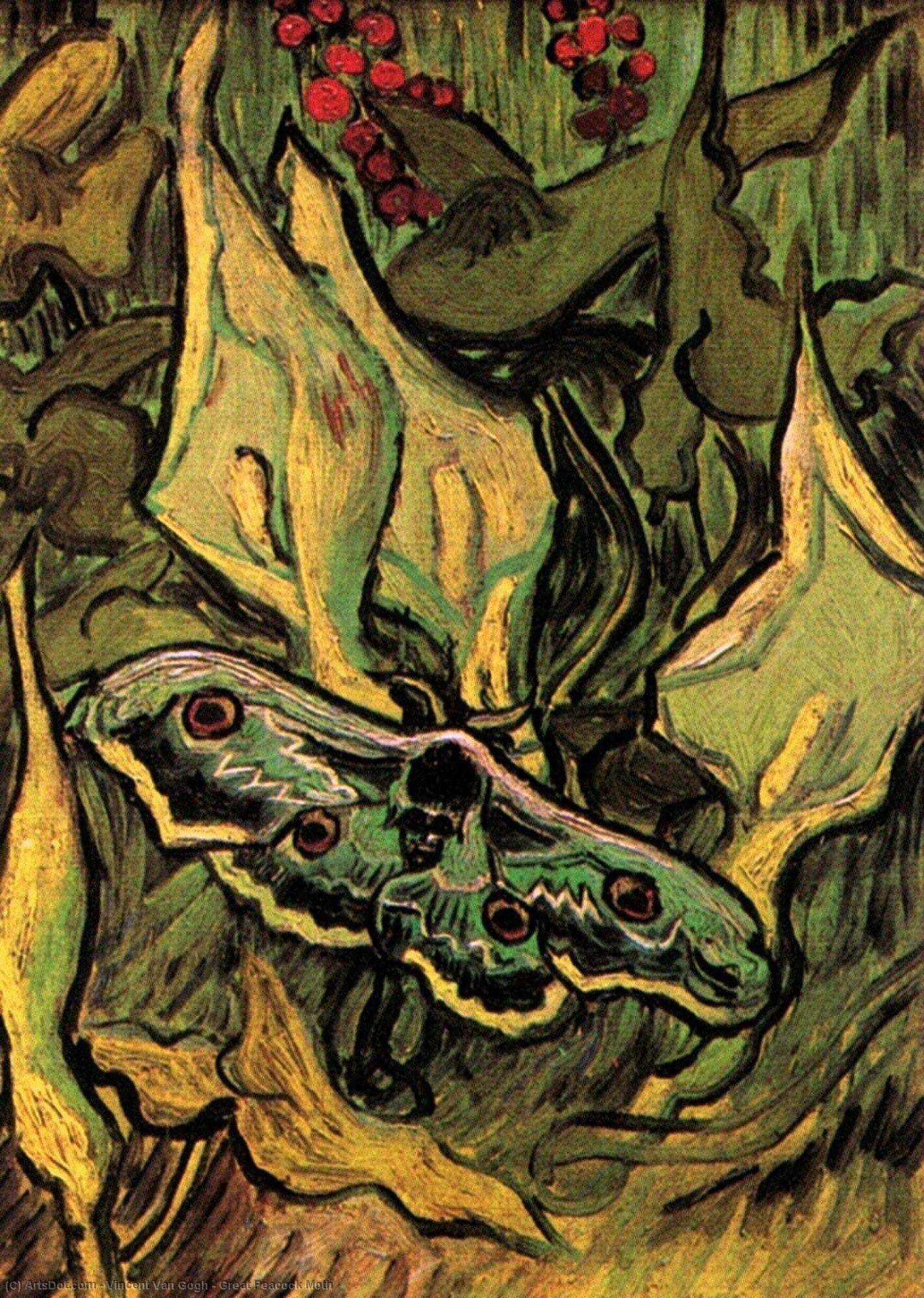
Vincent van Gogh's "Great Peacock Moth," painted in 1889 during his time at the Saint-Paul asylum in Saint-Rémy, is far more than a simple depiction of an insect. It’s a window into the artist’s intensely personal world—a realm where nature, memory, and emotion intertwine to create a profoundly moving work. This captivating piece, rendered in oil on canvas with his signature bold brushstrokes and vibrant palette, embodies the core of Van Gogh's post-impressionist style: an attempt to capture not just what he saw, but how he *felt* about what he saw.
The painting centers around a magnificent giant peacock moth (*Saturnia pyri*), its wings spread wide in a gesture of both vulnerability and majestic beauty. Van Gogh’s meticulous observation is evident in the intricate detail with which he portrays the moth's velvety texture, the delicate patterns on its wings—a striking contrast to the bold, almost frantic energy of his brushwork. The background, composed primarily of lush green leaves and scattered red berries, provides a vibrant counterpoint to the muted tones of the moth itself, drawing the viewer’s eye directly to this extraordinary creature.
A Glimpse into Van Gogh's Inner World
Painted during a period of intense personal struggle and mental instability, “Great Peacock Moth” offers a poignant insight into Van Gogh’s state of mind. As he wrote in a letter to his brother Theo, the moth had captivated him after being observed on the door of his room—a small, seemingly insignificant detail that became the subject of an intensely focused artistic endeavor. This dedication speaks volumes about Van Gogh's ability to find beauty and significance even within the confines of his own suffering. The choice of a nocturnal insect, often associated with darkness and transformation, suggests a contemplation on themes of mortality, change, and perhaps, the artist’s own journey through periods of profound emotional upheaval.
The moth's resemblance to a skull—a deliberate detail Van Gogh incorporated—adds another layer of symbolic complexity. It’s been interpreted as a meditation on death and decay, but also as a representation of the fleeting nature of beauty and life itself. The vibrant colors used – particularly the deep greens and rich reds – are not merely descriptive; they evoke a sense of heightened emotion, reflecting Van Gogh's passionate engagement with his subject.
The Art of Post-Impressionism
“Great Peacock Moth” is a quintessential example of Van Gogh’s post-impressionist style. He employed thick, impasto brushstrokes—building up layers of paint to create texture and movement—that are immediately recognizable in the painting's dynamic surface. The use of color is deliberately non-naturalistic; he prioritized emotional expression over strict adherence to reality. The vibrant hues aren’t meant to mimic nature exactly but rather to convey the intensity of his perception.
Furthermore, Van Gogh’s technique—characterized by short, broken brushstrokes and a swirling sense of energy—creates an almost palpable feeling of movement within the painting. The moth appears to be in flight, its wings catching the light, inviting the viewer into this intimate moment of observation. The composition itself is carefully balanced, drawing attention to the central figure while maintaining a sense of openness and spaciousness.
A Timeless Masterpiece
“Great Peacock Moth” stands as a testament to Van Gogh’s artistic genius and his ability to transform the ordinary into the extraordinary. It's a deeply personal work, reflecting both the beauty he found in nature and the struggles he faced within himself. Reproductions of this iconic painting offer an unparalleled opportunity to experience the raw emotion and vibrant energy that define Van Gogh’s legacy—a captivating addition to any art collection or a stunning focal point for interior design.