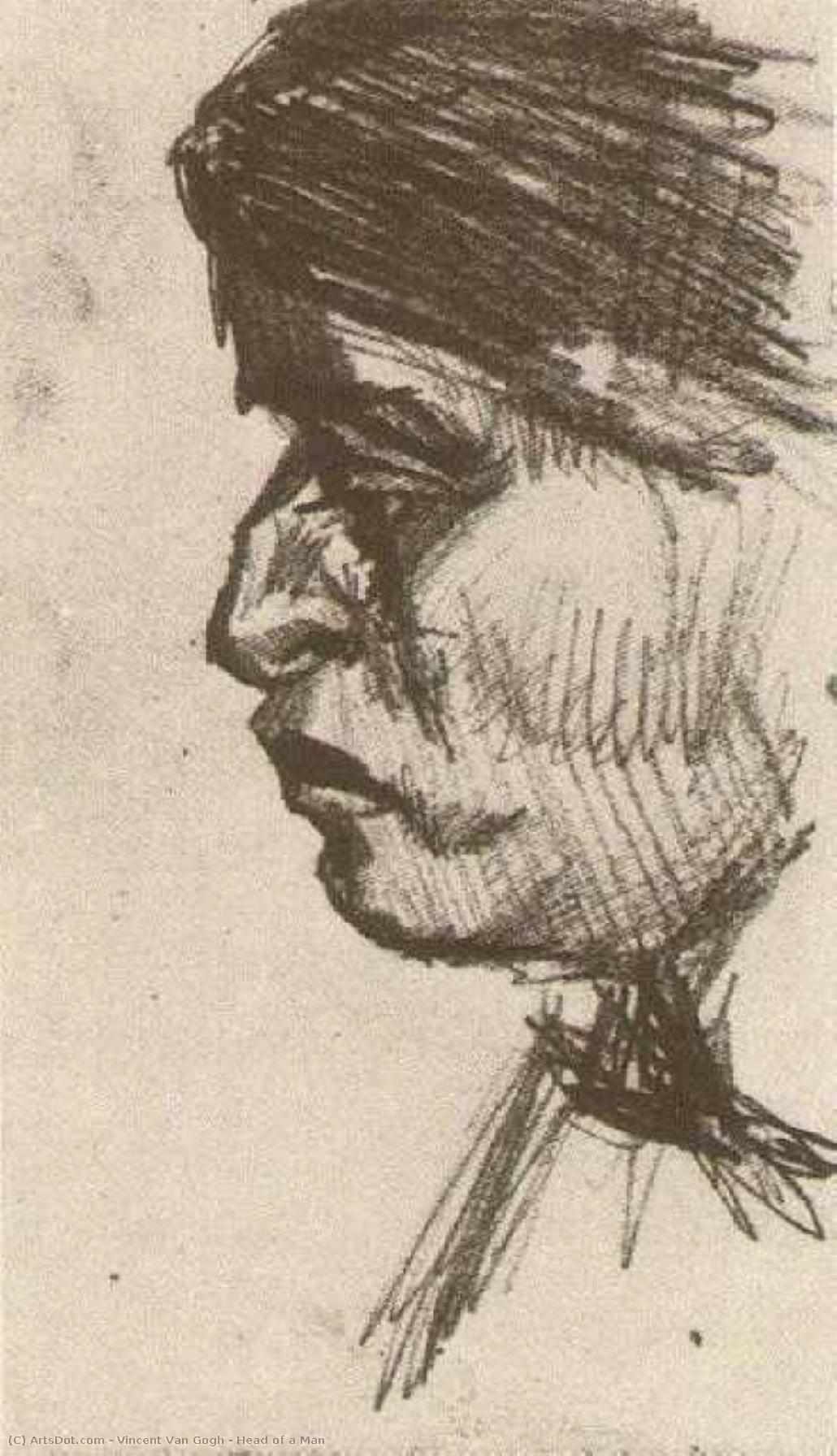
Head of a Man

Explore Vincent van Gogh’s ‘Head of a Man,’ a charcoal sketch capturing intimacy & emotion. Admire its expressive linework & poignant gaze – a masterpiece of realism.


vincent willem van gogh (1853 - 1890)

Vincent van Gogh (1853-1890): Explore the life & art of the Dutch Post-Impressionist master behind 'Starry Night' and 'Sunflowers'. Discover his bold style & lasting impact on modern art.

Van Gogh Museum (Amsterdam, Netherlands)

Immerse yourself in Van Gogh's world at the Amsterdam museum! Explore iconic paintings, letters & his life story – a journey of brilliance and emotion.

A Glimpse into Van Gogh’s Soul: “Head of a Man” (1885)

  • Subject and Composition: This captivating charcoal sketch presents the profile of a man, meticulously rendered with an emphasis on capturing both physical likeness and inner character. The composition focuses intently on the head and shoulders, fostering a sense of intimate observation. It’s a study – a concentrated exploration of form and expression that speaks to Van Gogh's dedication to understanding his subjects.
  • Style and Technique: Executed in 1885, “Head of a Man” exemplifies Van Gogh’s developing style during his early Dutch period. While rooted in realism, the work transcends mere representation through its expressive linework. The artist masterfully employs varying line weights and densities to create texture, volume, and depth – a hallmark of his approach even before his iconic impasto technique fully emerged. This is pure draftsmanship; charcoal on paper revealing an artist honing his skills.
  • Historical Context: 1885 was a pivotal year for Van Gogh. Having returned to the Netherlands after time in Belgium, he was intensely focused on depicting the lives of working-class people – peasants and laborers. This sketch likely falls within that series of studies, reflecting his desire to portray the dignity and hardship inherent in their existence. It predates his move to Paris and exposure to Impressionism, yet hints at the emotional intensity that would define his later work.
  • Symbolism and Emotional Impact: The subject’s gaze is particularly striking – intense and introspective. While we don't know the identity of the man, Van Gogh imbues him with a palpable sense of melancholy or quiet contemplation. This isn’t simply a portrait; it’s an exploration of the human condition. The use of charcoal itself contributes to this mood - its inherent softness and ability to create dramatic shadows evoke feelings of vulnerability and transience.
  • Van Gogh's Artistic Journey: This work is particularly insightful when considered alongside Van Gogh’s other portraits from the period, including his self-portraits and “Head of a Young Man.” It demonstrates his consistent practice of studying faces – an attempt to understand not just *how* people looked, but *who* they were. The discovery of a hidden self-portrait beneath another painting from this time (2022) further underscores Van Gogh’s resourceful approach and constant artistic experimentation.
  • Interior Design & Collectibility: A reproduction of “Head of a Man” would lend an air of quiet sophistication to any space. Its monochromatic palette makes it incredibly versatile, complementing both modern and traditional interiors. The sketch's intimate scale is ideal for smaller rooms or as part of a curated gallery wall. For collectors, this piece represents an important stage in Van Gogh’s development – a glimpse into the artistic foundations upon which his later masterpieces were built.
  • As Don McLean so eloquently captured in “Vincent,” there is a profound beauty and sadness woven into Van Gogh's work. This sketch embodies that duality, offering a poignant reminder of the artist’s sensitivity and enduring legacy.