Vincent Willem van Gogh (1853-1890), born in Zundert, Netherlands, was a Dutch Post-Impressionist painter whose expressive use of color and thick brushstrokes revolutionized art. Despite facing significant personal struggles and mental illness throughout his life, he created over 860 paintings and drawings during his brief career, leaving behind an unparalleled legacy of artistic innovation.
A Study in Vulnerability: Examining Vincent van Gogh’s ‘Idol’
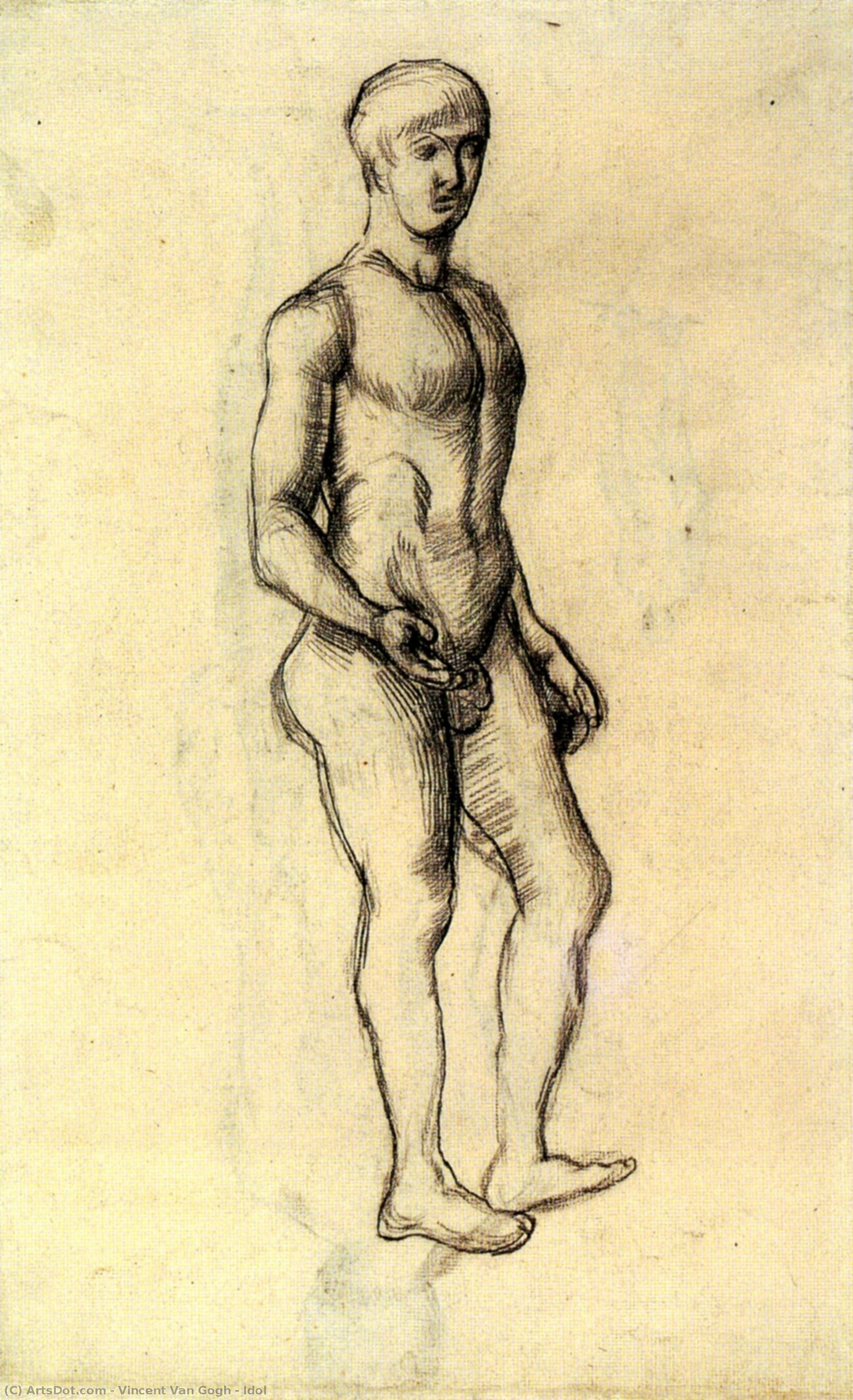
Vincent Willem van Gogh's “Idol,” created circa 1886, stands as a deceptively simple yet profoundly resonant depiction of the human form—a testament to his unwavering commitment to capturing raw emotion and anatomical precision within the confines of Realism. This chalk drawing, unearthed from the archives of WikiArt.org, offers more than just an image; it invites contemplation on themes of vulnerability, spirituality, and the artist’s relentless pursuit of truth through observation. The photograph accompanying this description showcases a male nude figure positioned in a contemplative stance, hands resting on hips—a posture conveying both strength and quiet introspection.
- Subject Matter: The drawing focuses squarely on the human body, specifically a male torso presented in an idealized pose. Unlike many of Van Gogh’s landscapes brimming with vibrant color and turbulent energy, ‘Idol’ prioritizes stillness and anatomical accuracy.
- Style & Technique: Executed in chalk—a medium favored by Van Gogh during his Parisian period—the drawing demonstrates remarkable detail and tonal gradation. The artist meticulously renders musculature and skin texture, utilizing hatching and cross-hatching to achieve a velvety surface finish that captures the nuances of light and shadow.
- Historical Context: Produced shortly after Van Gogh’s move to Paris in 1886, ‘Idol’ reflects the burgeoning influence of anatomical studies undertaken by artists like Gustave Courbet and Jean-Auguste Dominique Ingres. However, unlike his contemporaries who often aimed for polished perfection, Van Gogh deliberately eschewed idealized beauty, opting instead for an unflinching portrayal of human physicality.
Symbolism Beyond the Surface
Beyond its technical mastery lies a deeper symbolic significance. The nude figure embodies vulnerability—a deliberate rejection of societal conventions that sought to conceal or diminish the human body. Yet, the posture itself exudes confidence; hands resting on hips suggest resilience and inner resolve. Scholars interpret this juxtaposition as representing Van Gogh’s ongoing wrestling with faith and doubt, mirroring his personal struggles during a period marked by mental instability. The drawing's stark monochrome palette amplifies its emotional impact, stripping away extraneous distractions to focus solely on the essence of human form and contemplation.
Emotional Resonance & Artistic Legacy
“Idol” isn’t merely an anatomical study; it’s a conduit for profound emotion—a glimpse into Van Gogh's inner world as he wrestled with existential questions. The drawing’s quiet dignity speaks to the enduring power of simplicity and observation, qualities that define Van Gogh’s artistic vision. Its influence extends far beyond its immediate timeframe, inspiring subsequent generations of artists to explore the expressive potential of tonal rendering and unflinching realism. As a hand-painted reproduction available on WikiArt.org, ‘Idol’ allows viewers to experience firsthand the brilliance of Van Gogh's technique and appreciate the enduring beauty of this iconic artwork. Consider incorporating it into your interior design projects—a subtle nod to artistic history and a celebration of contemplative elegance.