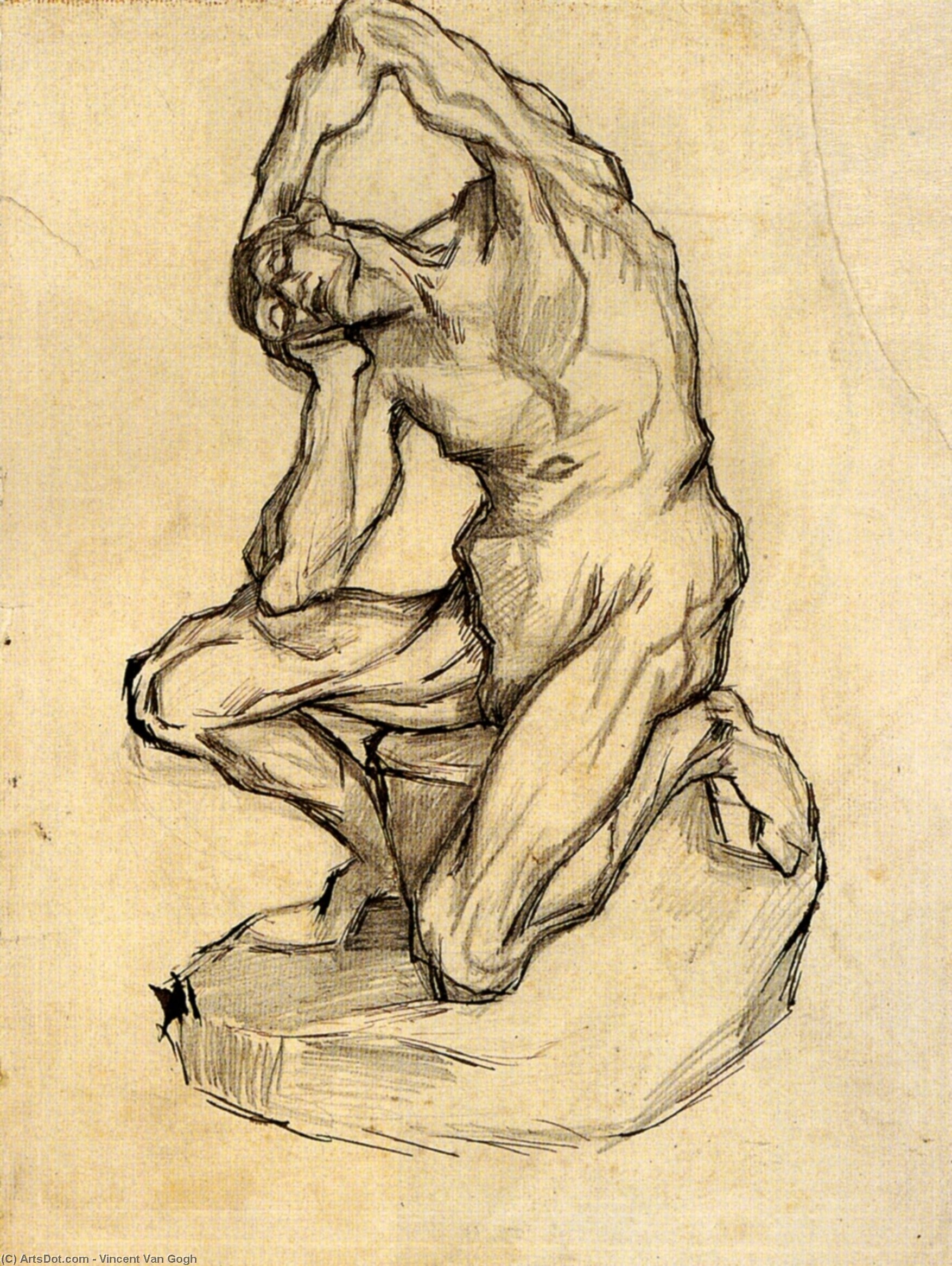
The Kneeling Ecorche: A Study in Form and Emotion by Vincent van Gogh
Vincent van Gogh’s 1887 “Kneeling Ecorche” is more than just a drawing; it's a profound exploration of the human form, rendered with an intensity that speaks volumes about the artist’s evolving style and his deeply felt connection to the subject matter. Created during his time in Paris, this remarkable piece exemplifies Van Gogh’s transition from early influences towards his signature Post-Impressionist approach – a bold departure from mere representation and a passionate embrace of line, shading, and emotional expression.
The drawing depicts a male figure kneeling, his hands clasped over his face in a posture of intense contemplation or perhaps even distress. Stripped bare of skin, the figure reveals an intricate network of muscles and bones, meticulously rendered with graphite. This “ecorche,” a term referring to anatomical studies depicting the underlying structure without covering flesh, was a common practice among artists seeking to master human anatomy. However, Van Gogh elevates this traditional exercise into something far more evocative. The starkness of the exposed musculature, combined with the figure’s vulnerable position, immediately draws the viewer in, prompting reflection on themes of mortality, introspection, and perhaps even suffering.
Post-Impressionism: A Reaction and a Revolution
To fully appreciate “Kneeling Ecorche,” it's crucial to understand its place within the broader context of Post-Impressionism. Emerging in the late 1880s, this movement represented a significant shift away from the Impressionists’ focus on capturing fleeting moments of light and color. While Impressionists sought to depict the *impression* of reality, Post-Impressionist artists like Van Gogh, Paul Cézanne, Paul Gauguin, and Georges Seurat aimed to convey their subjective experiences and emotions through art. They experimented with bolder colors, distorted forms, and symbolic imagery – rejecting the purely optical approach in favor of a more expressive and personal vision.
Van Gogh’s work during this period is characterized by an intense emotionality and a willingness to distort reality to achieve his desired effect. He wasn't interested in creating a photographic likeness; instead, he sought to capture the *essence* of his subject – its energy, its mood, its underlying spirit. “Kneeling Ecorche” perfectly embodies this approach, utilizing strong lines and dramatic shading to create a sense of movement and psychological depth.
Analyzing Technique and Composition
The drawing’s power lies not only in its subject matter but also in Van Gogh's masterful technique. He employs a loose, expressive line – a hallmark of his style – that seems almost frantic at times, conveying the figure’s inner turmoil. The shading is equally dynamic, with areas of deep shadow contrasting sharply with lighter highlights, creating a sense of volume and three-dimensionality. Notice how he uses hatching and cross-hatching to build up tone and texture, particularly in the musculature.
The composition itself is deceptively simple. The kneeling figure dominates the space, drawing the viewer’s eye directly to his face – a focal point of vulnerability and introspection. The two chairs in the background provide a sense of context, suggesting a moment of quiet contemplation or perhaps even despair. The placement of these elements creates a balanced yet unsettling arrangement, reinforcing the drawing's emotional impact.
A Reproduction for Your Space
ArtsDot offers exquisite hand-painted oil reproductions of Vincent van Gogh’s “Kneeling Ecorche,” meticulously crafted by skilled artists who share Van Gogh’s passion for capturing emotion and form. These reproductions faithfully recreate the drawing's intensity, texture, and atmosphere, bringing a piece of this iconic artwork into your home or office. Imagine owning a tangible representation of Van Gogh’s genius – a reminder of his profound insights into the human condition.
More than just a decorative object, a ArtsDot reproduction of “Kneeling Ecorche” is an investment in art history and a celebration of one of the most influential artists of all time. Explore our collection today and discover how you can bring this powerful image into your world. Wahoo Art offers a unique opportunity to own a piece of Van Gogh’s legacy, ensuring that his vision continues to inspire and move audiences for generations to come.