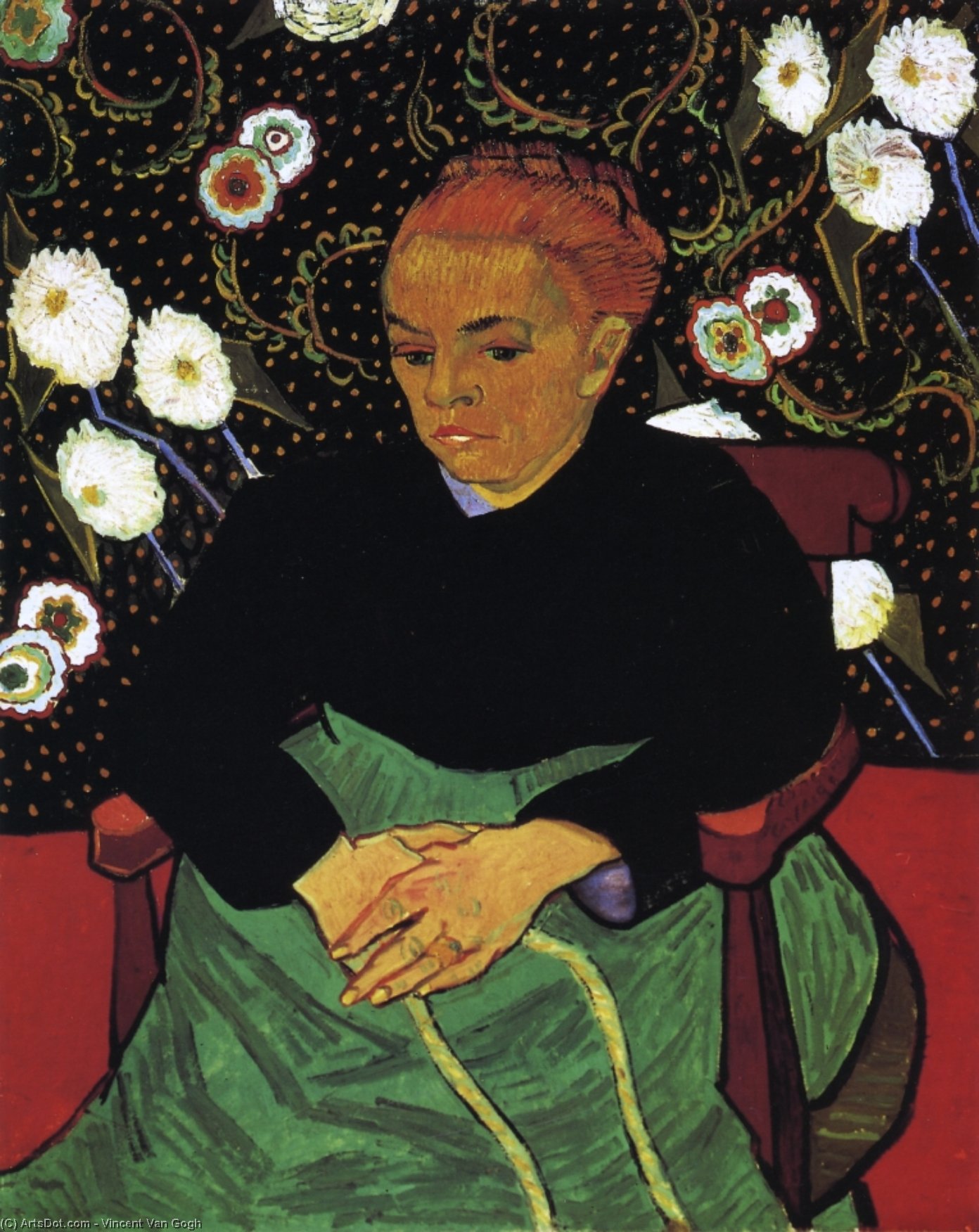
La Berceuse, Portrait of Madame Roulin
Vincent van Gogh’s
La Berceuse, Portrait of Madame Roulin, created in 1889, is a captivating portrait that showcases the artist’s unique style and emotional depth. This painting is part of a series of five versions, each capturing the essence of Augustine Roulin, the wife of Joseph Roulin, a close friend of Van Gogh.
Artistic Significance
La Berceuse is more than just a portrait; it represents a symbol of maternal love and comfort. The title “La Berceuse” translates to "lullaby," indicating the soothing presence of Madame Roulin as she rocks her cradle. Van Gogh’s use of vibrant colors and bold brushstrokes creates a sense of warmth and tranquility, drawing the viewer into the intimate moment. He deliberately chose this subject matter—a woman caring for her child—to express his profound admiration for familial bonds and domestic harmony. The painting embodies the artist's belief in the restorative power of simple acts of kindness and tenderness.
Technique and Medium
The painting is executed in oil on canvas, a medium that allowed Van Gogh to express his emotions through rich textures and vivid hues. The background features a floral pattern, adding depth and visual interest to the composition. This technique was characteristic of Van Gogh’s post-Impressionist style, which emphasized capturing the emotional essence of the subject rather than a realistic representation. Notice the impasto – thick application of paint – particularly prominent in Madame Roulin's dress and hands, conveying a palpable sense of physicality and immediacy. The artist meticulously blended colors to achieve subtle gradations and luminous effects, highlighting the softness of the maternal gaze.
Historical Context
La Berceuse was painted during a tumultuous period in Van Gogh’s life. He had recently experienced a breakdown and was recovering in a hospital. The portrait series of Madame Roulin served as a source of comfort and inspiration for the artist, reflecting his deep appreciation for the love and support of the Roulin family. It's remarkable how this painting emerged from such challenging circumstances—a testament to Van Gogh’s resilience and determination to find beauty amidst hardship. The Roulin family represented stability and normalcy in contrast to Van Gogh’s own erratic behavior, providing him with a focal point for his artistic endeavors.
Relevance to Modern Art
Van Gogh's innovative approach to portraiture has had a lasting impact on modern art. His emphasis on capturing the inner qualities of his subjects through color and brushwork paved the way for future generations of artists. La Berceuse, in particular, demonstrates Van Gogh’s ability to convey complex emotions through simple yet powerful compositions—a principle that continues to inspire contemporary painters today. Its enduring appeal lies in its honest portrayal of human connection and vulnerability.
Conservation and Display
The original painting is housed at the
Art Institute of Chicago, where it remains a popular attraction for art enthusiasts. ArtsDot.com offers high-quality reproductions of La Berceuse, allowing art lovers to bring this masterpiece into their own homes.