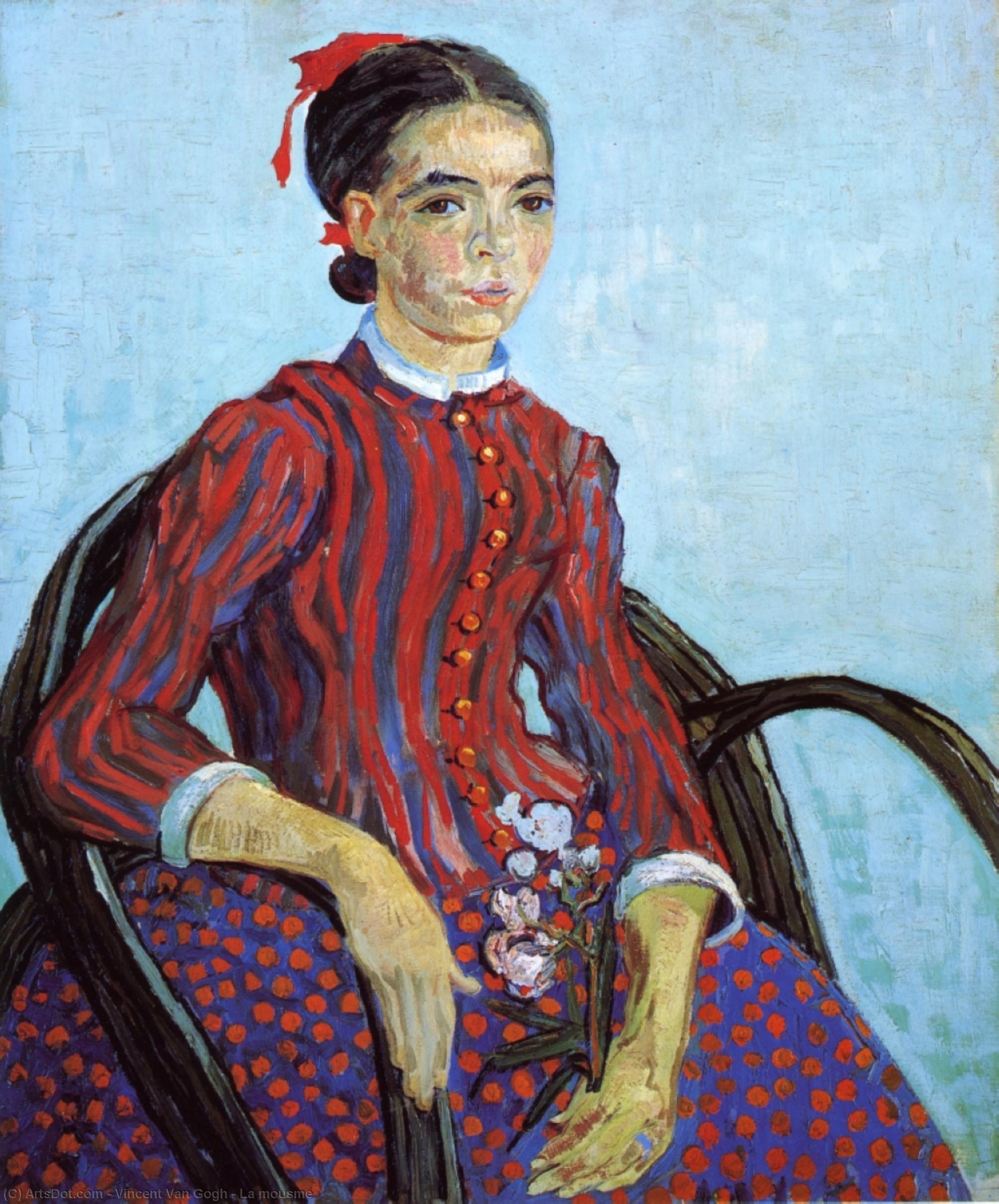
A Captivating Portrait of Provençal Youth: La Mousmé by Vincent van Gogh
Vincent van Gogh’s La Mousmé, painted in 1888 during his vibrant sojourn in Arles, France, is far more than a simple portrait; it's a window into the artist’s evolving artistic vision and his fascination with capturing the essence of everyday life. This intimate oil on canvas, measuring just 23 x 60 cm, currently resides within the esteemed National Gallery of Art in Washington D.C., yet its impact resonates far beyond the walls of that institution. The painting depicts a young woman, identified as a “mousmé” – a term borrowed from Pierre Loti’s novel *Madame Chrysanthème* and referencing a Japanese girl – seated gracefully on a chair, holding a delicate flower in her hand, and gazing directly at the viewer with an arresting directness.
Van Gogh's genius lies not merely in his technical skill but in his ability to infuse his subjects with emotion. The composition immediately draws the eye to the woman’s fiery red hair and dress, a bold contrast against the serene, almost ethereal blue of the sky behind her. This deliberate use of complementary colors – the vibrant reds and blues – is characteristic of Van Gogh's post-impressionist style, an attempt to capture not just the appearance of reality but also its emotional resonance. The brushstrokes themselves are thick and expressive, a hallmark of his technique, conveying a sense of movement and immediacy that seems to pulse with life.
The Influence of Japanese Art
Arles, for Van Gogh, represented a pivotal moment in his artistic journey – a deliberate attempt to emulate the aesthetic principles he admired in Japanese woodblock prints (Ukiyo-e). These prints, characterized by their flattened perspectives, bold compositions, and vibrant colors, profoundly influenced his approach to painting. He sought to capture the same sense of immediacy and beauty found in these works, translating the stylized forms and dramatic color palettes into his own portraits and landscapes. The woman’s pose itself echoes certain elements seen in Japanese art, particularly the emphasis on capturing a single, captivating moment.
Symbolism and Emotional Depth
Beyond its aesthetic qualities, La Mousmé is rich with symbolic meaning. The flower she holds – often interpreted as an oleander – represents both beauty and potential danger, reflecting Van Gogh’s complex relationship with nature and his fascination with the ephemeral quality of life. Her direct gaze at the viewer creates a powerful connection, inviting us into her world and prompting reflection on themes of youth, innocence, and perhaps even melancholy. The painting isn't simply a likeness; it’s an exploration of human emotion and experience.
A Testament to Van Gogh’s Legacy
La Mousmé stands as one of the most compelling portraits in Van Gogh’s oeuvre, offering a glimpse into his artistic development during a particularly productive period. It exemplifies his mastery of color, brushwork, and composition, while simultaneously revealing his deep empathy for his subjects. For those seeking to delve deeper into the world of Vincent van Gogh, ArtsDot offers meticulously crafted, hand-painted reproductions that faithfully capture the essence of this iconic masterpiece. Alongside La Mousmé, explore other significant works such as *Reaper with Sickle (after Millet)* and *Olive Picking*, each a testament to Van Gogh’s enduring legacy and his profound impact on the history of art. Furthermore, consider visiting The Museum Down House in Kent, Washington, a hidden gem showcasing American and European art, including a collection that complements Van Gogh's artistic journey.