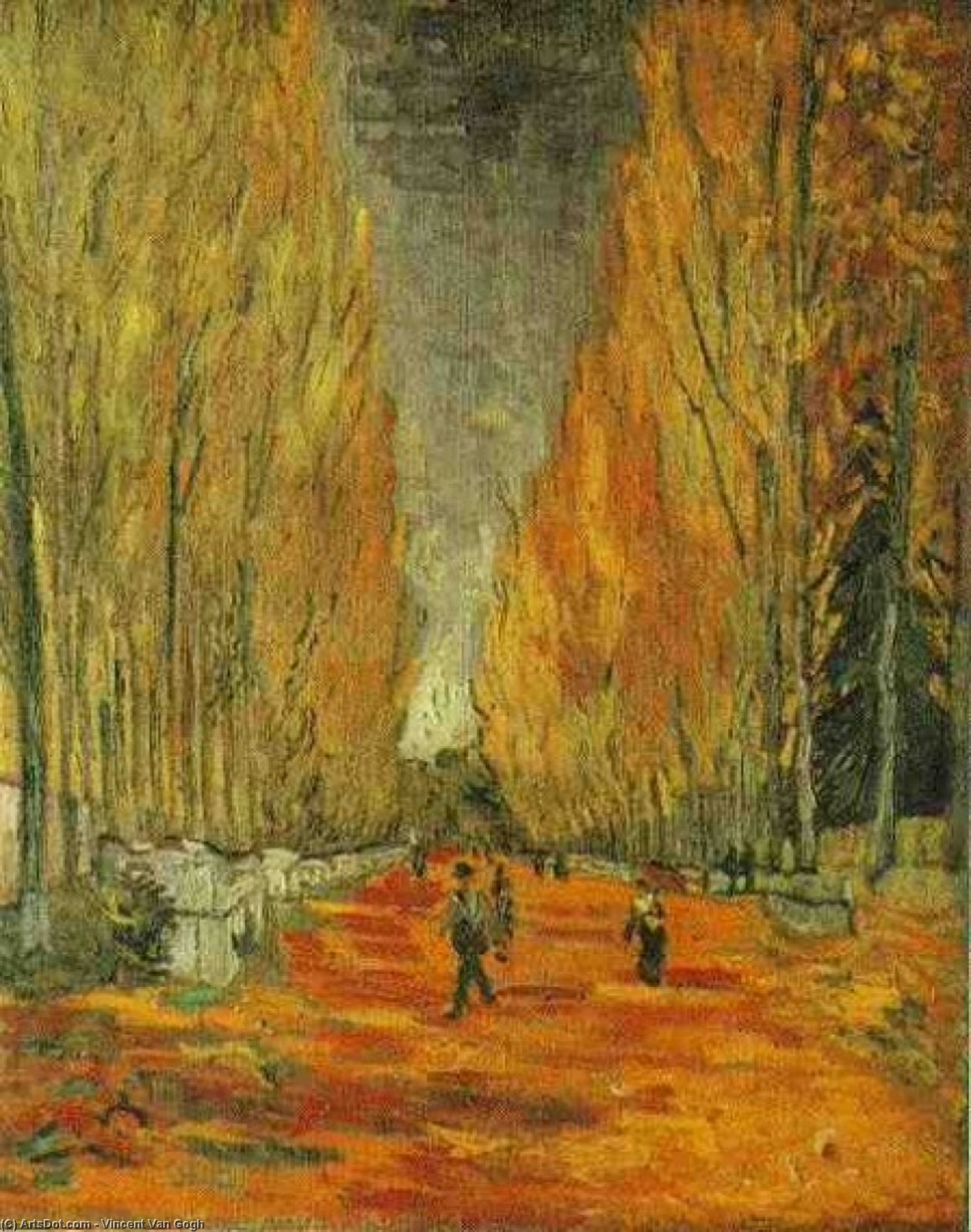
Les Alyscamps3: A Walk Through Van Gogh's Autumnal Reverie
Vincent van Gogh’s *Les Alyscamps3* isn’t merely a depiction of a street; it’s an immersion into the heart of a fleeting moment, a carefully constructed tableau of color and emotion that captures the poignant beauty of autumn in Arles. Painted during his time in southern France, this work exemplifies Van Gogh's masterful command of Post-Impressionist technique – a style characterized by bold brushstrokes, vibrant hues, and an intensely personal response to the world around him. The scene unfolds with remarkable clarity: a tree-lined road, gently curving into the distance, populated by figures engaged in quiet contemplation, their presence adding a layer of human connection to the landscape’s inherent solitude.
A Symphony of Color and Texture
The painting's power resides fundamentally in Van Gogh’s audacious use of color. The dominant oranges – ranging from fiery cadmium hues to softer, more subdued tones – dominate the scene, reflecting the transformation of the trees as they surrender to autumn’s embrace. These aren’t simply representations of color; they are expressions of feeling—a warmth that invites the viewer into the painting's intimate atmosphere. Notice the deliberate application of thick impasto, particularly in the tree trunks and branches, creating a tactile quality that almost begs to be touched. The brushstrokes themselves are not just marks on canvas but energetic pathways conveying movement and vitality – the rustle of leaves, the gentle sway of branches in the breeze, the purposeful stride of the walkers.
The Historical Context: Roman Roots and Artistic Dialogue
*Les Alyscamps3* draws its inspiration from the ancient Roman necropolis (Alyscamps) just outside Arles – a site steeped in history and imbued with a sense of melancholy. Van Gogh, alongside Paul Gauguin, was fascinated by this evocative space, seeking to capture not just its physical appearance but also the emotional resonance it held. The painting reflects a deliberate engagement with Japanese printmaking techniques, particularly evident in the flattened perspective and simplified forms. This influence is further reinforced by the inclusion of distinct figures – a solitary man, a woman, and a young girl - each contributing to the narrative’s quiet drama. The scene evokes a sense of timelessness, bridging the ancient Roman past with Van Gogh's own intensely personal present.
Symbolism and Emotional Resonance
Beyond its technical brilliance, *Les Alyscamps3* is rich in symbolic meaning. The autumnal colors represent not just the changing seasons but also themes of mortality, reflection, and the passage of time. The figures walking along the road can be interpreted as symbols of human endeavor, their journey mirroring Van Gogh’s own struggles and aspirations. The painting's overall mood is one of quiet contemplation—a space for introspection and a reminder of the beauty that can be found even in moments of sadness or solitude. It’s a testament to Van Gogh’s ability to transform personal experience into universal art, inviting viewers to share in his emotional journey.
Discover Your Own Masterpiece
ArtsDot offers meticulously crafted hand-painted reproductions of *Les Alyscamps3*, allowing you to bring this iconic artwork into your home or office. Choose from a range of sizes and framing options to perfectly complement your space. Experience the vibrant colors, expressive brushstrokes, and profound emotional depth that have captivated art lovers for generations. Explore the available reproductions today and own a piece of art history.