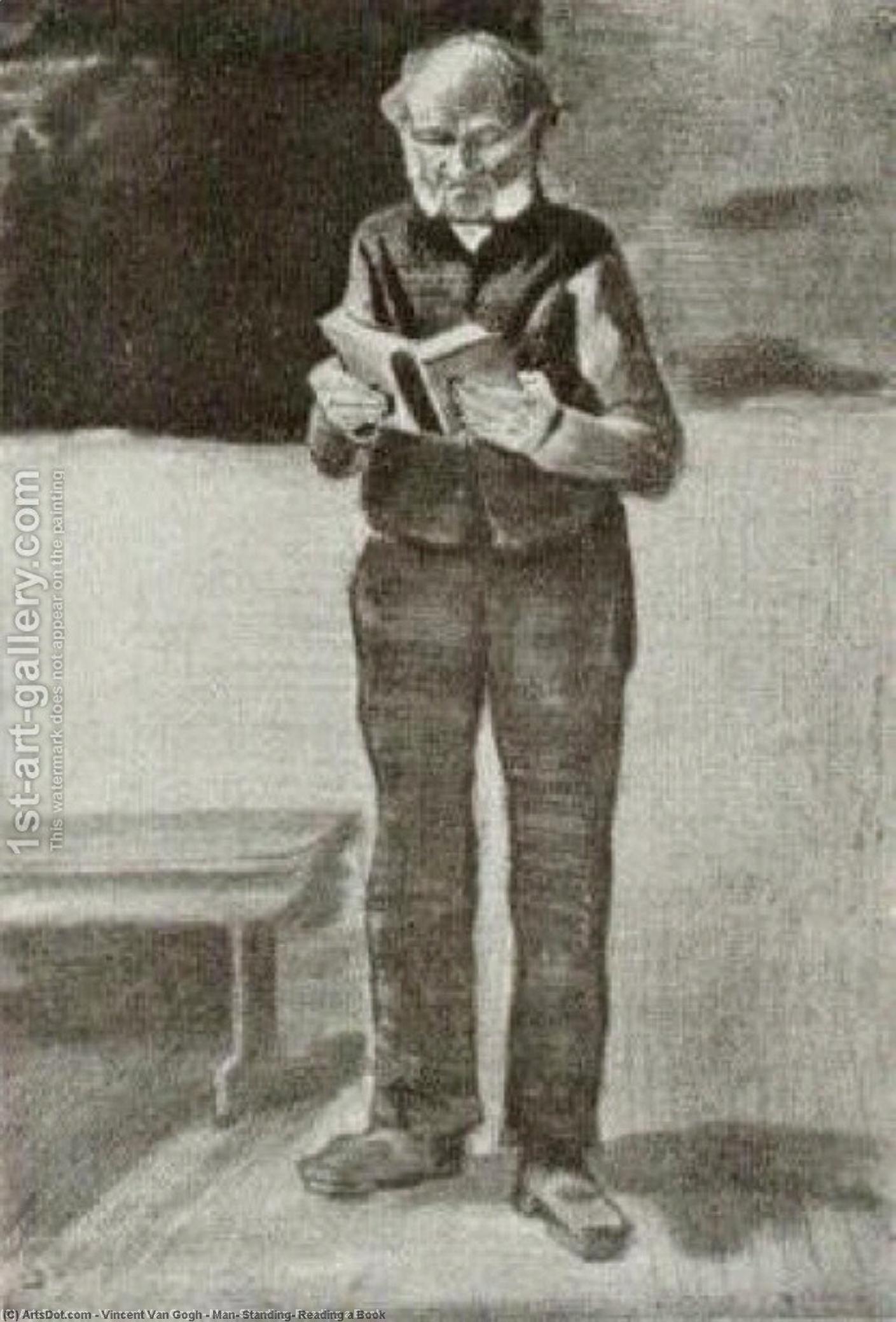
A Moment of Reflection Amidst Urban Life
Vincent van Gogh’s “Man, Standing, Reading a Book,” painted in 1882 during his formative years in Paris, captures a deceptively simple scene—a solitary figure engrossed in literature against the backdrop of a bustling cityscape. This unassuming composition speaks volumes about Van Gogh's artistic vision and his profound engagement with human experience.
- Style: The painting adheres to Realism, rejecting Impressionistic fleeting impressions of light and color in favor of meticulous observation and accurate depiction of form. Unlike the shimmering surfaces favored by contemporaries like Monet, Van Gogh prioritizes solidity and detail, grounding his subject matter in tangible reality.
- Technique: Executed with thick impasto—a technique characterized by applying paint thickly onto the canvas—Van Gogh achieves a remarkable textural richness. The ridges of pigment create a palpable sense of presence, inviting viewers to feel the weight and materiality of the scene. He employs a muted palette dominated by earthy tones—browns, ochres, and greys—reflecting the subdued atmosphere of the Parisian street.
Historical Context: Impressionism's Shadow
Painted shortly after Van Gogh’s initial exposure to Impressionism, “Man, Standing, Reading a Book” represents a deliberate departure from the dominant artistic trends of the time. While Impressionists sought to capture ephemeral moments of beauty—sunlight dappled through leaves or the shimmer of water—Van Gogh focused on conveying psychological depth and emotional resonance. This decision aligns with his broader philosophical preoccupation with capturing inner states and communicating profound feelings.
- Parisian Life: The cityscape depicted is a quintessential representation of Parisian life in 1882—a vibrant hub of commerce, culture, and social interaction. However, the solitary figure reading offers a counterpoint to this energetic environment, suggesting contemplation and introspection amidst the chaos.
Symbolism and Emotional Resonance
The book itself serves as a potent symbol—representing knowledge, wisdom, and escape from worldly concerns. Its placement in the foreground emphasizes its importance within the composition and underscores Van Gogh’s belief in the transformative power of literature. The posture of the man—relaxed yet attentive—communicates serenity and inner peace despite his surroundings.
“Man, Standing, Reading a Book” is more than just a depiction of an urban scene; it's an invitation to pause, reflect, and appreciate the beauty of quiet contemplation.
Concluding Thoughts: An Enduring Legacy
Despite its apparent simplicity, “Man, Standing, Reading a Book” embodies Van Gogh’s artistic genius—his ability to distill complex emotions into evocative imagery. It remains a cornerstone of his oeuvre and exemplifies his unwavering commitment to capturing the human spirit with honesty and compassion. Its enduring appeal testifies to the timeless relevance of Van Gogh's vision and its profound impact on subsequent generations of artists.