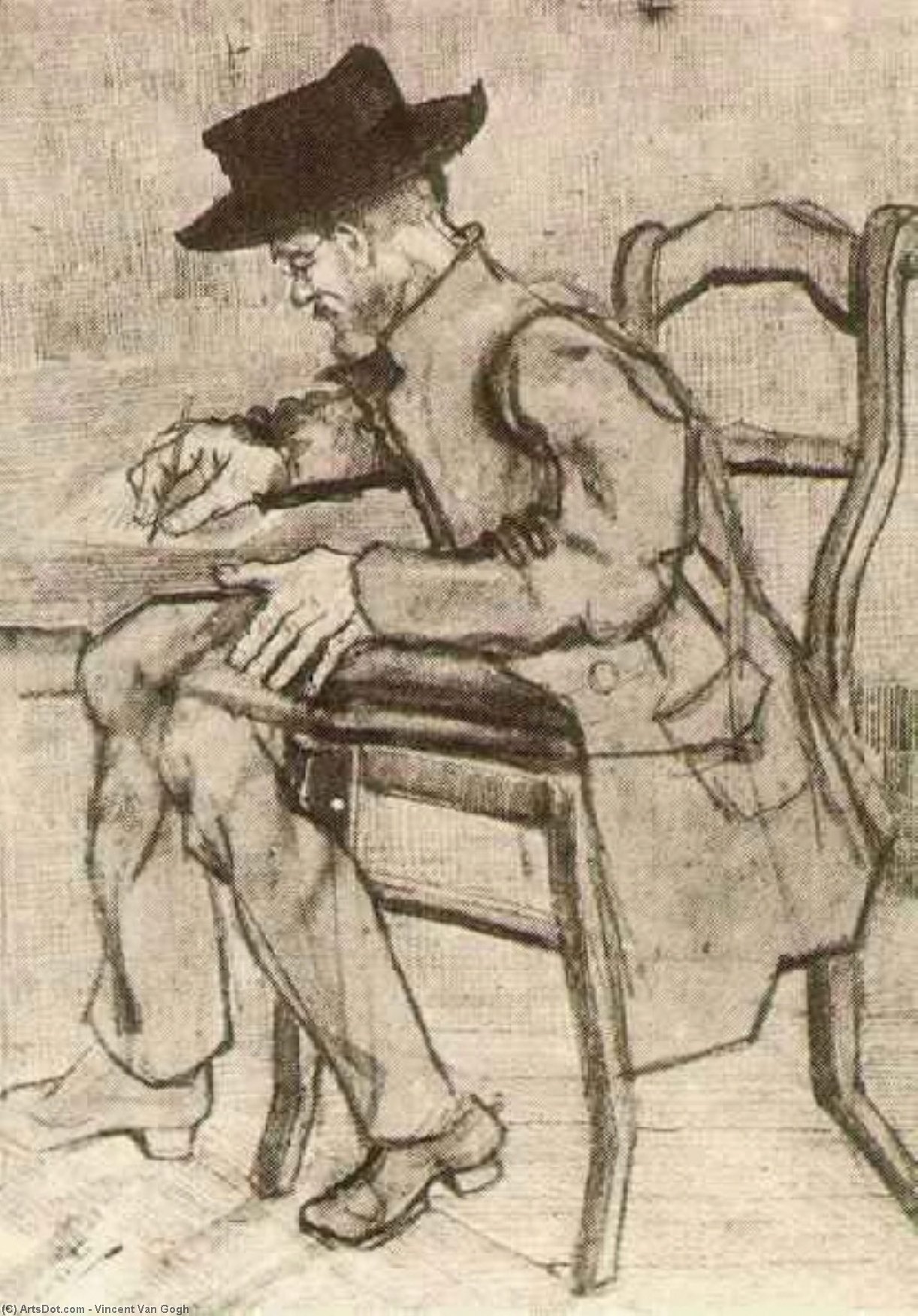
A Moment of Introspection: Unveiling Van Gogh’s ‘Man Writing Facing Left’
This captivating pencil drawing, created in 1881, offers a rare glimpse into Vincent van Gogh's early artistic development. *Man Writing Facing Left* is not a grand statement piece, but rather an intimate study of everyday life – a testament to Van Gogh’s dedication to capturing the essence of human experience even before his signature vibrant style fully emerged. The work depicts a solitary figure absorbed in writing, presenting a powerful image of concentration and perhaps, quiet contemplation.
Decoding the Style & Technique
Van Gogh's approach here is rooted in realism, yet already imbued with the expressive qualities that would define his later masterpieces. He masterfully employs shading to create depth and volume, bringing the figure to life on a two-dimensional surface. The lines are not merely descriptive; they possess a palpable energy, hinting at the artist’s emotional connection to his subject. Notice the gestural quality of the linework – thick in some areas to define form, lighter and more delicate where shadows fall. This technique foreshadows Van Gogh's later use of impasto, building texture and emotion through visible brushstrokes. The drawing showcases a remarkable ability to convey mood and character with minimal means.
Historical Context & Early Influences
Created during his time in the Netherlands, before his move to Paris and exposure to Impressionism and Post-Impressionism, *Man Writing Facing Left* reflects Van Gogh’s early artistic training and influences. He was deeply interested in portraying the lives of working people, and this drawing is part of a series of studies focusing on figures engaged in ordinary activities. This period was crucial for honing his observational skills and developing his unique visual language. It's important to remember that Van Gogh initially considered a career as an art dealer and minister before fully committing to painting, and these experiences shaped his empathetic portrayal of humanity.
Symbolism & Emotional Resonance
The posture of the man – head bowed, back turned to the viewer – invites introspection. The act of writing itself can be interpreted symbolically; it represents communication, thought, creativity, or perhaps even a private struggle. The overall mood is one of quiet solitude and focused intensity. While we don’t know the content of his writing, the drawing evokes a sense of mystery and encourages viewers to project their own emotions and narratives onto the scene. There's a subtle melancholy present, a feeling that anticipates the emotional depth found in Van Gogh’s later works.
Bringing Van Gogh Home: High-Quality Reproductions
For art enthusiasts seeking to enrich their spaces with the beauty of this early Van Gogh work, high-quality reproductions are available through ArtsDot.com. These handmade oil painting reproductions capture the intricate details and subtle nuances of the original drawing, allowing you to appreciate Van Gogh’s artistry in your own home.
- Artist: Vincent van Gogh
- Year: 1881
- Medium: Pencil on paper
- Style: Realism, Early Post-Impressionism
- Emotional Impact: Introspective, Solitary, Contemplative
Discover more of Van Gogh’s extraordinary oeuvre and explore a wide range of art reproductions at ArtsDot.com.