Montmartre. Paris by Vincent van Gogh: A Study of Post-Impressionism
- Title: Montmartre, Paris
- Artist: Vincent van Gogh
- Date: 1886
Background on Vincent Van Gogh and the Parisian Context
Vincent Willem van Gogh (1853-1890), a Dutch painter, stands as one of Western art's most influential figures. His painting "Montmartre, Paris," created in 1886, exemplifies his unique style and technique contributing to Post-Impressionism. Before dedicating himself to painting at the age of 27, Van Gogh explored various careers. Moving to Paris in 1886 exposed him to Impressionism and Post-Impressionism, transforming his artistic approach from somber early works to vibrant depictions of life.
Analysis of "Montmartre, Paris": Style and Technique
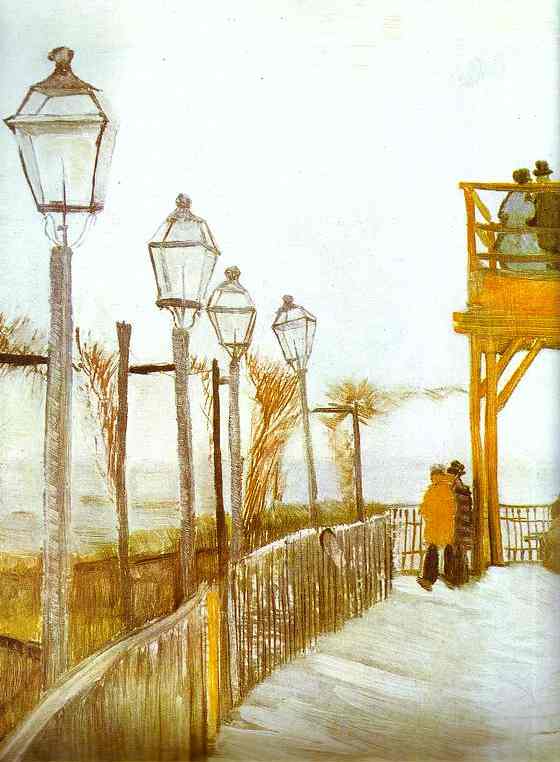
"Montmartre, Paris" showcases Van Gogh's distinctive style. The painting captures the bustling streets of Montmartre, a Parisian district known for its artistic community. Van Gogh employed bright, bold colors to convey the neighborhood’s energy. A key feature is his use of thick brushstrokes and impasto technique – applying paint in layers to create depth and texture. This was influenced by Impressionism but taken further with Van Gogh's innovative approach.
The painting also demonstrates a skillful use of contrasting colors, particularly complementary pairs like blue and orange, creating a dynamic and harmonious composition. This color scheme adds intensity and emotion, reflecting Van Gogh’s unique perspective on the world.
Historical Context and Symbolism
In the 1880s, Montmartre was a hub for artists seeking affordable rents and a vibrant bohemian atmosphere. The painting reflects this era, depicting everyday life in the district. The presence of people, lamps, and benches suggests a moment of peaceful observation amidst urban activity. Van Gogh's choice to depict Montmartre wasn’t merely about capturing a scene; it was about portraying a community and its spirit.
Emotional Impact and Legacy
"Montmartre, Paris" evokes a sense of vibrancy and quiet contemplation. The painting’s emotional impact stems from Van Gogh's ability to translate his personal feelings onto the canvas through color and brushwork. His innovative style paved the way for future artistic movements like Fauvism and Expressionism. Today, Van Gogh's works are celebrated worldwide, inspiring art enthusiasts and collectors alike.