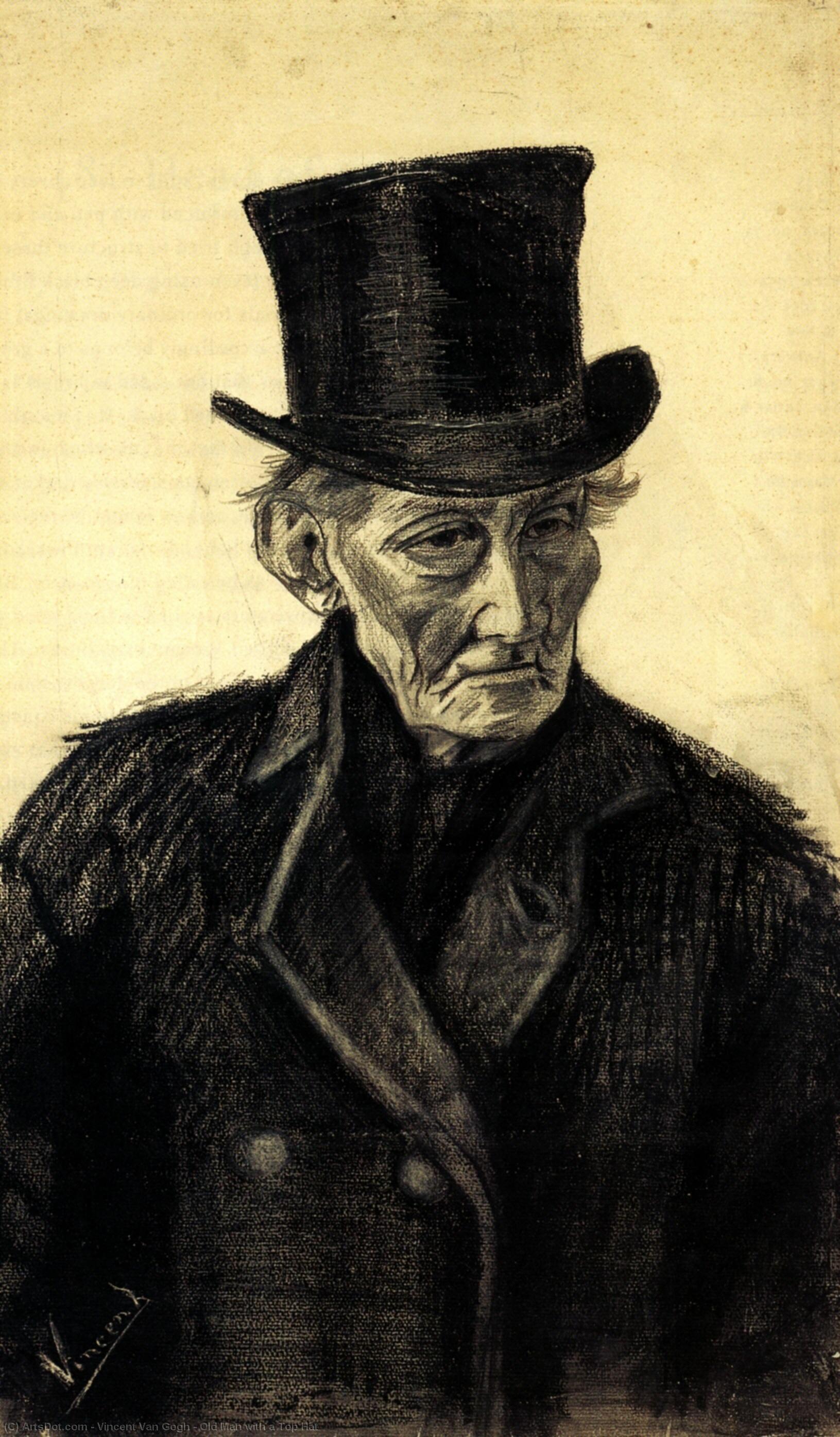
Old Man with a Top Hat: A Window Into Van Gogh’s Early Vision
Vincent Willem van Gogh's "Old Man with a Top Hat," painted in 1882 during his formative years in The Hague, Netherlands, stands as an arresting testament to the artist’s burgeoning talent and unwavering dedication to capturing the essence of human experience. Unlike the swirling landscapes that would later define his signature style—a stylistic leap born from profound emotional exploration—this crayon drawing embodies a remarkable degree of realism, reflecting Van Gogh's initial fascination with meticulous observation and detailed representation. It’s a deceptively simple composition: an elderly gentleman seated in profile, adorned with a distinguished top hat, gazing intently at the viewer. Yet, within this quiet stillness lies a wealth of artistic significance.
The Technique of Crayon – A Departure From Impressionism
Van Gogh's choice of crayon distinguishes “Old Man with a Top Hat” from the prevailing Impressionist movement. While Impressionists prioritized capturing fleeting moments of light and color—often employing loose brushstrokes—Van Gogh sought to achieve a more tactile and expressive result. The crayon medium allowed for layering colors gradually, creating subtle tonal variations that imbue the portrait with depth and luminosity. This technique is particularly evident in the rendering of the man’s face and clothing, where meticulous shading brings forth textures and contours that convey both physicality and psychological nuance. It speaks to a desire to portray not just what is seen but also how it feels—a characteristic that would become increasingly prominent throughout his oeuvre.
Symbolism Within Everyday Observation
Beyond its technical prowess, “Old Man with a Top Hat” resonates with symbolic undertones rooted in Van Gogh’s broader artistic concerns. The top hat itself serves as more than just an accessory; it represents status, dignity, and perhaps even a hint of melancholy—a visual shorthand for the complexities of human existence. Similarly, the old man's gaze directs attention outward, suggesting contemplation and introspection. He embodies wisdom gained through experience, mirroring Van Gogh’s own spiritual quest to find meaning in the mundane realities of life. The artist wasn’t merely depicting an individual; he was distilling a profound statement about humanity itself.
A Reflection of Artistic Evolution
“Old Man with a Top Hat” is undeniably a pivotal piece in understanding Van Gogh's artistic trajectory. It represents his initial foray into realism—a deliberate rejection of Impressionistic ideals—and foreshadows the expressive fervor that would characterize his later masterpieces. Studying this early work alongside pieces like “Digger” and “Eating from a Plate,” available as exquisite hand-painted reproductions on ArtsDot.com, reveals a remarkable progression toward capturing emotion through color and form. To delve deeper into Van Gogh’s life and artistic journey, visit Wikipedia for invaluable biographical information. Don't miss the opportunity to own a timeless artwork—a tangible connection to one of history’s most influential artists. Explore ArtsDot.com for stunning reproductions and discover more about Van Gogh's legacy!