The Painting's Significance
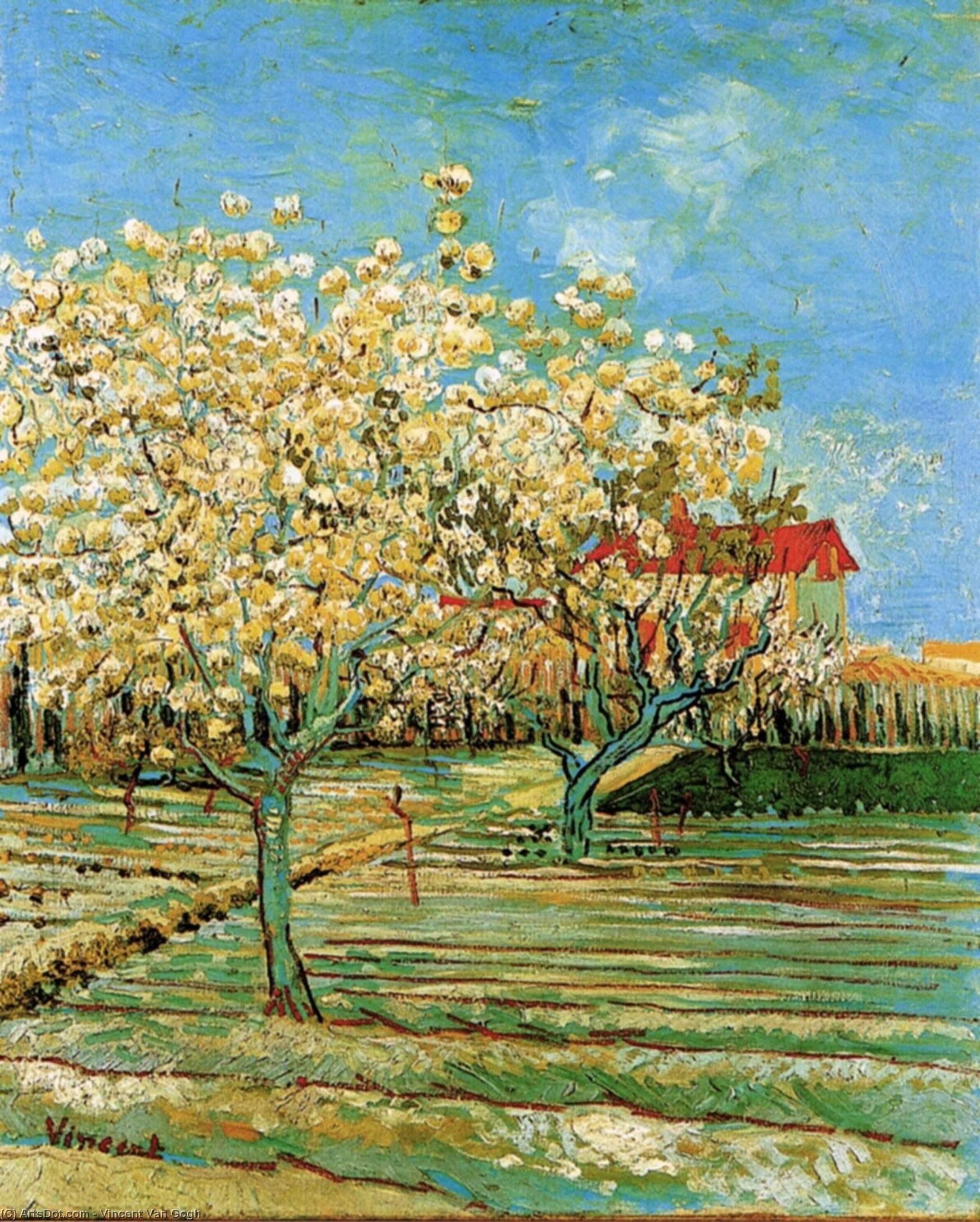
Orchard in Blossom, a beautiful oil on canvas painting created by
Vincent Van Gogh in 1888, is a stunning representation of an orchard during the spring season. The vibrant colors and intricate details of the blossoming trees evoke feelings of serenity and tranquility.
Artistic Style and Technique
Van Gogh's unique post-impressionist style is evident in this painting, characterized by bold brushstrokes and vivid color palette. The artist's use of thick paint application adds texture to the canvas, creating a three-dimensional effect that draws the viewer into the scene.
Historical Context
During his time in Arles, Van Gogh was inspired by the natural beauty of the surrounding landscape. He often depicted local olive groves, wheat fields, and sunflowers in his works.
Orchard in Blossom is a testament to his fascination with the changing seasons and the cyclical nature of life.
Similar Works by Van Gogh
Other notable paintings by Van Gogh that showcase his affinity for natural landscapes include:
Legacy and Impact
Van Gogh's work, including
Orchard in Blossom, has had a profound influence on modern art. His bold use of color and expressive brushwork paved the way for avant-garde movements like Fauvism and German Expressionism.
Museum Collection
The Musée des Beaux-Arts Toulon, France, houses an impressive collection of artworks, including pieces by renowned artists like Van Gogh. For more information on the museum's collection, visit
Musée des Beaux-Arts Toulon.
Conclusion
Orchard in Blossom is a captivating masterpiece that showcases Van Gogh's unique style and his deep connection with nature. This painting, along with other works by the artist, continues to inspire art lovers around the world.
For more information on Vincent Van Gogh and his artworks, visit
Vincent van Gogh on Wikipedia.