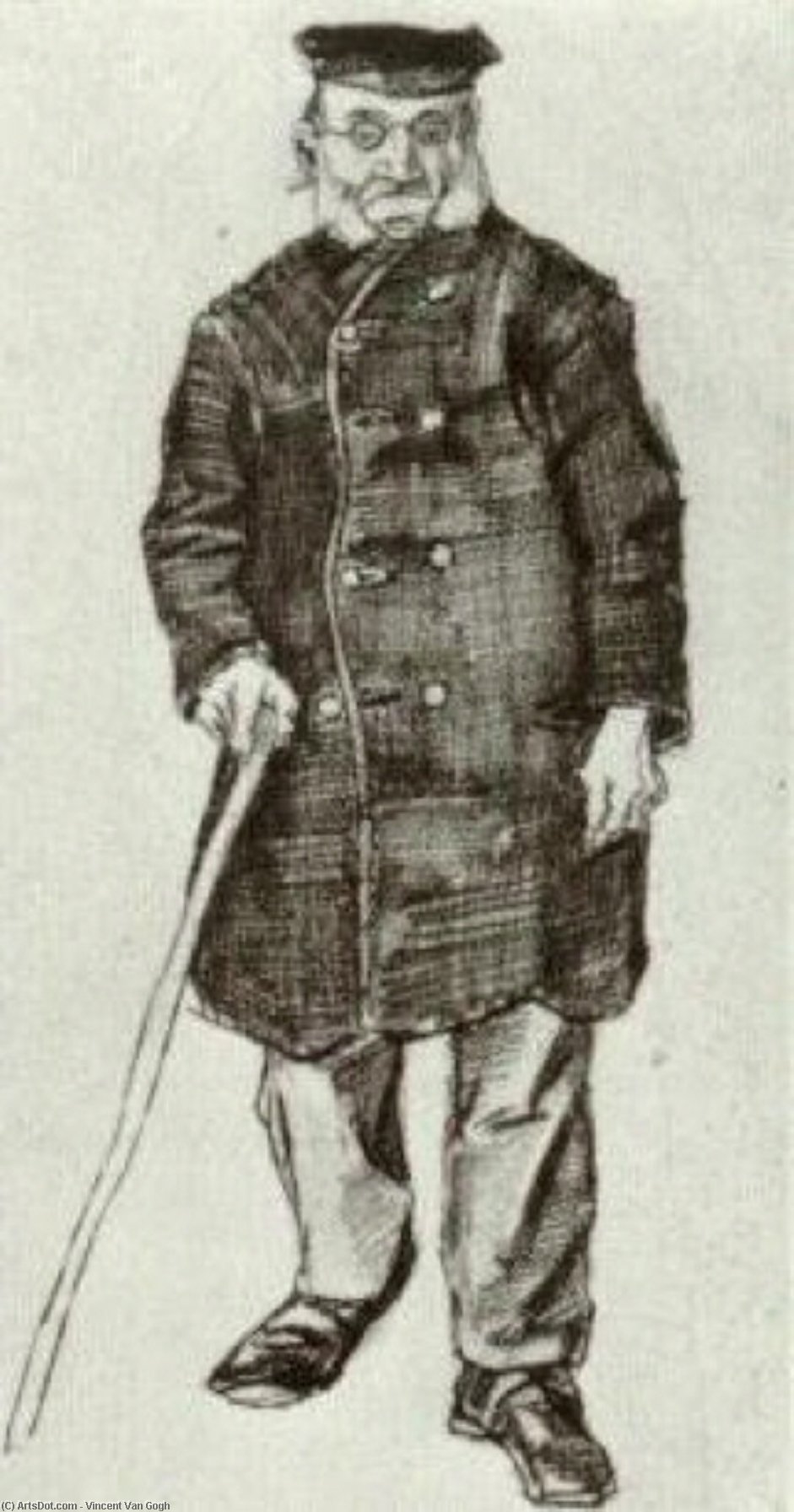
Orphan Man with Cap and Stick

Explore Vincent van Gogh’s ‘Orphan Man with Cap’! A poignant black & white drawing showcasing his masterful realism & expressive lines. Discover this iconic work.


vincent willem van gogh (1853 - 1890)

Vincent van Gogh (1853-1890): Explore the life & art of the Dutch Post-Impressionist master behind 'Starry Night' and 'Sunflowers'. Discover his bold style & lasting impact on modern art.

A Study in Age and Dignity: Van Gogh’s “Orphan Man with Cap and Stick”

  • Created in 1882, during his Dutch period, this striking drawing offers a poignant glimpse into Vincent van Gogh's developing artistic voice. While not as widely celebrated as his later, vibrant works, “Orphan Man with Cap and Stick” reveals Van Gogh’s masterful draftsmanship and burgeoning empathy for the working class.
  • The artwork depicts an elderly man, rendered in meticulous detail using pen and ink on paper. The subject is presented frontally, commanding attention with his weathered features and humble attire. He leans slightly on a cane, suggesting both physical frailty and a lifetime of labor. His cap adds to the sense of quiet respectability.

Technique and Style: Early Realism & Expressive Lines

  • This drawing exemplifies Van Gogh’s early commitment to realism, honed through careful observation of his surroundings. However, it's not a cold or clinical depiction. The artist employs expressive lines – varying in weight and density – to convey texture, form, and most importantly, the man’s character.
  • Hatching and cross-hatching techniques are skillfully used to build up shadows and create a sense of volume. The lines aren't merely descriptive; they seem to *animate* the figure, imbuing him with a quiet dignity.
  • Compared to his later Impressionistic and Post-Impressionistic paintings, this work is restrained in color – naturally, being a monochrome drawing. Yet, Van Gogh achieves remarkable depth and emotional resonance through tonal variations and masterful line control.

Historical Context & Symbolism

  • 1882 was a pivotal year for Van Gogh. Having abandoned his early career aspirations, he was fully dedicated to art but still searching for his unique style. This drawing reflects the influence of Dutch Masters like Rembrandt and Frans Hals – particularly in its focus on character study and realistic portrayal.
  • The “orphan man” title (and subject) hints at a life marked by hardship and perhaps loneliness. The cane symbolizes age, vulnerability, and reliance. His clothing, while simple, suggests a working-class background and a sense of pride. These elements combine to create a narrative about resilience in the face of adversity.
  • Van Gogh’s interest in portraying ordinary people – laborers, peasants, and those on the margins of society – was deeply rooted in his own experiences as a missionary among impoverished coal miners. He sought to give voice to the voiceless and dignity to the overlooked.

Emotional Impact & Interior Design Considerations

  • “Orphan Man with Cap and Stick” evokes a sense of quiet melancholy, but also profound respect. The man’s gaze is direct and unwavering, suggesting inner strength and wisdom.
  • As a reproduction, this drawing would be an excellent addition to interiors seeking a touch of understated elegance and historical depth. Its monochrome palette makes it versatile – complementing both modern and traditional décor styles.
  • Consider pairing it with neutral tones or incorporating it into a gallery wall featuring other drawings or portraits. The artwork’s contemplative mood lends itself well to spaces designed for relaxation, reading, or quiet reflection.