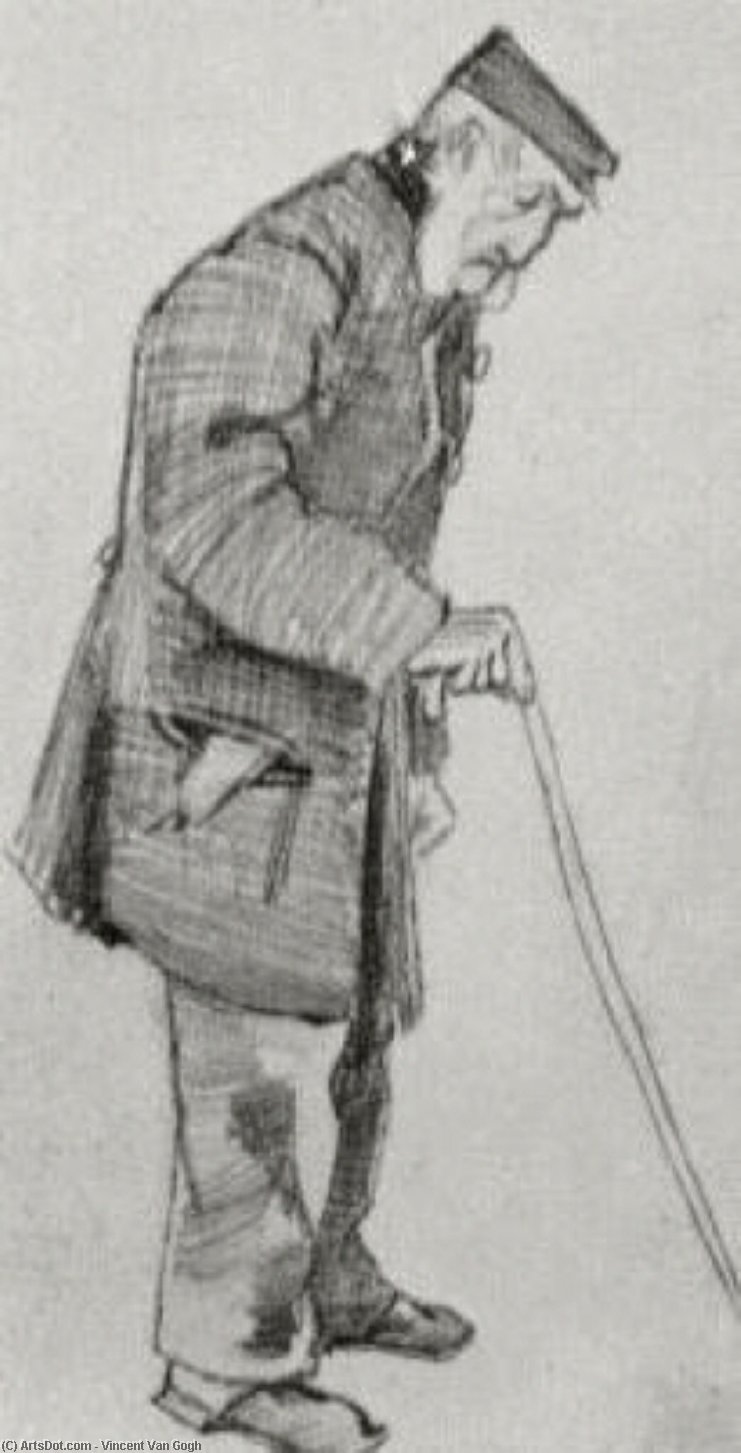
A Study in Quiet Dignity: Vincent van Gogh’s ‘Orphan Man with Cap and Walking Stick’
Vincent Willem van Gogh's “Orphan Man with Cap and Walking Stick,” completed in 1882 during his formative years in Nuenen, Netherlands—a period marked by intense observation of rural life—stands as a poignant testament to the artist’s early stylistic explorations. Rendered in chalk on tan wove paper, this unassuming sketch transcends mere representation; it embodies a profound sensitivity to human vulnerability and an unwavering commitment to capturing fleeting moments of everyday existence.
Composition and Technique: Hatching for Depth
The artwork's central focus is undeniably the elderly man depicted in profile. Van Gogh employs a masterful technique utilizing hatching—a series of closely spaced parallel lines—to sculpt tonal variations across the figure’s torso, shoulders, and head. This method isn’t merely decorative; it’s fundamental to conveying depth and texture. The artist meticulously builds up shading through layering successive strokes of chalk, creating an illusion of form that anticipates Van Gogh's later monumental canvases.
Realism Informed by Emotion
“Orphan Man” firmly establishes Van Gogh within the realm of Realism, albeit one infused with a distinctly expressive spirit. Unlike Impressionists who sought to capture fleeting impressions of light and color, Van Gogh prioritizes anatomical accuracy alongside emotional resonance. The man’s posture—slightly slumped, leaning on his walking stick—suggests both physical fragility and inner contemplation. This deliberate choice reflects Van Gogh's fascination with portraying the human condition with unflinching honesty.
Symbolism: Gesture and Reflection
Beyond its formal qualities, “Orphan Man” resonates with symbolic significance. The walking stick serves as a potent emblem of reliance on support—a visual metaphor for aging and vulnerability—while the book held by the figure embodies intellectual pursuits and introspection. These subtle gestures invite viewers to consider themes of solitude, dignity, and the enduring power of contemplation—themes that would become central to Van Gogh’s artistic vision.
A Precursor to Masterpieces: Echoes of Later Style
This early drawing foreshadows Van Gogh's groundbreaking stylistic innovations that would characterize his subsequent works. The dynamic use of hatching, combined with the artist’s unwavering attention to tonal gradation and textural detail—characteristics evident here—anticipates the expressive brushstrokes and vibrant colors that define paintings like “Starry Night” and “Sunflowers.” “Orphan Man with Cap and Walking Stick,” therefore, isn't simply a snapshot of rural life; it’s a crucial stepping stone on Van Gogh’s artistic pilgrimage toward achieving his unparalleled mastery.