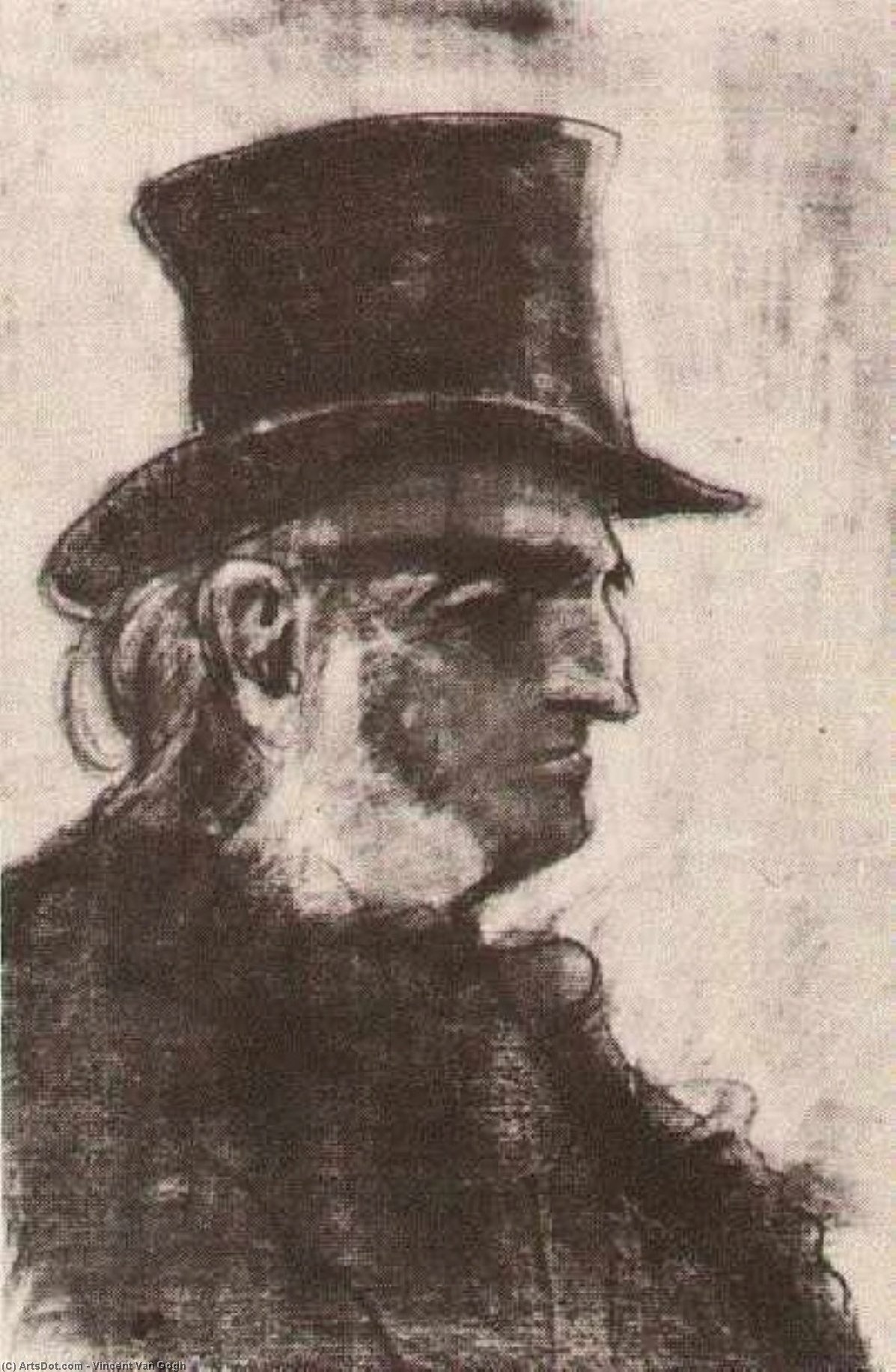
“Orphan Man with Top Hat” depicts Adrianus Zuyderland, a resident of The Hague’s Old People's Home, captured by Vincent van Gogh in November 1882. This poignant portrait showcases Van Gogh’s masterful use of color and brushwork, reflecting his fascination with capturing everyday life and human emotion.
Orphan Man with Top Hat Drinking Coffee - A Portrait of Vulnerability
Vincent van Gogh’s “Orphan Man with Top Hat Drinking Coffee,” painted in November 1882, stands as a poignant snapshot of human experience—a testament to quiet dignity amidst profound hardship. Executed during his formative years in The Hague, this unassuming portrait reveals Van Gogh's meticulous observation and burgeoning mastery of watercolour and pencil drawing techniques.
- Subject Matter: The artwork depicts Adrianus Zuyderland, a resident of the Reformed Old People’s Home where Van Gogh resided. Zuyderland embodies the vulnerability of aging—a man consumed by solitude and burdened by circumstance.
- Style & Technique: Characteristic of Van Gogh's early oeuvre, “Orphan Man” exemplifies Realism blended with Impressionistic influences. The artist employed a loose watercolor wash to capture the subtle nuances of light and shadow on Zuyderland’s face and clothing, layering delicate strokes to convey texture and emotion.
- Historical Context: Painted amidst Van Gogh's initial foray into artistic experimentation following his relocation to The Hague, this piece reflects the broader artistic currents of the time—a move away from purely academic conventions toward a more expressive engagement with the natural world. It aligns with Van Gogh’s exploration of themes related to compassion and empathy.
Symbolism: Capturing Essence Through Detail
Beyond its depiction of Zuyderland, “Orphan Man” is laden with symbolic significance. The man's posture—hunched slightly over his cup—suggests a preoccupation with inner turmoil, mirroring Van Gogh’s own struggles with mental health during this period. Furthermore, the inclusion of a top hat and waistcoat speaks to social status and aspiration—a subtle reminder of Zuyderland’s former life as a respected businessman.
- Color Palette: The muted palette—dominated by browns, ochres, and creams—underscores the melancholic mood of the scene. However, Van Gogh skillfully utilizes highlights to illuminate Zuyderland's face, emphasizing his gaze and conveying an aura of quiet contemplation.
- Composition: The artist’s careful arrangement of elements contributes to the artwork’s emotional impact. Zuyderland is positioned centrally within the frame, drawing the viewer’s eye directly to his expression—a gesture of vulnerability and introspection.
Emotional Resonance: A Window Into Van Gogh's Soul
"Orphan Man with Top Hat Drinking Coffee" transcends mere representation; it delves into the depths of human emotion. Van Gogh’s masterful rendering captures not only Zuyderland’s physical appearance but also his psychological state—a profound awareness of mortality and a yearning for connection amidst isolation. The artwork serves as an enduring reminder of Van Gogh's unwavering commitment to portraying the complexities of human experience with honesty and compassion.
This evocative portrait exemplifies Van Gogh’s pioneering approach to watercolor painting and offers invaluable insight into his artistic vision during his formative years.