The Enigmatic Figure: Paul Gauguin’s ‘Man in a Red Beret’
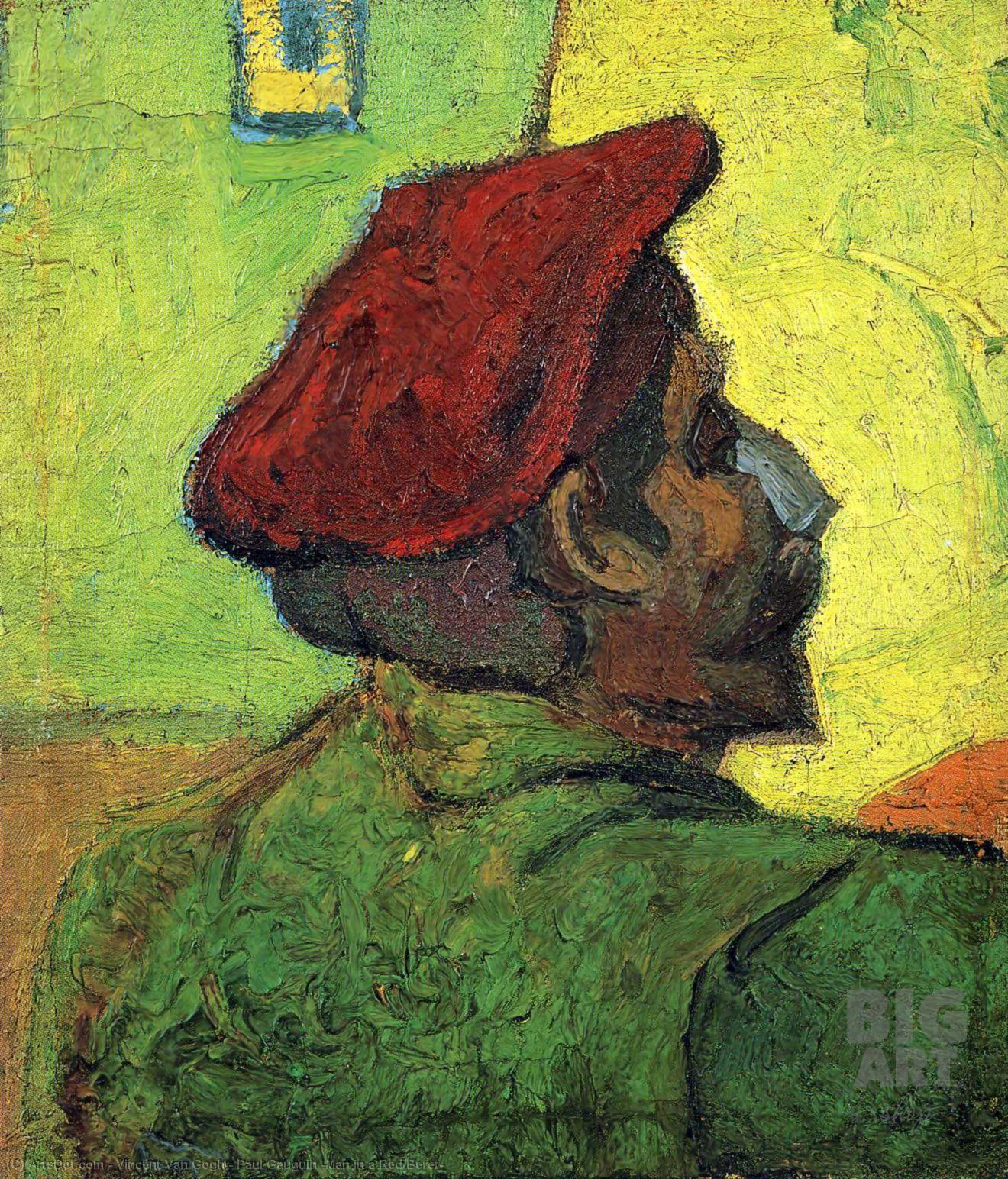
Vincent van Gogh's “Paul Gauguin (Man in a Red Beret)” isn’t merely a portrait; it’s a visual embodiment of the complex and intensely creative relationship between two giants of modern art. Painted in 1888 during a pivotal period of artistic exploration, this intimate scene captures Gauguin not as a celebrated figure, but as a man caught in quiet contemplation – a study in vulnerability and understated power. The painting, measuring a modest 37 x 33 cm, immediately draws the eye with its bold simplicity: a man, rendered in Van Gogh’s signature impasto technique, sits against a backdrop of warm yellow walls, his gaze directed downwards, hinting at a private world. It's a deceptively simple composition that speaks volumes about the dynamics between these two artists who profoundly shaped the course of art history.
Van Gogh employed the Cloisonnism technique – a method characterized by sharply defined outlines and areas of solid color—to create a striking contrast between the figure and its surroundings. The red beret, a vibrant splash of color against the muted tones, immediately commands attention, drawing our focus to Gauguin’s face. His mustache and goatee are meticulously rendered, adding character and depth to his expression. The yellow walls aren't just a background; they contribute significantly to the painting’s atmosphere, radiating warmth and suggesting a sense of domesticity or perhaps even introspection. The two windows offer glimpses of an exterior world, subtly contrasting with the contained space of the interior scene.
A Collaboration Forged in Arles
This particular work exists within the fascinating context of Van Gogh’s time spent in Arles alongside Paul Gauguin. The pair shared a studio and a fervent desire to break from the conventions of academic art, seeking instead to express their individual visions through color and form. This period was marked by intense artistic exchange, experimentation, and, ultimately, a growing rift between the two artists. “Man in a Red Beret” serves as a poignant reminder of this shared history – a snapshot of a creative partnership that blossomed amidst both collaboration and tension.
The painting’s stylistic roots lie firmly within Post-Impressionism, but it also incorporates elements of Synthetism, a movement championed by Gauguin himself. Synthetism emphasized bold colors and simplified forms, rejecting the naturalistic representation favored by Impressionists. Van Gogh's use of color is particularly striking – not intended to mimic reality, but rather to convey emotion and atmosphere. The yellow walls, for instance, aren’t simply depicted as yellow; they evoke a sense of warmth, comfort, or perhaps even melancholy.
Symbolism and the Portrait’s Depth
Beyond its technical merits, “Man in a Red Beret” is rich in symbolism. Gauguin's downward gaze suggests introspection, contemplation, or perhaps even weariness. The open mouth hints at a moment of quiet observation – a pause in the flow of thought. The red beret itself could be interpreted as a symbol of defiance, individuality, or simply a personal choice. It’s a small detail that adds layers of meaning to the portrait, inviting viewers to project their own interpretations onto the scene.
Furthermore, the painting reflects Gauguin's broader artistic philosophy – his desire to capture the essence of human experience through simplified forms and vibrant colors. His time in Tahiti profoundly influenced his work, leading him to explore themes of primitivism, spirituality, and the relationship between humanity and nature. “Man in a Red Beret” offers a glimpse into this world, capturing Gauguin’s spirit with remarkable immediacy.
A Legacy of Influence
Paul Gauguin was born in Paris in 1848 and quickly became associated with the Impressionist movement through his acquaintance with Camille Pissarro. He developed his distinct style, marked by vivid colors and Symbolist themes, particularly during his time in Tahiti. Gauguin's work had a profound impact on modern art, influencing artists such as Pablo Picasso and Henri Matisse. Van Gogh’s portrait of Gauguin stands as a testament to this influence – a beautiful and evocative image that continues to resonate with viewers today.