Vincent van Gogh (1853-1890): Explore the life & art of the Dutch Post-Impressionist master behind 'Starry Night' and 'Sunflowers'. Discover his bold style & lasting impact on modern art.
A Window Into Springtime Soul: Exploring Vincent van Gogh’s ‘Pear Tree in Blossom’
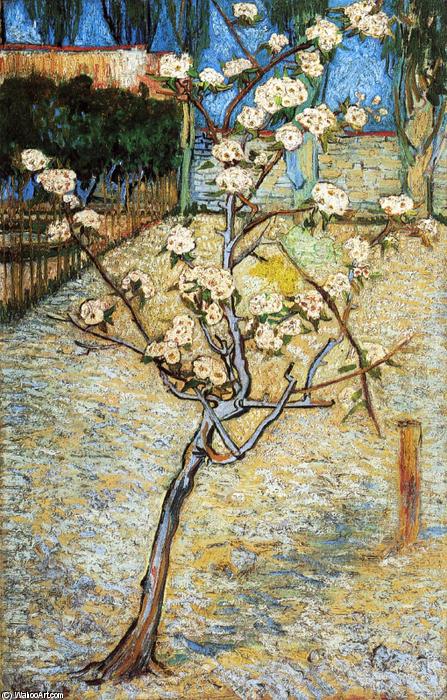
Vincent van Gogh's 'Pear Tree in Blossom,' painted in 1888 during his Parisian period, stands as a testament to the artist’s evolving artistic vision and his profound connection with the natural world. More than just a depiction of a flowering tree—a common motif in Impressionist landscapes—this painting embodies Van Gogh’s masterful synthesis of influences from Japanese art and Pointillism, resulting in an emotionally charged composition that continues to resonate with viewers today.
The Artistic Synthesis: Influences Beyond Impressionism
While undeniably rooted in Impressionistic principles concerning light and color – particularly the dappled sunlight filtering through the branches – ‘Pear Tree in Blossom’ transcends mere replication of visual sensations. Van Gogh deliberately incorporated elements from Japanese woodblock prints (ukiyo-e), notably their flattened perspective and emphasis on decorative patterns, subtly altering the overall aesthetic experience. This deliberate borrowing wasn't merely stylistic; it reflected a broader intellectual curiosity about Eastern artistic traditions and their ability to convey emotion through simplified forms. Furthermore, Van Gogh’s pioneering use of Pointillist techniques—applying tiny dots of color rather than blending them—added another layer of complexity. Rather than aiming for seamless transitions between hues, he sought to capture the vibrancy and luminosity of springtime blossoms by fracturing light into discrete points of pigment, creating an illusion of shimmering brilliance.
Symbolism Rooted in Observation
The pear tree itself holds considerable symbolic significance within Van Gogh’s oeuvre. Traditionally associated with fertility, purity, and renewal—themes prevalent in Christian iconography—the blossoming tree represents the promise of springtime and the cyclical nature of life. Its placement on a sidewalk, bordered by a simple fence, introduces an element of domestic tranquility juxtaposed against the grandeur of nature. The two flanking trees serve as anchors for the composition, grounding the viewer’s gaze and emphasizing the central subject's prominence. Notably, the bench positioned beneath the tree invites contemplation—a gesture characteristic of Van Gogh’s desire to engage viewers emotionally and intellectually.
A Masterful Expression of Feeling
What distinguishes ‘Pear Tree in Blossom’ from countless other landscape paintings is its palpable emotional intensity. The thick impasto brushstrokes—characteristic of Van Gogh's distinctive style—capture the dynamism of movement and convey a sense of immediacy. The bold yellows and whites dominate the palette, reflecting not only the radiant glow of blossoms but also conveying feelings of joy and optimism. Yet, beneath this surface exuberance lies an underlying melancholy – a subtle acknowledgment of life’s fragility and beauty intertwined. This duality is precisely what elevates ‘Pear Tree in Blossom’ beyond mere visual representation; it transforms it into a profound meditation on the human condition.
Preservation and Reproduction: Bringing Van Gogh's Vision Home
Currently housed at the Van Gogh Museum in Amsterdam, this masterpiece exemplifies the museum’s commitment to safeguarding artistic heritage and making Van Gogh’s art accessible to audiences worldwide. ArtsDot offers meticulously crafted oil painting reproductions of ‘Pear Tree in Blossom,’ allowing collectors and interior designers alike to experience the breathtaking beauty and emotional depth of this iconic artwork firsthand. Own a piece of art history—a tangible connection to Vincent van Gogh's enduring legacy.