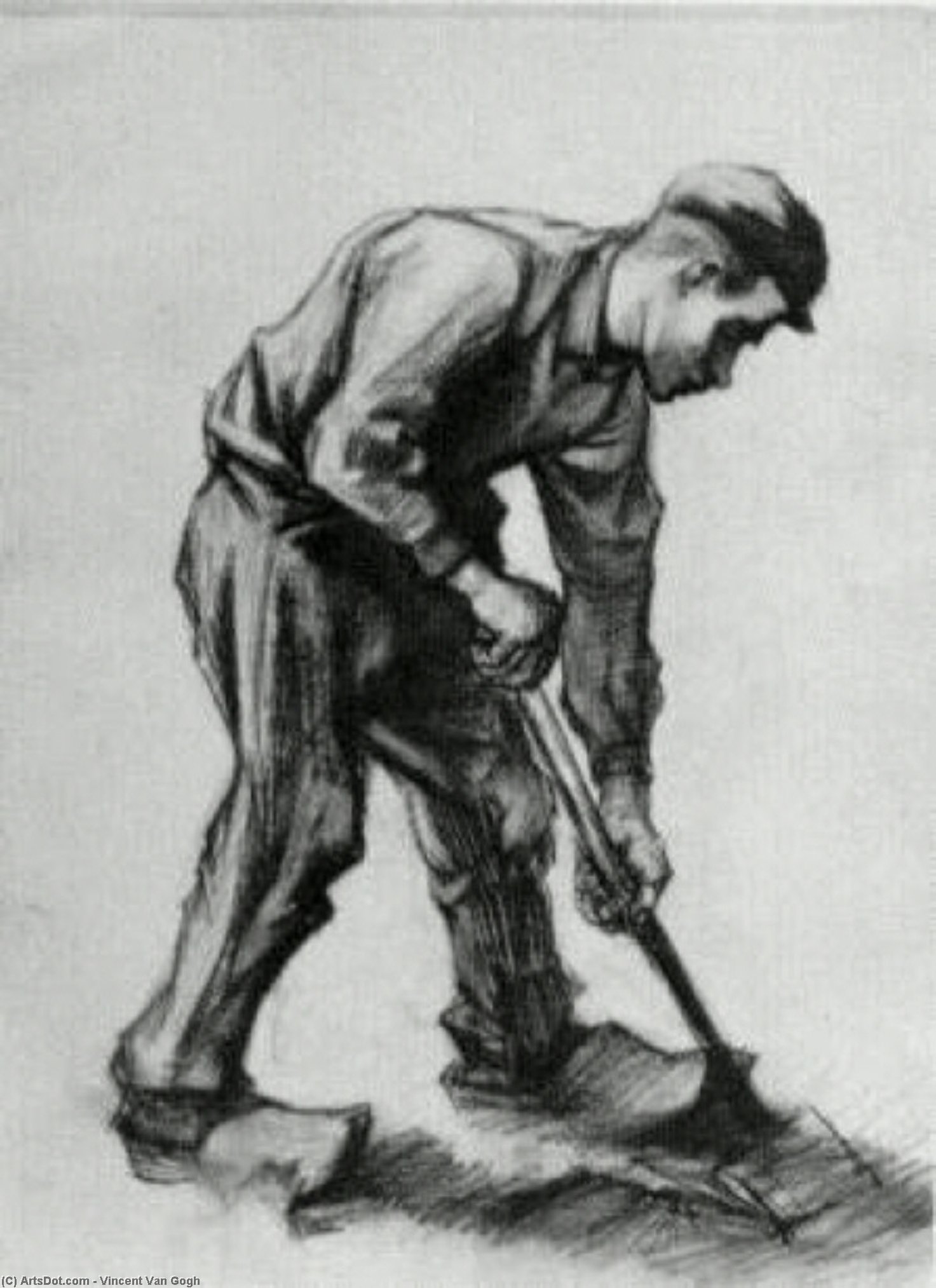
Vincent van Gogh’s poignant depiction of rural labor embodies Expressionist style—a man diligently digging with a shovel captures the raw emotion and dedication characteristic of his era. Explore this evocative masterpiece and bring its timeless beauty into your home.
Vincent van Gogh (1853-1890): Explore the life & art of the Dutch Post-Impressionist master behind 'Starry Night' and 'Sunflowers'. Discover his bold style & lasting impact on modern art.
A Portrait of Rural Resilience: Vincent van Gogh’s “Peasant Boy, Digging”
The drawing "Peasant Boy, Digging," executed in 1885 by Vincent Willem van Gogh, transcends mere depiction; it embodies a profound meditation on labor, vulnerability, and the quiet dignity inherent in everyday existence. Captured in stark black and white, this seemingly simple composition speaks volumes about Van Gogh’s artistic vision and his unwavering fascination with capturing the essence of rural life – a theme recurrent throughout his oeuvre.
Subject Matter and Composition
The artwork centers around a young man dressed in overalls, diligently shoveling soil into a bucket. The posture is deliberately contorted—bending low, muscles straining—yet there’s an undeniable stillness within the movement. This isn't a heroic figure engaged in grand endeavors; rather, he represents the backbone of agricultural society – someone quietly performing essential tasks with unwavering dedication. Van Gogh meticulously renders every detail: the worn fabric of the overalls, the suspenders supporting his torso, and the focused gaze of the boy’s eyes. The placement of the shovel and bucket creates a dynamic diagonal line that draws the viewer's eye across the canvas, emphasizing the physicality of the labor involved.
Style and Technique – Impressionistic Roots
While firmly rooted in Post-Impressionism, “Peasant Boy, Digging” demonstrates Van Gogh’s distinctive approach to capturing light and texture. Unlike Impressionists who prioritize fleeting moments of visual sensation, Van Gogh employs a technique characterized by deliberate hatching and crosshatching—a method he honed during his time in France – to build up tonal values with remarkable precision. These textured strokes convey not only the surface appearance of the soil but also an underlying sense of warmth and solidity. The artist’s use of shading creates depth and volume, lending a palpable realism to the scene despite its monochrome palette. This technique aligns closely with Impressionistic principles while simultaneously forging a path toward Expressionism's emotive intensity.
Historical Context: Rural France and Artistic Exploration
Painted during Van Gogh’s stay in Arles, Provence, “Peasant Boy, Digging” reflects the artist’s growing interest in portraying ordinary subjects—particularly those found within the landscapes of rural France. Following his move from Paris, where he had initially experimented with Impressionistic influences, Van Gogh sought inspiration in the natural world and endeavored to convey its beauty and hardship with uncompromising honesty. The painting speaks to a broader cultural preoccupation with depicting the lives of working-class individuals—a trend that gained momentum during the late 19th century as artists wrestled with questions of social realism and psychological depth.
Symbolism: Resilience and Human Connection
Beyond its depiction of physical labor, “Peasant Boy, Digging” carries symbolic weight. The boy’s unwavering focus embodies perseverance and resilience—qualities that Van Gogh himself possessed during his turbulent life. Furthermore, the act of digging represents transformation and renewal – mirroring the cyclical rhythms of agricultural seasons and hinting at a deeper yearning for connection with the earth and its bounty. The monochrome palette contributes to this symbolic resonance, stripping away extraneous distractions and concentrating on the fundamental elements of human experience.
Emotional Impact: Quiet Contemplation
Ultimately, “Peasant Boy, Digging” evokes a powerful sense of contemplative stillness. It’s not an image designed to elicit dramatic emotion; instead, it invites viewers to pause and consider the dignity inherent in simple tasks performed with dedication. The drawing's understated beauty resides precisely in its ability to convey profound psychological insight—a testament to Van Gogh’s genius for capturing the inner life of his subjects and transforming ordinary scenes into canvases brimming with emotional resonance. It serves as a poignant reminder that art can illuminate the human condition with remarkable sensitivity and grace.