The Essence of Labor: Vincent van Gogh's "Peasant Lifting Potatoes"
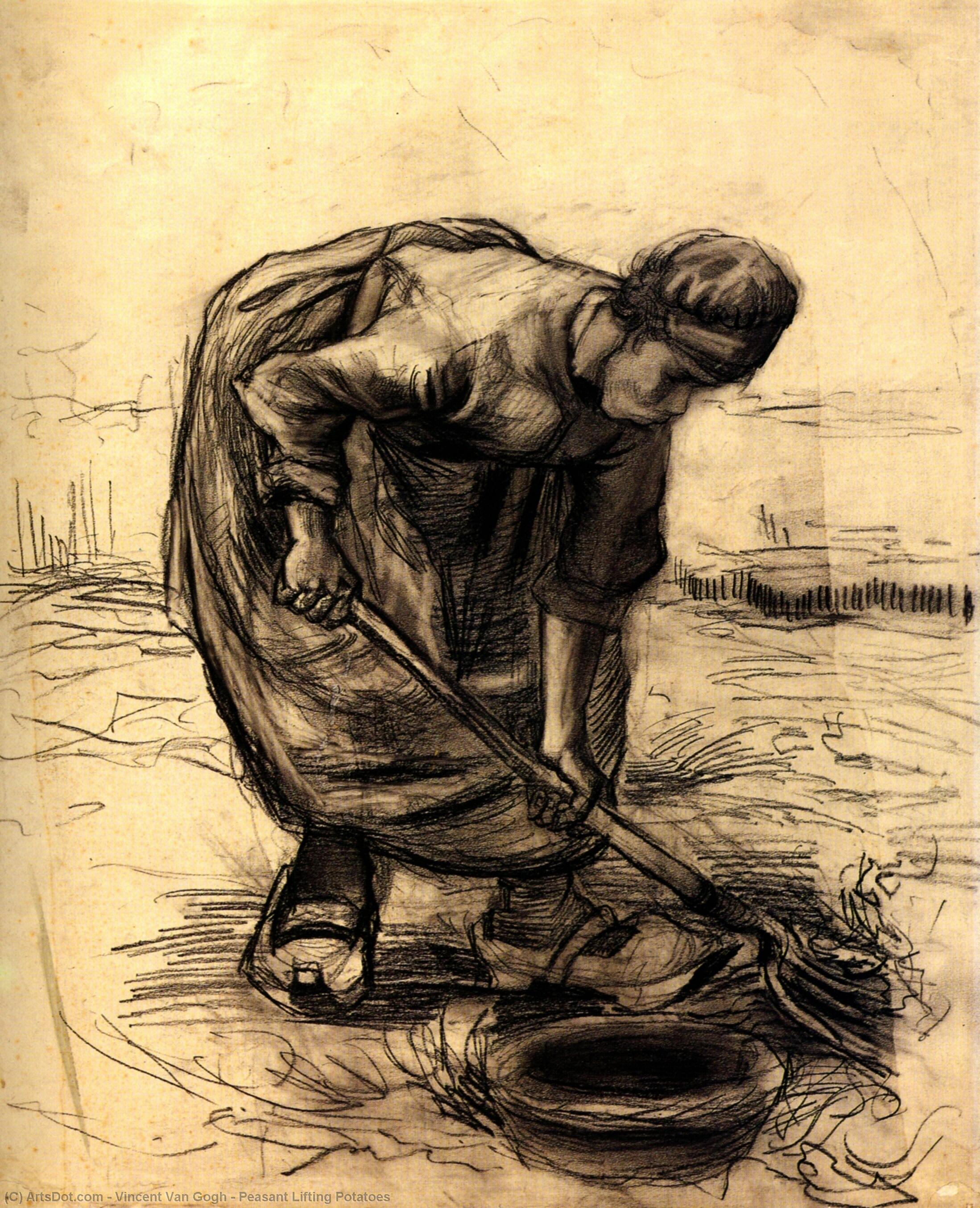
Vincent van Gogh’s “Peasant Lifting Potatoes,” painted in 1885, isn’t merely a depiction of agricultural work; it’s a profound meditation on the dignity and strength inherent in everyday labor. Created during his formative years in Nuenen, a small village near Eindhoven, this chalk drawing offers a remarkably intimate glimpse into the lives of rural Dutch peasants – a subject often overlooked by the art world at the time. The scene unfolds with quiet intensity: a solitary peasant, rendered with an almost sculptural quality, bends to lift a heavy sack of potatoes from the earth. The simplicity of the composition—a single figure against the backdrop of a muted landscape—forces us to confront the physicality and emotional weight of his task.
- Subject Matter: The core subject is the humble act of potato harvesting, a cornerstone of rural life in 19th-century Netherlands.
- Setting: A bleak, overcast landscape—characteristic of Nuenen’s environment—underscores the arduous nature of the work.
- Figure: The peasant's posture and expression convey both exhaustion and a quiet determination.
A Masterclass in Realist Technique
Van Gogh’s masterful use of chalk is central to the drawing’s impact. He eschews the vibrant colors that would later define his mature style, opting instead for a restrained palette of grays, browns, and ochres. This deliberate choice emphasizes the texture of the earth, the rough fabric of the peasant's clothing, and the weight of the potatoes themselves. The artist employs short, broken lines—a technique borrowed from Japanese woodblock prints – to build up form and create a sense of immediacy. These lines aren’t smooth or idealized; they are deliberately uneven, reflecting the roughness of the subject matter and conveying a feeling of raw energy.
The drawing's remarkable detail is achieved through meticulous observation and an understanding of light and shadow. Van Gogh captures the subtle variations in tone—the deep shadows cast by the sack, the highlights on the peasant’s hands—with astonishing accuracy. This attention to detail isn’t merely decorative; it serves to heighten our awareness of the physical reality of the scene.
Symbolism and Social Commentary
Beyond its technical merits, “Peasant Lifting Potatoes” carries a subtle layer of social commentary. Van Gogh was deeply empathetic towards the working class, viewing them as embodying resilience and dignity. By focusing on this anonymous peasant, he elevates his labor to an act of quiet heroism—a testament to human endurance. The drawing can be interpreted as a poignant reminder of the often-unseen struggles faced by ordinary people. The muted colors also evoke a sense of melancholy, reflecting the hardships of rural life and the isolation experienced by those who labored in the fields.
Emotional Resonance and Lasting Legacy
Despite its seemingly simple subject matter, “Peasant Lifting Potatoes” possesses a remarkable emotional depth. The drawing’s power lies not in grand gestures or dramatic scenes, but in its ability to convey a profound sense of human connection—a shared experience of labor, hardship, and quiet dignity. It's a window into the soul of a peasant, offering a glimpse beyond the surface of rural life. This early work demonstrates Van Gogh’s nascent talent for capturing not just appearances, but also the underlying emotions and experiences of his subjects. Today, reproductions of this drawing continue to resonate with viewers, reminding us of the beauty and significance found in the everyday lives of ordinary people—a legacy that cements its place as a cornerstone of Van Gogh's artistic journey.