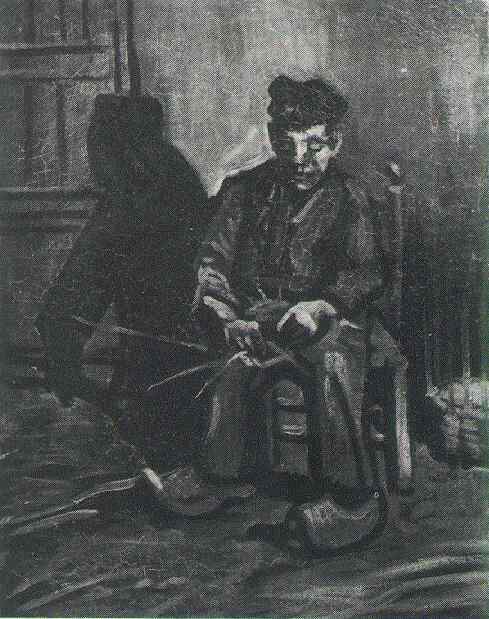
Vincent van Gogh’s ‘Peasant Making a Basket’: A Study in Rural Simplicity and Emotional Expression
Vincent Willem van Gogh (1853-1890), a name synonymous with artistic passion and turbulent genius, remains one of the most recognizable and beloved figures in Western art history. Born on March 30, 1853, in Groot-Zundert, Netherlands, his journey was not one of immediate acclaim but rather a slow burn of dedication, struggle, and ultimately, profound influence. The eldest of six children born to a Protestant minister, Theodorus van Gogh, Vincent’s early life was steeped in religious contemplation, a sensibility that would subtly permeate much of his later work. Though he displayed an inclination towards drawing from a young age, his path wasn't immediately clear; he explored various vocations – art dealer, teacher, and missionary – before fully embracing the artist’s life. These experiences, though seemingly disparate, proved formative, instilling in him a deep empathy for the working class and a profound sense of spiritual seeking that would shape his artistic vision.
- Subject Matter & Context: “Peasant Making a Basket,” painted in 1890 during Van Gogh’s stay at Saint-Rémy-de-Provence, embodies his fascination with the everyday lives of rural laborers—a deliberate departure from academic conventions favoring grand historical narratives. He sought to portray honest humanity and capture the beauty inherent in simple tasks performed with diligence and care.
- Style & Technique: This painting exemplifies Van Gogh’s signature Post-Impressionist style, characterized by bold color palettes and expressive brushwork—techniques that prioritize conveying emotion over precise representation. The thick impasto technique—applying paint directly onto the canvas in textured layers—creates a palpable sense of physicality and dynamism.
Color Palette & Composition: Van Gogh’s masterful use of color is immediately striking. Dominated by earthy hues – rich browns, verdant greens, and warm yellows – he achieves harmony between the subject and her surroundings. These colors aren't merely decorative; they serve to evoke feelings of tranquility and connection to nature—themes central to Van Gogh’s artistic ethos. The composition centers around a seated woman meticulously weaving a basket, positioned slightly off-center to draw the viewer’s eye and emphasize her focused activity.
Symbolism & Emotional Impact: Beyond its aesthetic qualities, “Peasant Making a Basket” carries symbolic weight. It represents labor, tradition, and the dignity of manual work—values deeply held by Van Gogh himself. The woman's posture conveys quiet determination and resilience, mirroring the artist’s own struggles with mental illness during his time at Saint-Rémy. More than just depicting a scene; it aims to communicate an inner state—a profound appreciation for beauty found in ordinary moments.
- Reproductions & Preservation: At ArtsDot.com, we understand the desire to experience Van Gogh’s artistic legacy firsthand. Our skilled artisans meticulously recreate each brushstroke and hue of “Peasant Making a Basket,” ensuring that our hand-painted oil reproductions capture the essence of his original masterpiece.
- Sizes & Availability: Whether you envision a captivating centerpiece for your living room or a thoughtful addition to your home office, we offer reproductions in various sizes—from petite prints to expansive canvases—to perfectly complement your aesthetic preferences and budget.
Further Exploration: To delve deeper into Van Gogh’s artistic journey and appreciate the enduring influence of “Peasant Making a Basket,” we encourage you to visit
Vincent Willem van Gogh’s artist database or explore
Van Gogh Museum in Amsterdam. You can also discover similar artworks at
Wadsworth Atheneum.