A Study in Quiet Resolve
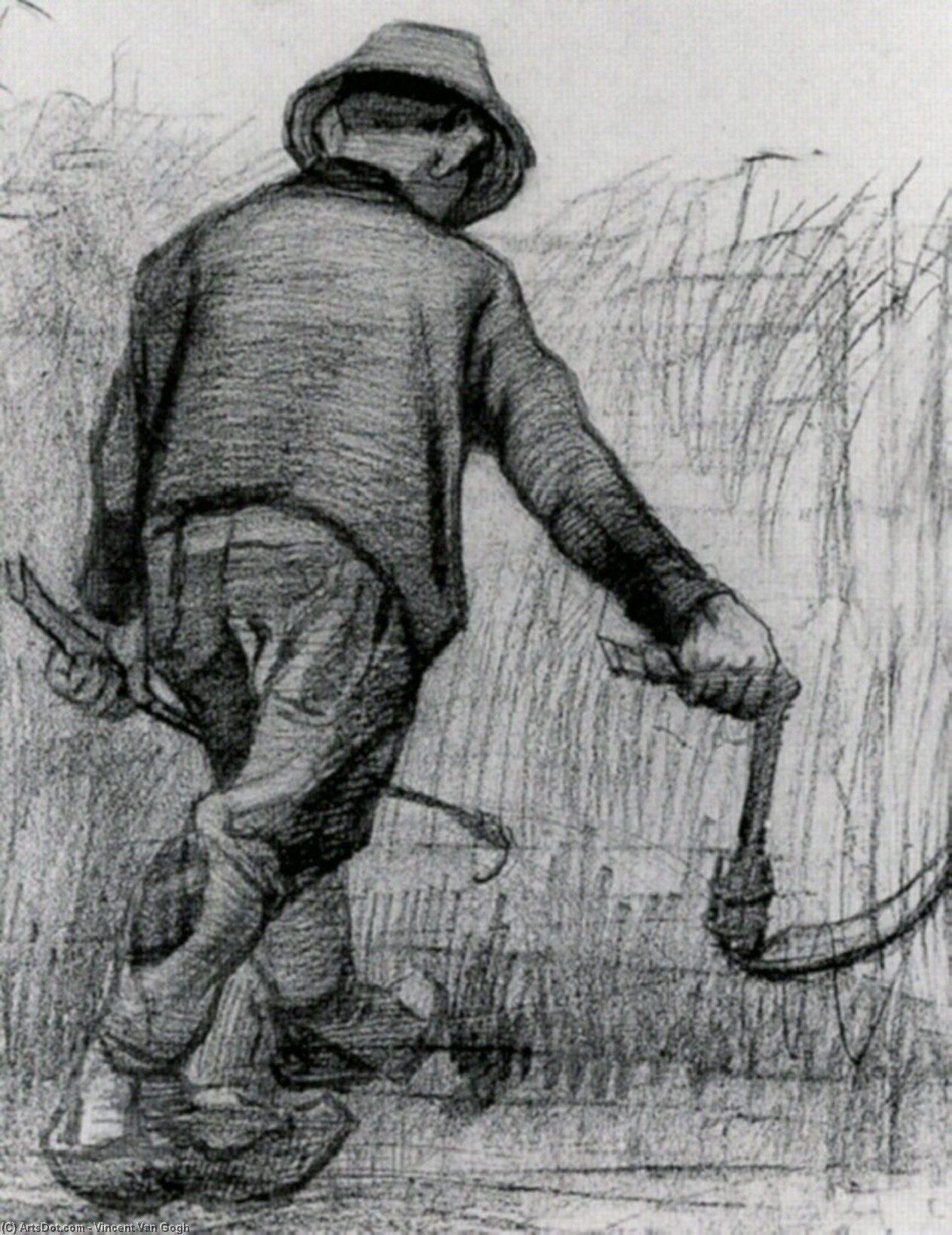
In the quiet corners of art history, few sketches possess the raw, unadorned power found in Vincent van Gogh’s “Peasant with Sickle, Seen from the Back.” Created in 1885 during his formative years in Nuenen, this work serves as a profound window into the artist's early preoccupation with the dignity of manual labor. Rather than a grand, colorful spectacle, Van Gogh offers us a moment of stillness—a monochromatic meditation on the weight of existence and the rhythmic pulse of rural life. The figure, positioned with a deliberate, off-center balance, invites the viewer to look past the surface of the paper and into the very soul of the working class. There is an intimacy here that transcends the medium; we are not merely observing a laborer, but sharing in his solitude.
The technical execution of this piece reveals a master in the making, utilizing the energetic, tactile qualities of charcoal or graphite to build a world out of shadow and light. Van Gogh’s hand is visible in every stroke, where short, urgent lines dance across the paper to create the rough texture of sun-parched grass and the heavy, coarse fabric of the peasant's clothing. The artist employs a sophisticated range of grayscale, moving from the deepest, most somber blacks to delicate, ethereal grays that suggest a diffused, overcast light. This lack of color does not diminish the work; instead, it strips away distractions, forcing an encounter with the fundamental forms and the stark, honest reality of the subject matter. The use of hatching and cross-hatching provides a structural depth that anchors the figure against the horizontal line of a distant fence, creating a sense of space that feels both grounded and expansive.
Symbolism and the Beauty of Toil
Beyond its technical brilliance, the artwork is steeped in a quiet symbolism that resonates deeply with anyone who finds beauty in the understated. The sickle, curved and sharp against the soft textures of the landscape, acts as a potent emblem of the harvest—a symbol of both the sustenance provided by the earth and the grueling toil required to reap it. The peasant’s posture, viewed from behind, denies us the familiarity of a face, yet conveys an overwhelming sense of character through the slump of the shoulders and the steady stance. It is a visual embodiment of resilience; even in weariness, there is an unwavering determination that mirrors Van Gogh's own legendary perseverance.
For the discerning collector or interior designer, this piece offers a unique opportunity to introduce a sense of historical gravity and contemplative calm into a space. As a reproduction, it brings the soulful atmosphere of the Dutch Realism movement into the modern home, acting as an anchor of authenticity and emotion. It is more than a decoration; it is a conversation starter that celebrates the beauty found in simplicity and the enduring strength of the human spirit. Whether placed in a minimalist gallery setting or a warm, textured study, "Peasant with Sickle, Seen from the Back" commands attention through its profound, silent eloquence.