A Study in Texture and Observation: Vincent van Gogh’s “Peasant with Walking Stick”
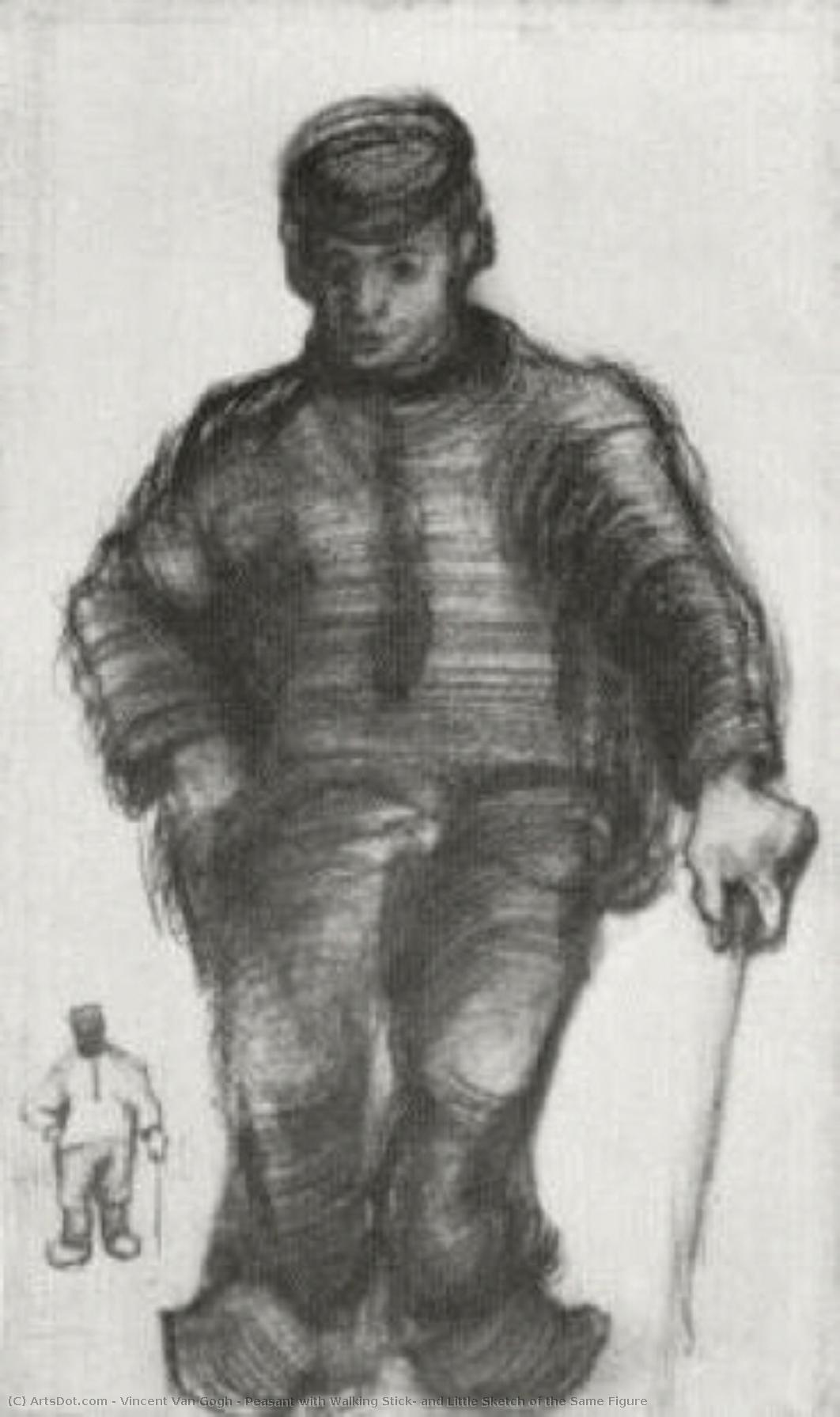
Vincent Willem van Gogh's "Peasant with Walking Stick, and Little Sketch of the Same Figure," created in 1885 during his time in Nuenen, Netherlands – a period marked by deliberate immersion in rural life – stands as a testament to his unwavering dedication to capturing the essence of ordinary subjects. More than just a depiction of a man and his walking stick, this unassuming sketch embodies Van Gogh’s signature style: Realism blended with an expressive brushwork that transcends mere representation.
- Subject Matter: The artwork focuses on a solitary peasant figure standing beside a chair. This deliberate choice reflects Van Gogh's fascination with portraying the dignity and resilience of working-class individuals, mirroring his broader humanist concerns.
- Style: Rooted in Realism, “Peasant with Walking Stick” distinguishes itself from purely objective depictions through Van Gogh’s emotive application of color and texture. It’s a stylistic departure from Impressionism, prioritizing psychological insight over fleeting visual sensations.
Van Gogh employed chalk on paper to achieve remarkable textural detail. The artist meticulously rendered the contours of the peasant's body and clothing with bold, decisive lines—a technique that anticipates his later monumental canvases. These textured strokes convey not only physical form but also an underlying sense of movement and energy, hinting at the laborer’s posture and gait.
- Technique: The artist's masterful use of chalk allows for layering and blending, creating a palpable surface quality that enhances the visual impact. Notice how Van Gogh captures the subtle nuances of light and shadow, contributing to the overall atmosphere of quiet contemplation.
- Historical Context: Created during Van Gogh’s period in Nuenen – a deliberate retreat from Paris and its artistic circles – “Peasant with Walking Stick” reflects his desire to engage directly with the realities of rural Dutch society. This was a conscious effort to move beyond idealized landscapes toward portraying the hardships and dignity inherent in agricultural labor.
Beyond its formal qualities, the sketch possesses considerable symbolic significance. The walking stick represents age, experience, and perhaps even vulnerability—a poignant reminder of human mortality. Simultaneously, it symbolizes support and stability, grounding the figure amidst the simplicity of his surroundings. The inclusion of the smaller sketch serves as a meta-commentary on artistic process itself – Van Gogh’s meticulous observation and subsequent rendering demonstrate his commitment to conveying not just what he sees but also how he feels.
Emotional Impact: “Peasant with Walking Stick” resonates deeply with viewers due to its understated beauty and profound psychological depth. It evokes a sense of quiet contemplation, inviting us to consider the dignity of labor and the enduring power of observation. Like many of Van Gogh’s works, it speaks to themes of solitude, resilience, and the human condition—elements that continue to captivate audiences today.