Vincent van Gogh (1853-1890): Explore the life & art of the Dutch Post-Impressionist master behind 'Starry Night' and 'Sunflowers'. Discover his bold style & lasting impact on modern art.
A Portrait of Resilience: Examining Vincent van Gogh’s “Peasant Woman”
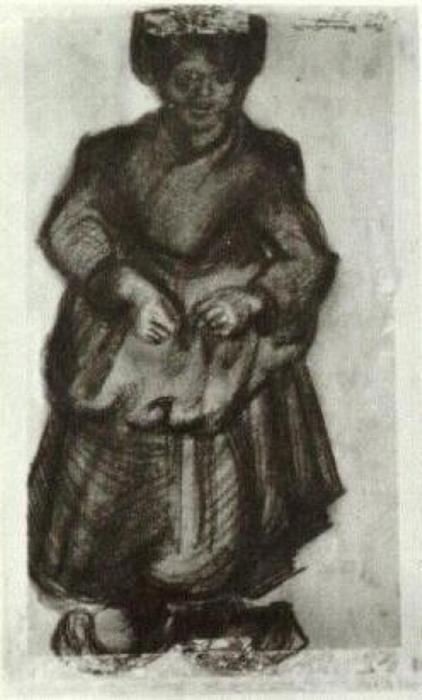
Vincent Willem van Gogh's "Peasant Woman," painted in 1885 during his prolific period in Arles, France, transcends mere representation; it embodies a profound exploration of human dignity and the quiet strength found within rural life. Captured in stark black and white photography—a testament to the enduring fascination with this iconic image—the painting depicts a woman seated patiently beside a chair, clutching a blanket close to her chest as she gazes downwards. This seemingly simple composition belies a complex tapestry of artistic considerations that speak volumes about Van Gogh’s evolving stylistic sensibilities and his unwavering empathy for the marginalized figures inhabiting his immediate surroundings.
Style and Technique: Impressionistic Roots with Bold Expression
The photograph showcases a painting firmly rooted in Impressionism, yet infused with an unmistakable surge of expressive brushstrokes characteristic of Van Gogh's later years. While influenced by artists like Claude Monet and Pierre-Auguste Renoir—whose explorations of light and color aimed to capture fleeting moments of sensory experience—Van Gogh pushed beyond the stylistic conventions of his predecessors. His technique involved applying thick impasto – heavily textured paint – creating palpable physicality within the canvas. This deliberate layering of pigment isn’t merely decorative; it serves as a conduit for conveying emotion, mirroring the woman's posture and gaze with an intensity that anticipates the emotional depth found in his subsequent works like “Starry Night.” The subdued palette—primarily browns and greys—further emphasizes the solemnity of the scene and underscores Van Gogh’s commitment to portraying subjects with unflinching honesty.
Historical Context: Arlesian Observation and Social Consciousness
“Peasant Woman” emerged during a pivotal moment in Van Gogh's artistic journey, coinciding with his relocation to Arles – a town brimming with vibrant agricultural activity and populated by impoverished laborers. This setting profoundly impacted his artistic vision, prompting him to depict individuals from the working class with compassion and respect. The painting reflects the broader socio-cultural currents of the Belle Époque, where artists increasingly sought to engage with social realities beyond the aristocratic salons of Paris. Van Gogh’s meticulous observation of everyday life—evident in the detailed rendering of the chair and handbag—demonstrates his desire to capture not just visual appearances but also the psychological nuances inherent within human experience.
Symbolism: Quiet Dignity and Maternal Instinct
Beyond its formal qualities, “Peasant Woman” resonates with symbolic significance. The woman’s downward gaze speaks to a contemplative stillness, suggesting introspection and perhaps a quiet acceptance of circumstance. The blanket symbolizes protection—both physical and emotional—representing maternal care and the nurturing role assumed by women in rural communities. Furthermore, the posture itself conveys resilience; despite facing hardship, she maintains composure and dignity. These subtle gestures contribute to the painting’s enduring power to evoke feelings of empathy and admiration for the quiet fortitude displayed by ordinary individuals.
Emotional Impact: A Window into Van Gogh's Soul
Ultimately, “Peasant Woman” offers a glimpse into the artist’s innermost convictions—a testament to his belief in the inherent worth of humanity regardless of social status. The photograph captures not just an image but also the palpable emotion conveyed by Van Gogh’s brushstrokes. It invites viewers to contemplate themes of vulnerability, compassion, and the beauty found within simplicity. Like many of Van Gogh's portraits, it eschews idealized representations, presenting a portrait of human experience that is both honest and profoundly moving—a legacy that continues to inspire artists and collectors alike.