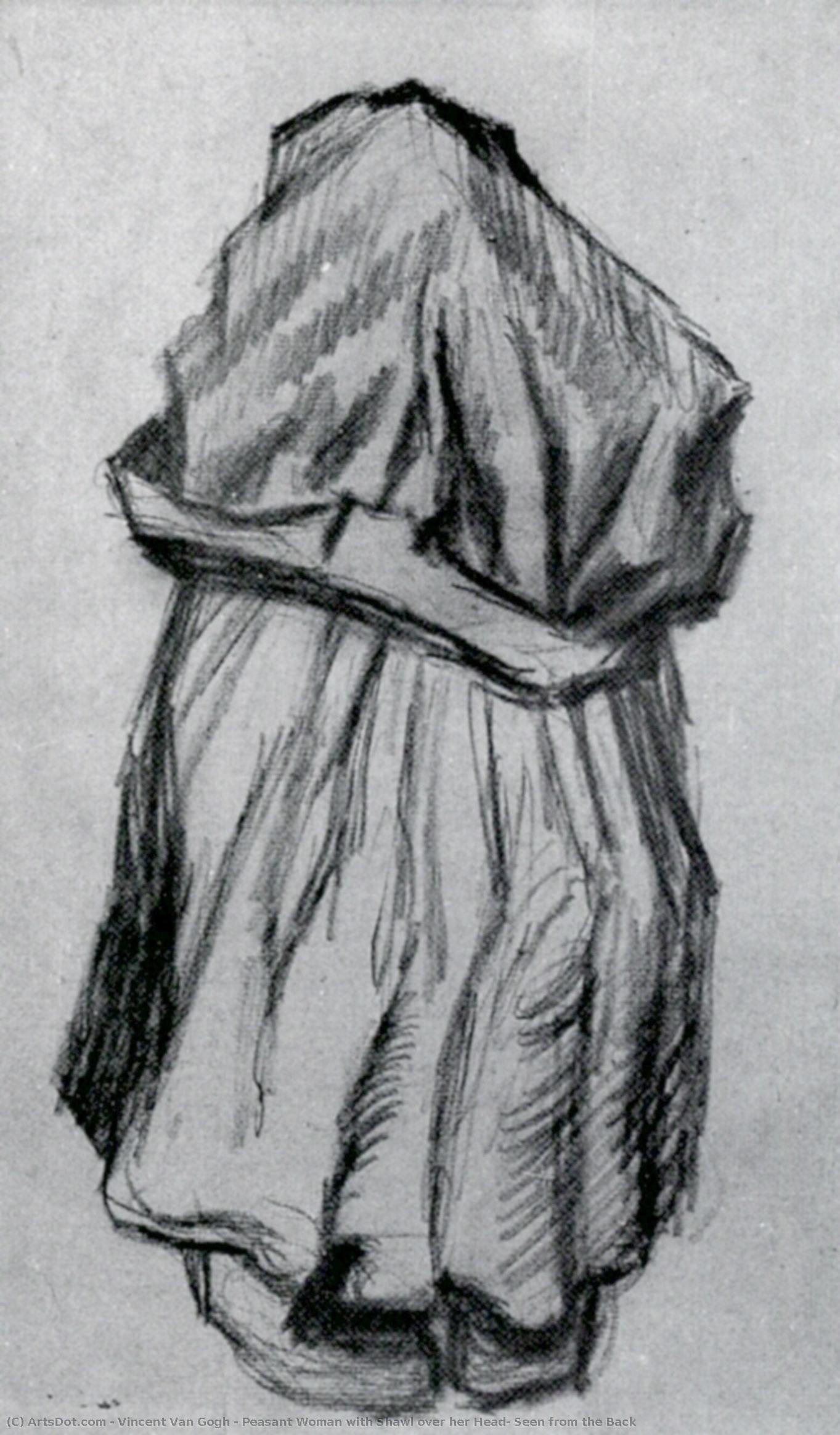
A Moment Frozen in Time: Vincent van Gogh’s ‘Peasant Woman with Shawl Over Her Head, Seen From The Back’
Vincent Willem van Gogh's “Peasant Woman With Shawl Over Her Head, Seen From The Back,” painted in 1885 during his formative years in Nuenen, Netherlands, stands as a testament to the artist’s unwavering dedication to capturing the essence of everyday life through direct observation and expressive artistic vision. More than just a depiction of rural labor—though undeniably rooted in Millet's influence—this sketch embodies Van Gogh’s burgeoning mastery of Realism combined with his deeply personal stylistic signature.
- Composition & Perspective: The artwork presents a vertically oriented image, prioritizing the woman’s stature and emphasizing the voluminous drape of her shawl. A subtle architectural backdrop – a wall with a window – provides context without overshadowing the central figure. Van Gogh eschews meticulous perspective, opting for simplified spatial representation to convey depth rather than precise realism; this deliberate choice reflects his artistic philosophy of conveying emotion over accurate depiction.
- Technique & Material: Executed entirely in dry media—specifically pencil—the drawing utilizes hatching and cross-hatching techniques with remarkable precision. These textured strokes meticulously build up tonal values, creating a palpable sense of materiality and mirroring the rough surface of fabric and skin. The artist’s layering process contributes to the artwork's depth and richness.
- Style & Emotion: “Peasant Woman With Shawl Over Her Head” firmly establishes Van Gogh’s early stylistic trajectory—a blend of realism informed by Millet’s influence and propelled forward by an intensely personal expressive impulse. The artist deliberately exaggerates features, mirroring Daumier's approach, to imbue the subject with character and conveying a quiet dignity alongside a hint of melancholy.
- Symbolism & Subject Matter: Beyond its portrayal of rural life, the image speaks to themes of vulnerability and resilience. The obscured face invites contemplation about inner thoughts and emotions—a characteristic Van Gogh trait—suggesting that art can transcend mere representation to communicate profound psychological states.
This artwork’s enduring appeal lies in its ability to transport viewers back to a specific moment in time, capturing the spirit of Impressionism's precursor. Its meticulous detail combined with emotive brushwork ensures it remains an inspiring piece for interior designers and art collectors alike.