Vincent van Gogh’s Pieta: A Soulful Echo of Grief
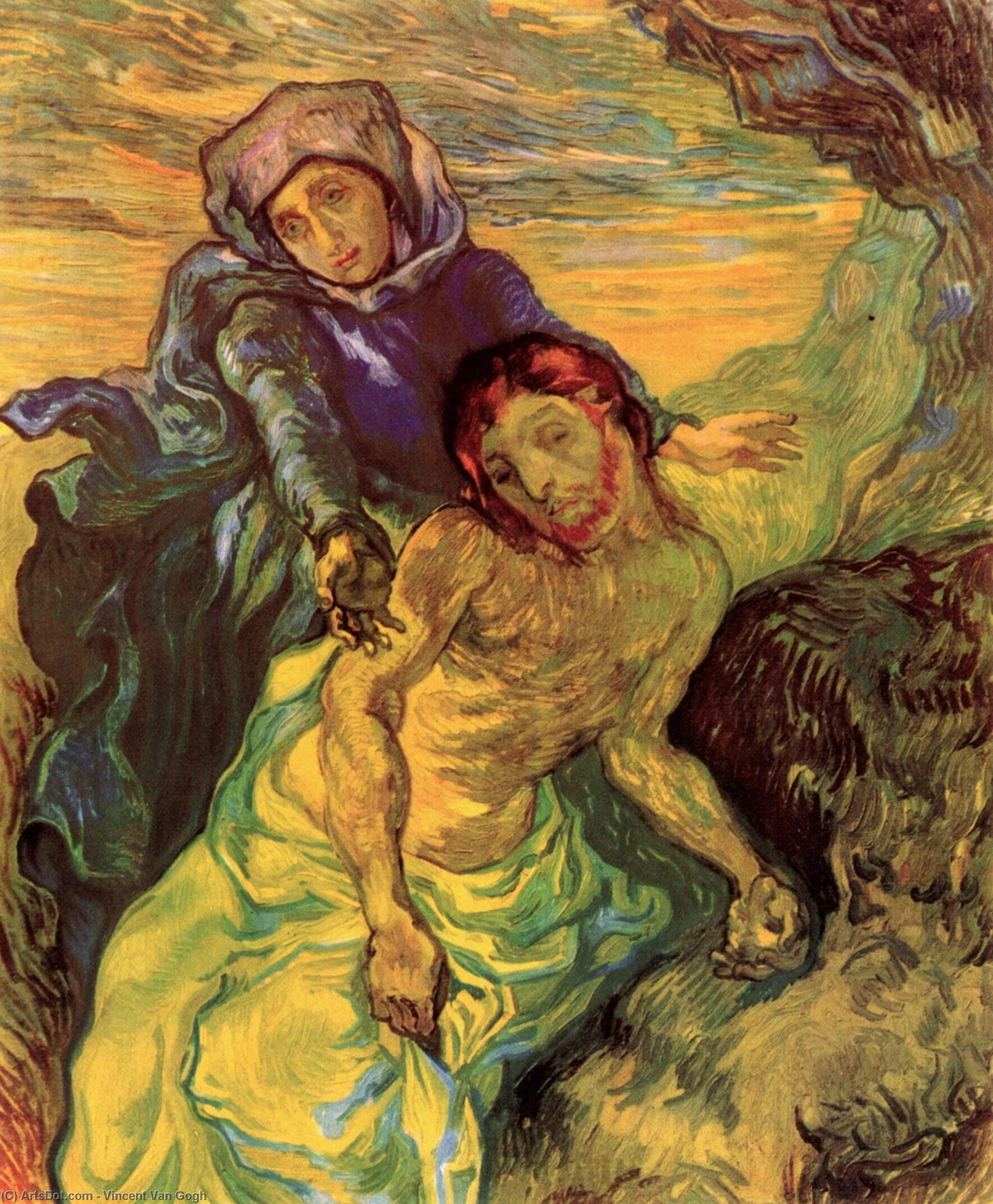
Vincent van Gogh's "Pieta," painted in 1889, isn’t merely a depiction of the Virgin Mary cradling the lifeless body of Jesus; it’s a profound exploration of sorrow, faith, and the enduring human capacity for empathy. Created during a turbulent period in Van Gogh’s life – marked by mental instability and a desperate search for meaning – this small yet intensely emotive canvas reveals a master grappling with universal themes of loss and sacrifice. It stands as a poignant example of his evolving post-impressionist style, blending elements of religious iconography with his signature expressive brushwork and vibrant color palette.
The genesis of "Pieta" lies in Van Gogh’s deep admiration for Eugène Delacroix, the celebrated French Romantic painter. He wasn't aiming for a literal copy but rather sought to capture the emotional core of Delacroix’s original composition – the raw grief and tenderness conveyed through the figures. However, Van Gogh swiftly transformed this foundation into something uniquely his own. The influence of Japanese woodblock prints, particularly their flattened perspectives and bold use of color, subtly informs the painting's dynamic energy. Notice how he departs from the traditional, static portrayal of the Pietà, injecting a sense of movement and immediacy through the swirling brushstrokes that define the background landscape.
Composition and Symbolism: A Landscape of Lament
The composition itself is deceptively simple yet powerfully resonant. Van Gogh places Mary in the lower half of the canvas, her figure dominating the scene with its flowing robes – a deliberate reference to Delacroix’s influence, echoing the voluminous drapery of his Romantic paintings. Jesus' body, rendered with an almost startling realism for the time, lies vulnerable and exposed within her arms. The hillside backdrop, bathed in a luminous blue sky, provides a stark contrast to the somber tones of the figures, suggesting both the earthly realm of suffering and a hint of spiritual transcendence. The use of yellow and orange – colors often associated with warmth and vitality – is deliberately juxtaposed against the cool blues and greens, creating a palpable sense of emotional tension.
Beyond the obvious symbolism of grief and sacrifice, Van Gogh imbues "Pieta" with layers of personal meaning. The Virgin Mary’s long dress isn't simply an attribute of her role; it symbolizes her purity, devotion, and unwavering faith – qualities that Van Gogh himself struggled to reconcile with his own turbulent inner life. Jesus’ body represents not only the ultimate sacrifice but also a profound vulnerability, mirroring Van Gogh’s own feelings of isolation and despair during this period. The painting becomes, in essence, a visual meditation on suffering and resilience.
Artistic Style and Technique: A Dance of Color and Texture
Van Gogh's post-impressionist style is vividly displayed in "Pieta." His signature technique—bold, impasto brushstrokes—creates a remarkable sense of texture and depth. Thick layers of paint are applied with energetic sweeps, capturing the weight of Mary’s grief and the fragility of Jesus’ body. The swirling patterns in the background landscape aren't merely decorative; they convey a feeling of unrest and emotional turbulence, mirroring Van Gogh’s own mental state. The vibrant colors, particularly the intense yellows and oranges, are not used to create a realistic depiction but rather to heighten the painting’s emotional impact. He employs color expressively, using it to communicate feelings rather than simply representing reality.
Relevance in Art History: A Bridge Between Masters
"Pieta" is a crucial work within Van Gogh's artistic journey – a testament to his ability to synthesize influences from the past while forging his own unique style. It exemplifies his practice of “painting after” other masters, not as mere imitation but as a means of exploring different approaches and deepening his understanding of art history. The painting’s emotional intensity and innovative technique paved the way for future generations of artists, particularly those associated with Expressionism. For those seeking to own a piece of this artistic legacy, ArtsDot offers meticulously crafted oil painting reproductions of Van Gogh's "Pieta," ensuring that the essence of this powerful work is preserved in stunning detail.