Van Gogh’s meticulous attention to detail, combined with his emotive brushstrokes, profoundly impacted subsequent artists, establishing him as a cornerstone of Expressionism and cementing his enduring legacy as one of art history's most influential figures.
Plaster Statuette of a Female Torso
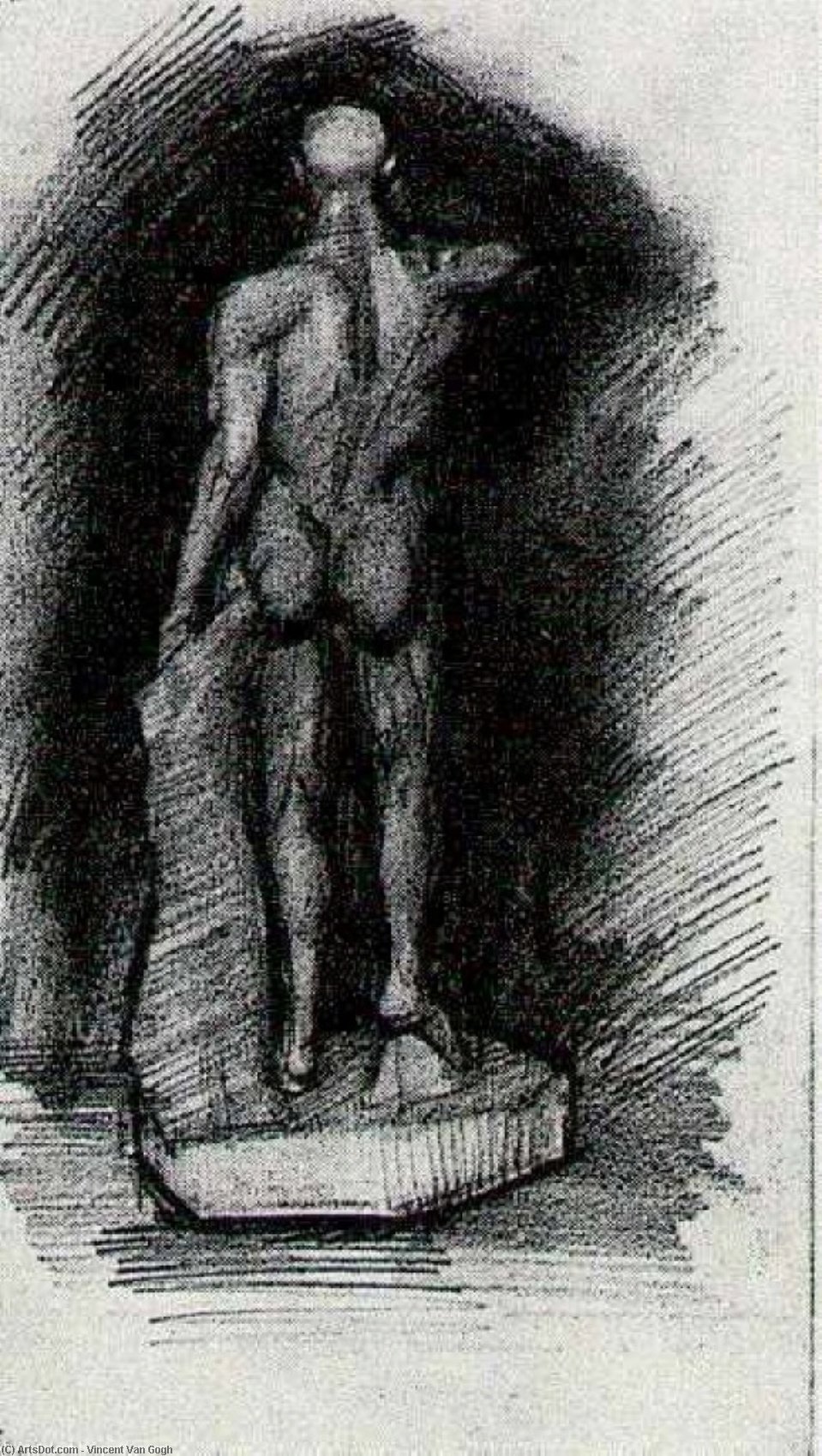
Vincent van Gogh’s “Plaster Statuette of a Female Torso,” created in 1886, stands as a testament to the artist's unwavering dedication to capturing essence over meticulous detail—a hallmark of his distinctive Post-Impressionist style. This preparatory sketch offers a glimpse into Van Gogh’s artistic process and reveals an acute observation of form, mirroring his broader fascination with classical sculpture and human anatomy.
- Composition: The drawing centers around the statuette itself, positioned prominently within the frame. Its placement emphasizes its importance as the focal point, while a simple rectangular base provides stability. Minimal background tones serve to isolate the subject, directing the viewer’s gaze directly to the sculpture’s contours.
- Color Palette: Employing a monochrome scheme—primarily shades of white and black—the artist eschews color entirely, prioritizing tonal contrast to sculpt volume and define shape. This deliberate choice underscores Van Gogh's focus on conveying form and emotion through subtle shading rather than chromatic vibrancy.
- Line Technique: The sketch’s expressive quality derives from its extensive use of sketchy lines—hatching and cross-hatching dominate the surface, creating a dynamic texture that mimics the rough materiality of plaster. Varying line thicknesses contribute to the overall visual rhythm and imbue the drawing with an immediacy characteristic of Van Gogh's spontaneous approach.
- Symbolism: Beyond its formal study, “Plaster Statuette” speaks to themes of contemplation and artistic exploration. The pose of the female torso embodies grace and serenity, reflecting Van Gogh’s enduring interest in portraying idealized human figures—a recurring motif throughout his oeuvre.
This artwork exemplifies Van Gogh's masterful technique – drawing with pencil or charcoal on paper – skillfully manipulating line weight and shading to achieve remarkable depth and texture. The artist’s meticulous attention to detail, though restrained compared to academic conventions, captures the spirit of Impressionism while simultaneously forging a path toward Expressionism. Its enduring appeal lies in its ability to evoke a profound sense of quiet beauty and artistic introspection.
- Historical Context: Created during Van Gogh’s Parisian period, “Plaster Statuette” reflects the burgeoning artistic dialogues of the time—particularly the influence of Impressionism and Symbolism. It represents a crucial step in his evolving stylistic trajectory, demonstrating his growing confidence in conveying emotion through simplified forms.
- Emotional Impact: The drawing's subdued palette and expressive lines resonate with an underlying sense of melancholy – mirroring Van Gogh’s personal struggles during this transformative phase. Yet, it simultaneously conveys a feeling of serene contemplation, inviting viewers to appreciate the beauty inherent in observation and artistic representation.