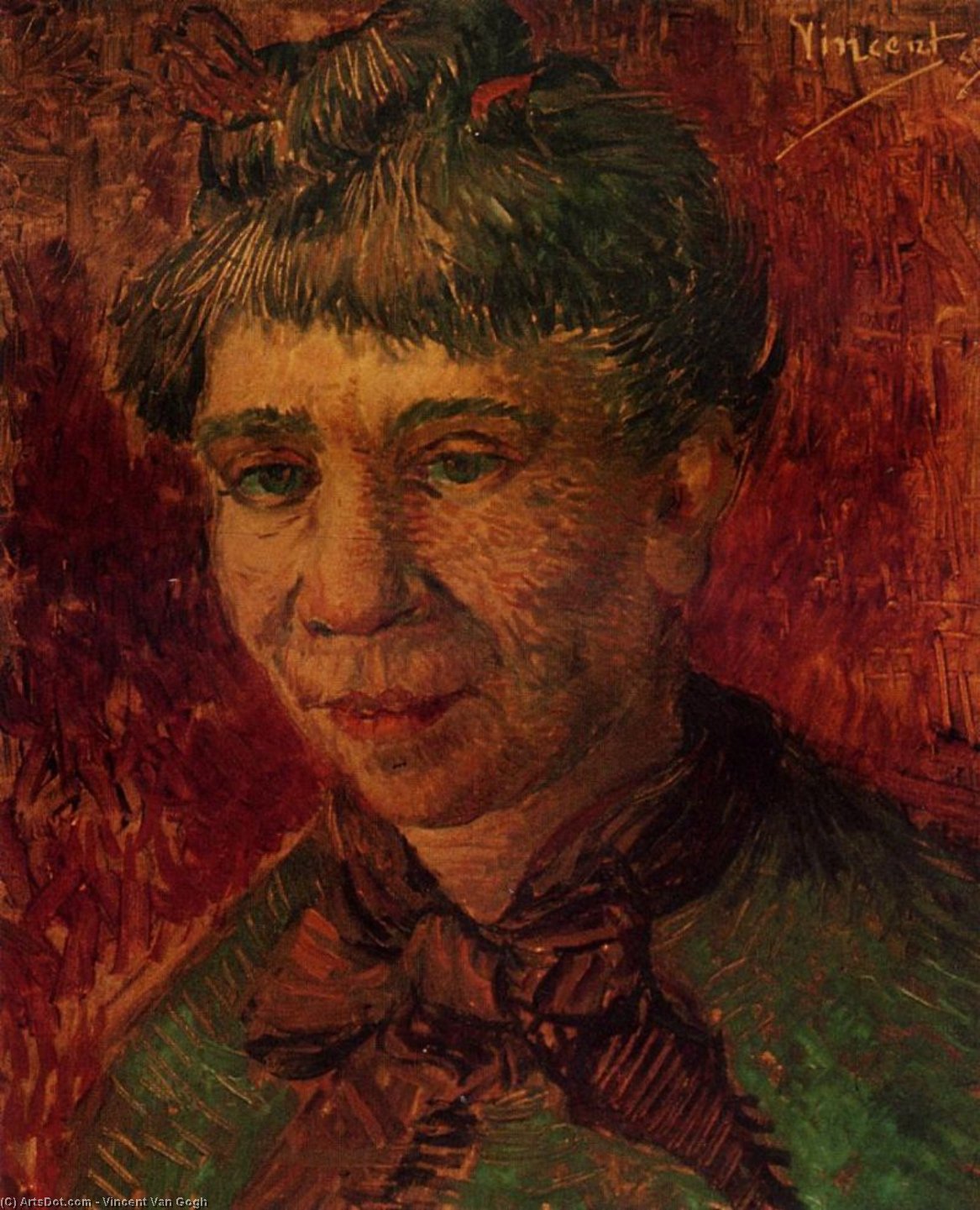
Vincent Van Gogh, one of the most celebrated artists of the Post-Impressionist era, left an indelible mark on the world of art with his vibrant and expressive works. Among his numerous masterpieces,
Portrait of a Woman, created in 1886, stands out for its captivating blend of colors and intriguing subject matter. ### The Painting's Details - Medium: Oil On Panel - Date: 1886 - Location: Kunstmuseum Basel (Switzerland) The painting depicts a woman with dark hair, adorned with a bow, wearing a green dress. Her gaze is directed towards the viewer, creating an intimate connection. The background, painted in red and orange hues, provides a striking contrast to her attire, adding depth and dynamacy to the portrait. ### Additional Elements Two birds are incorporated into the painting, one on the left side and another at the top right corner. These elements add a sense of movement and life to the otherwise static portrait, reflecting Van Gogh's innovative approach to composition. ### The Artist's Vision Van Gogh was known for his self-portraits, which were an integral part of his artistic journey. His portraits often depicted his face as it appeared in the mirror he used, showcasing his left side in reality as the right side in the image. This technique allowed him to explore different aspects of his own identity and emotions. ### Historical Context The Kunstmuseum Basel, where
Portrait of a Woman is housed, boasts the oldest public art collection in the world. Established in 1661, it has been a significant cultural institution for centuries, showcasing works from various periods and styles. ### Related Works -
Vincent Van Gogh: Portrait of a Woman -
Vincent Van Gogh: Marguerite Gachet at the Piano ### Conclusion
Portrait of a Woman by Vincent Van Gogh is a testament to his artistic genius and innovative spirit. The painting's unique blend of colors, composition, and subject matter makes it a fascinating piece that continues to captivate art enthusiasts today. For those interested in exploring more about the history of art and its various forms, refer to
The History of Art on Wikipedia.